

29-Day Wild Scotland, Iceland, Greenland & Labrador Coast
- 17 May ‘28
- 29 nights
- Departing from Leith (Edinburgh)
- Seabourn Venture

-
Balcony price from$45,399*/pp
-
Suite price from$64,999*/pp
YOUR ITINERARY
Leith (Edinburgh), UK - Invergordon (Inverness), Scotland, United Kingdom - Kirkwall - Fair Isle - Mousa, Shetland Islands - Isle of Noss - Lerwick - Lerwick - Tvoroyri, Faroe Islands - Torshavn, Faroe Island - Torshavn, Faroe Island - Torshavn, Faroe Island - Klaksvik - Seydisfjordur, Iceland - Siglufjorour, Iceland - Patreksfjorour, Iceland - Dynjandi, Iceland - Grundarfjordur, Iceland - Reykjavik, Iceland - Exploring The Outer Islands of Heimaey - Heimaey, Westman Islands, Iceland - Kangikitsok, Greenland - Prins Christian Sund, Greenland - Qaqortoq, Greenland - Hvalsey - Brattahlid (Qassiarsuk), Greenland - Nain, NL, Canada - Nachvak Fiord, Torngat Mts, Canada - Saglek Fjord, Labrador, Canada - Hopedale, Labrador, Canada - Indian Harbour, NL, Canada - L Anse aux Meadows, Newfoundland, Canada - St John's, Newfoundland
Two miles distant from its ancient seaport of Leith lies Edinbu...
Two miles distant from its ancient seaport of Leith lies Edinburgh, Scotland’s national capital. The Scottish capital since the 15th century, Edinburgh is comprised of two distinct areas – the Old Town, dominated by a medieval fortress, and the neoclassical New Town, whose development from the 18th century onwards had a far-reaching influence on European urban planning. The harmonious juxtaposition of these two contrasting historic areas, each with many important buildings, is what gives the city its unique character.
Always favored by geography, Edinburgh is ideally situated on the Firth of Forth, an inlet from the North Sea, and built on extinct volcanoes surrounded by woods, rolling hills and lakes. On a clear day, there are glorious vistas from each of these hilltops. Looming above the city is the striking fairy tale castle built on the site of a 7th-century fortress. Towards the Middle Ages life within the fortress spilled onto the long ridge running to the foot of Arthur’s Seat, which crowns Holyrood Park. The city’s most legendary citizens are the arch Presbyterian John Knox and Mary Queen of Scots, who dominated the Edinburgh of the late 16th century. Edinburgh’s delightful city center is a joy to explore on foot. Every alley reveals impressive steeples, jagged, chimney-potted skylines, or lovely rotund domes.
Invergordon, the port for Inverness, is located in the n...
Invergordon, the port for Inverness, is located in the northern part of Scotland on the Moray Firth. The quaint town of Inverness has reminders of such historical figures as St. Columba, Mary Queen of Scots, and Oliver Cromwell. Its attractions include a 17th-century clock tower, part of a fort erected by Cromwells army and the 19th-century cathedral. Regarded as the “Capital of the Highlands,” the town holds many traditional Scottish events each summer.
Kirkwall is the largest town of Orkney, an archipel...
Kirkwall is the largest town of Orkney, an archipelago to the north of mainland Scotland. The name Kirkwall comes from the Norse name Kirkjuvágr, which later changed to Kirkvoe, Kirkwaa and Kirkwall.
Fair Isle is an island in Shetland, in northern Scotland. It lie...
Fair Isle is an island in Shetland, in northern Scotland. It lies about halfway between mainland Shetland and Orkney. It is known for its bird observatory and a traditional style of knitting. The island has been owned by the National Trust for Scotland since 1954.
Mousa is a small island in Shetland, Scotland, unin...
Mousa is a small island in Shetland, Scotland, uninhabited since the nineteenth century. The island is known for the Broch of Mousa, an Iron Age round tower, and is designated as a Special Protection Area for storm-petrel breeding colonies.
Lerwick, Britain’s most northerly town, and...
Lerwick, Britain’s most northerly town, and is a small, bustling, cosmopolitan seaport with a population of over 7,000 people and fine architecture. Shetland Museum, located on Hay’s Dock, is an award- winning attraction. Discover the island’s many secrets through its exhibits, and take a look in the boat shed, where you can see demonstrations of traditional boat building. Also of interest is the stone-walled town hall, built in 1884, displaying an impressive array of beautifully intricate stained glass. Towering St. Magnus Cathedral, constructed in 1863, is likewise well worth a visit.
People have lived and prospered here since Neolithic times. The site of Clickimin Broch, a hollow-stone-walled structure, was a Late Bronze Age farmstead of the 7th century BCE. Historic Fort Charlotte, built in 1653, is a five-sided fortress, with cannon batteries pointing out to sea. The Shetland Textile Museum, with its fine weaving, and the quaint Crofters Museum will detail life in a much gentler time. The name Lerwick is derived from Norse and means ‘bay of clay.’
Lerwick, Britain’s most northerly town, and is a s...
Lerwick, Britain’s most northerly town, and is a small, bustling, cosmopolitan seaport with a population of over 7,000 people and fine architecture. Shetland Museum, located on Hay’s Dock, is an award- winning attraction. Discover the island’s many secrets through its exhibits, and take a look in the boat shed, where you can see demonstrations of traditional boat building. Also of interest is the stone-walled town hall, built in 1884, displaying an impressive array of beautifully intricate stained glass. Towering St. Magnus Cathedral, constructed in 1863, is likewise well worth a visit.
People have lived and prospered here since Neolithic times. The site of Clickimin Broch, a hollow-stone-walled structure, was a Late Bronze Age farmstead of the 7th century BCE. Historic Fort Charlotte, built in 1653, is a five-sided fortress, with cannon batteries pointing out to sea. The Shetland Textile Museum, with its fine weaving, and the quaint Crofters Museum will detail life in a much gentler time. The name Lerwick is derived from Norse and means ‘bay of clay.’
A distant outpost of Denmark, the Faroe Islands su...
A distant outpost of Denmark, the Faroe Islands suddenly appear out of the misty North Atlantic, nearly 200 miles from the nearest landfall. Of the twenty-two islands in the group, seventeen are inhabited, with a population of 17,000 residing in the capital city of Torshavn. Irish monks discovered the islands in the 8th century and became the first settlers, only to be driven out by Viking explorers a century later. The traditions and legends of their Viking forefathers are kept alive in a language so close to old Norse that Faroe Islanders can still read the ancient texts inscribed centuries ago. The name Faroe comes from faereyjar, the Old Norse word meaning “Sheep Islands.” With thousands of sheep dotting the hillsides, the name remains apt today. While sheep are important to the economy, the real wealth of the islands comes from the fishing industry. A fleet of over 300 trawlers and line-fishing boats bring in an average annual haul of 245,000 tons of cod and herring. Ultra-modern processing and freezing plants do the job of getting the product to market in the most efficient manner.
A distant outpost of Denmark, the Faroe Islands sudde...
A distant outpost of Denmark, the Faroe Islands suddenly appear out of the misty North Atlantic, nearly 200 miles from the nearest landfall. Of the twenty-two islands in the group, seventeen are inhabited, with a population of 17,000 residing in the capital city of Torshavn. Irish monks discovered the islands in the 8th century and became the first settlers, only to be driven out by Viking explorers a century later. The traditions and legends of their Viking forefathers are kept alive in a language so close to old Norse that Faroe Islanders can still read the ancient texts inscribed centuries ago. The name Faroe comes from faereyjar, the Old Norse word meaning “Sheep Islands.” With thousands of sheep dotting the hillsides, the name remains apt today. While sheep are important to the economy, the real wealth of the islands comes from the fishing industry. A fleet of over 300 trawlers and line-fishing boats bring in an average annual haul of 245,000 tons of cod and herring. Ultra-modern processing and freezing plants do the job of getting the product to market in the most efficient manner.
A distant outpost of Denmark, the Faroe Islands suddenly appear...
A distant outpost of Denmark, the Faroe Islands suddenly appear out of the misty North Atlantic, nearly 200 miles from the nearest landfall. Of the twenty-two islands in the group, seventeen are inhabited, with a population of 17,000 residing in the capital city of Torshavn. Irish monks discovered the islands in the 8th century and became the first settlers, only to be driven out by Viking explorers a century later. The traditions and legends of their Viking forefathers are kept alive in a language so close to old Norse that Faroe Islanders can still read the ancient texts inscribed centuries ago. The name Faroe comes from faereyjar, the Old Norse word meaning “Sheep Islands.” With thousands of sheep dotting the hillsides, the name remains apt today. While sheep are important to the economy, the real wealth of the islands comes from the fishing industry. A fleet of over 300 trawlers and line-fishing boats bring in an average annual haul of 245,000 tons of cod and herring. Ultra-modern processing and freezing plants do the job of getting the product to market in the most efficient manner.
The remote town of Seydisfjördur is perched at the end of ...
The remote town of Seydisfjördur is perched at the end of a narrow twisting fjord in East Iceland. A very picturesque village of 700 people, it is known for its thriving arts scene and large number of resident artists. Tourism is on the rise as well, as its natural setting of mountains and waterfalls is simply breathtaking. Surrounded by impressive 1,085 meter (3,560’) tall snow-capped mountains, Seydisfjördur is home to the Technical Museum of Iceland and hosts populations of both eider ducks and Atlantic puffins. It was settled by Norwegian fishermen in 1848 and quickly became an important trading center between Iceland and Europe. It is known throughout Iceland for its colorful Norwegian-style wooden houses. The first telegraph cable connecting Iceland to Europe made landfall here in 1906. A large dam was constructed here in 1913, which produced power for the country’s first high voltage AC power plant, a revolutionary achievement for its time.
Siglufjörður is the northernmost town on the Ice...
Siglufjörður is the northernmost town on the Icelandic mainland, a small fishing village of some 1,200 people. Founded in 1918, it was in the past the capital of the North Atlantic herring fishing industry. The Síldarminjasafnið Herring Era Museum, one of Iceland’s largest seafaring and industrial museums, houses three different areas where one can learn about both the traditional and the modern herring industry. A collection of many historic fishing vessels and artifacts is proudly displayed by the people of Siglufjörður, detailing how herring was salted, processed and collected. The small harbor with its colorful fishing boats and the red-roofed steeple of the Lutheran church dominate the village-scape.
The natural beauty of the area includes high mountains that rim the fjord, freshwater lakes, the Hólsá river, black sand beaches, and a wealth of birdlife all around. This northernmost region of Iceland is renowned for some of the largest and most dramatic waterfalls in the country.
The charming small fishing village of Grundarfjörð...
The charming small fishing village of Grundarfjörður is located in the middle of the Snæfellsnes Peninsula and thus provides easy access to Stykkishólmur, Snæfellsbær and the Snæfellsnes National Park. Its best-known landmark is undoubtedly the peak of Mt. Kirkjufell. Translated as ‘church mountain,’ Kirkjufell is the most easily recognizable peak, and one of the most photographed mountains in Iceland. During summer months a Viking Village is built in the center of town where Viking re-enactments occur quite regularly. During the Á góðri stund town festival in July, the town’s 900 residents decorate their houses in red, blue, yellow, and green, transforming the town into a spinning kaleidoscope of color.
The town first began trade in 1786, and around 1800, French merchants came to Iceland and settled in Grundarfjörður, where they constructed a church and a hospital. The town has prospered through the fishing industry for a long time. The surrounding sea is rich with birdlife & marine life throughout the year.
Warmed by the Gulf Stream as well as by highly active thermal h...
Warmed by the Gulf Stream as well as by highly active thermal hot springs and volcanoes, Iceland is somewhat misnamed. While it is a stark and barren country with three huge areas of glaciers, one theory is that early Norsemen sought to mislead other potential settlers by giving a pleasant name to fierce, inhospitable Greenland, and a forbidding name to the imminently habitable Iceland. Irish monks and hermits established themselves here in the 8th century, but left a century later when the pagan Norsemen arrived. Europe’s first Parliament of General Assembly, the Althing, was established in the year 930 and still functions as the legislative body, although it was suspended by the Danes at the end of the 18th century and not reconvened until 1843. Reykjavik was the site picked by the island’s first permanent resident, Ingolfur Arnarson in 874, and is home to more than half of the island’s total population. The world’s northernmost capital, Reykjavik is proud of its virtual lack of air pollution. Both electrical power and home heating are derived from the geothermal activity on the island. The city’s large swimming pools are always warm, and in the countryside exotic fruits such as grapes and bananas are cultivated in greenhouses made cozy with the help of underground hot springs.
The largest town in South Greenland with over 3,5...
The largest town in South Greenland with over 3,500 citizens, Qaqortoq was founded in 1775 and still reveals some examples of colonial-period architecture. There is not infrastructure to support shore excursions here, but guests can explore the town and its museum, or possibly arrange a visit to a nearby hot springs. Like other towns in Greenland, there are also possibilities to buy examples of traditional Inuit arts and crafts, including items crafted of bone, soapstone and wild-harvested furs.
Twelve miles by Zodiac up the Hvalseyjarfjord from Q...
Twelve miles by Zodiac up the Hvalseyjarfjord from Qaqortoq, the largest community in South Greenland, lies the most prominent Norse archaeological site in Greenland. The so-called Eastern Settlement lasted from the 10th until the mid-15th century. Your expedition team archaeologist can interpret for you the ruins of the great halls and church at Hvalsey that hint of a prospering medieval farmstead. The site evokes an era when the Norse were trading with the indigenous Thule people of the area for furs and ivory, which were a prized commodities in Europe. A wedding held in the church in 1408 comprises the last written record of the Norse adventure in Greenland. Within a few years, Hvalsey and the rest of other Norse communities of Greenland withered as immigrants returned to the more established communities in Iceland and Norway. The site’s meadows of wildflowers sloping up from the fjord give a sense of the peaceful community that existed here in that long-ago summer.
Located at the most northerly tip of Newfoundland, LAnse aux ...
Located at the most northerly tip of Newfoundland, LAnse aux Meadows is nestled near the fishing village of St. Anthony. It is the site of the first European settlement in the New World, approximately 500 years before Columbus arrival. Other Norse groups had relocated from their homelands to the New World. In 1961, explorer and writer Helge Instad discovered a group of large mounds in the countryside. These mounds were excavated revealing the remains of a Norse settlement. This site became LAnse aux Meadows National Historic Park in 1977 and is noted on the UNESCO World Heritage List of important cultural properties. The site at LAnse aux Meadows has been completely excavated allowing visitors to see the remains of the homes, a smithy, and various worksheds. The parks interpretive center displays Norse artifacts from the excavation which include iron rivets, a flywheel and the floorboard of a boat. Researchers still debate as to whether the site at LAnse aux Meadows is Leif Erikssons Vinland, a lush, beautiful area where he settled in for the winter around the year 1000. Parks Canada will greet you on disembarking the ship and you may explore at leisure this first settlement of the New World.
St. John’s is the most easterly point in North America an...
St. John’s is the most easterly point in North America and closest point of land to Europe. Due to it strategic location, St. John’s has been vitally important for centuries to explorers, adventurers, merchants, soldiers, pirates, and all manner of seafarers, who provided the foundation for this thriving modern day city. Explore this, one of the oldest cities in North America, and a city unlike any other. This “City of Legends” is cradled in a harbor carved from granite, and surrounded by hills running down to the ocean. Quaint side streets of a thousand colors are home to friendly faces that wait to greet you.
YOUR SHIP - The Seabourn Venture
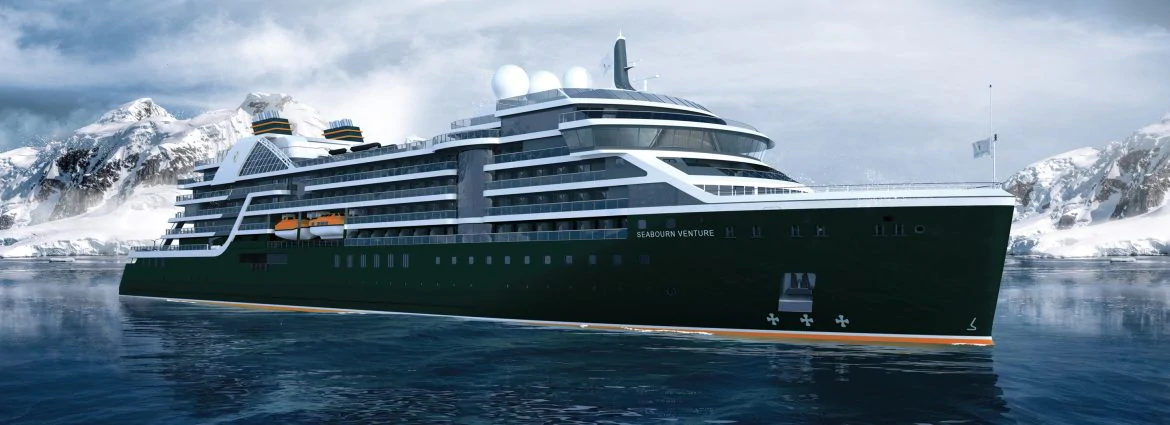
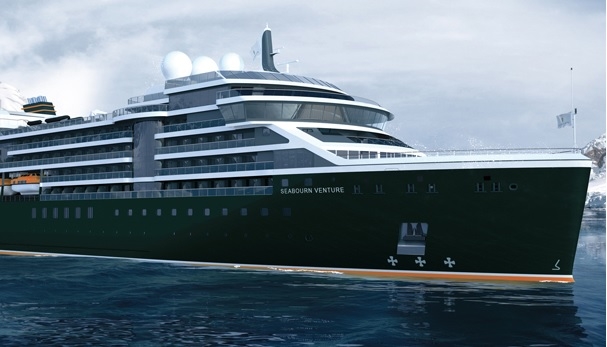
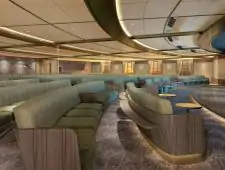
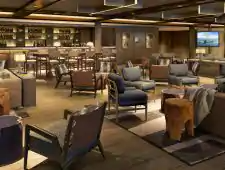

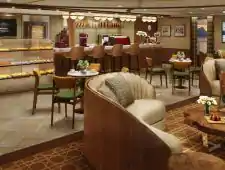
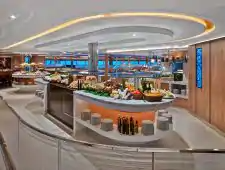
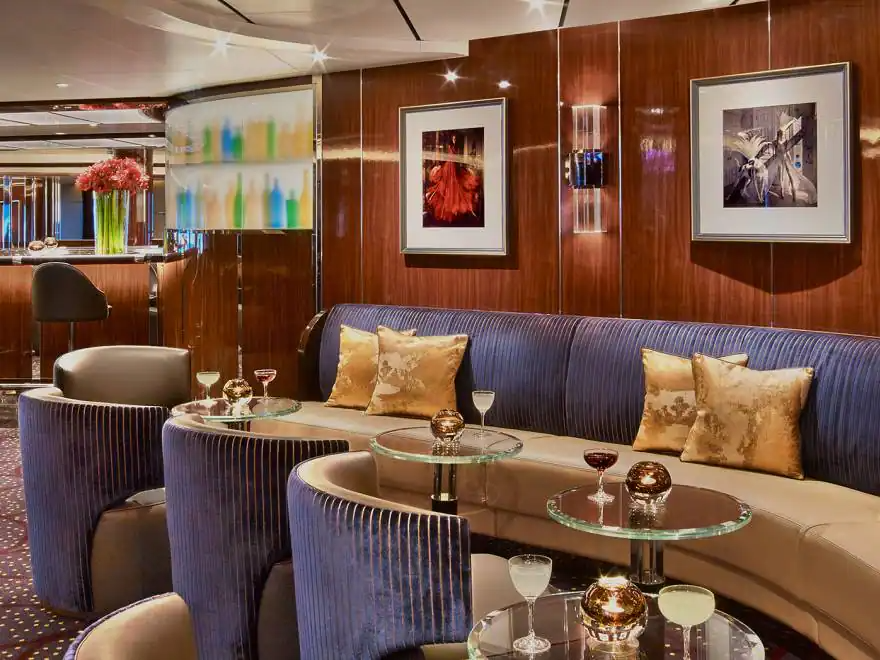
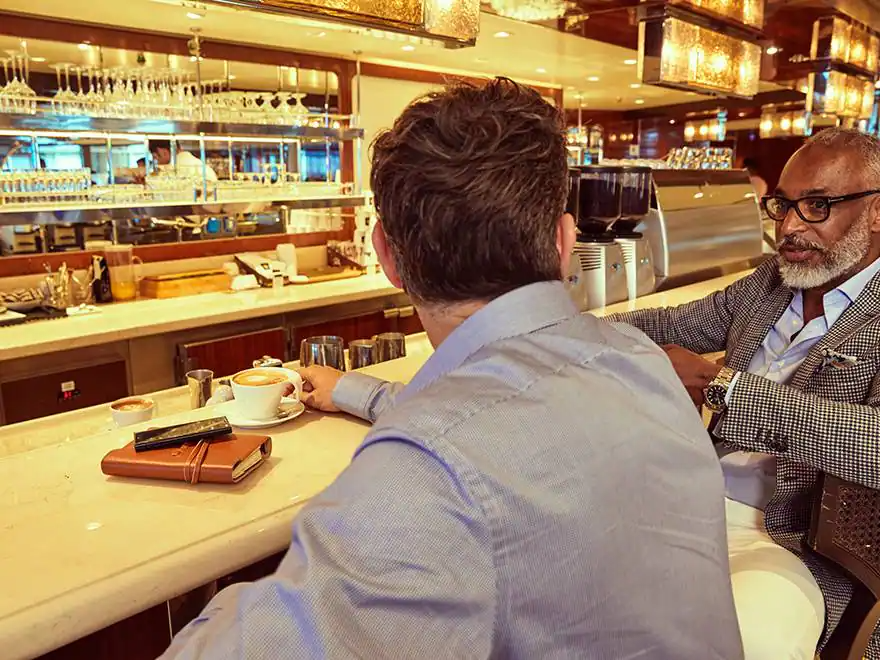
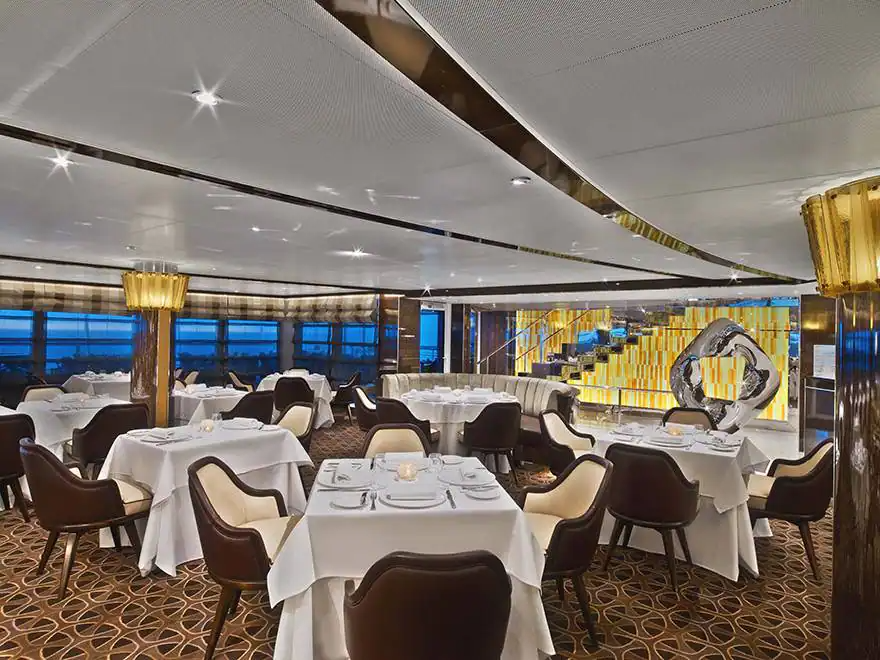
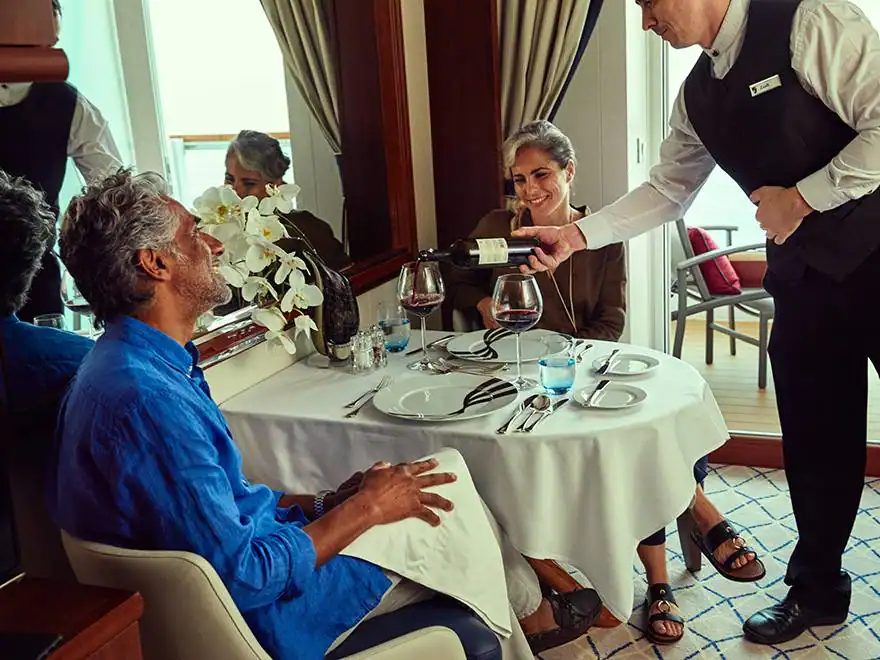
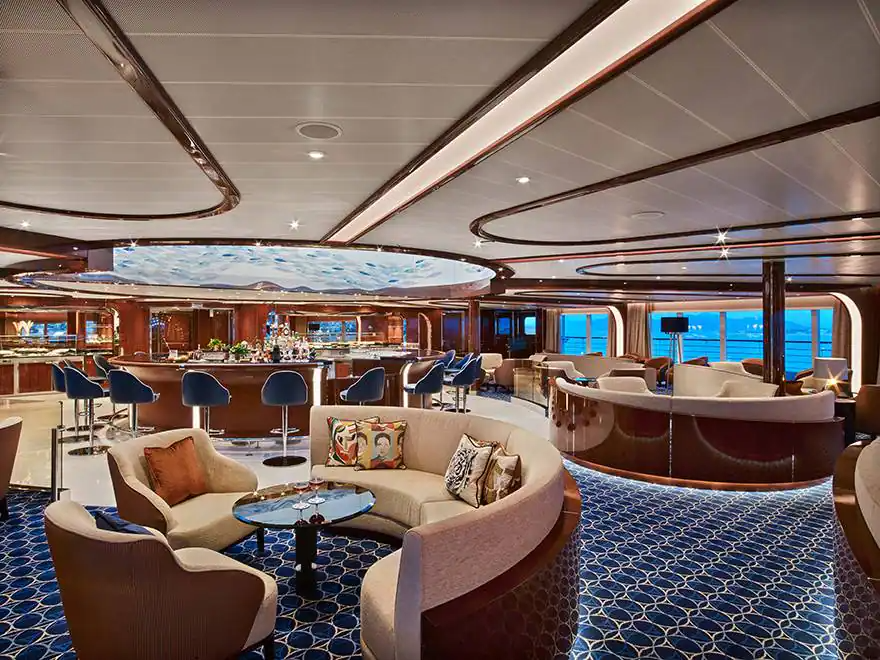
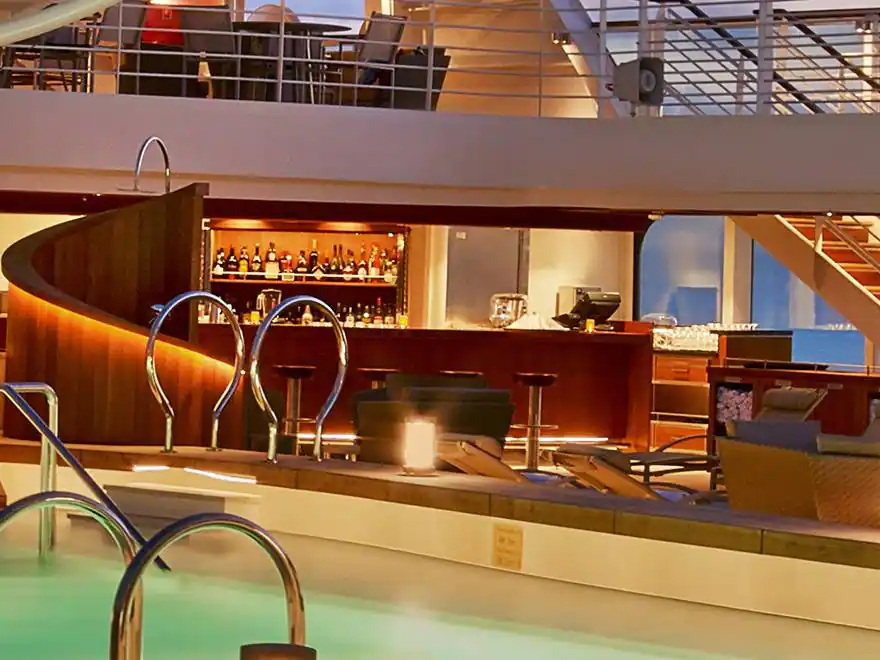
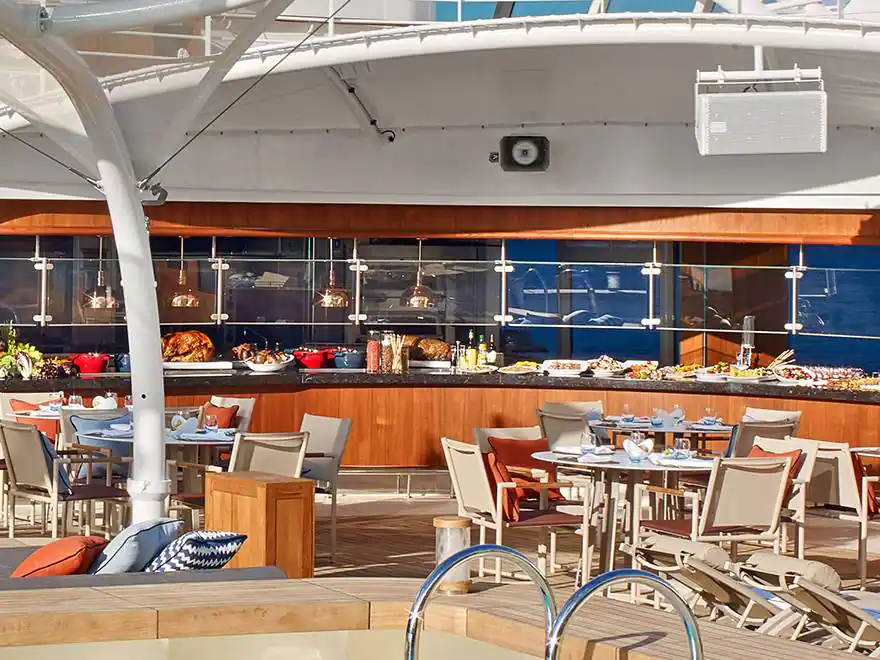

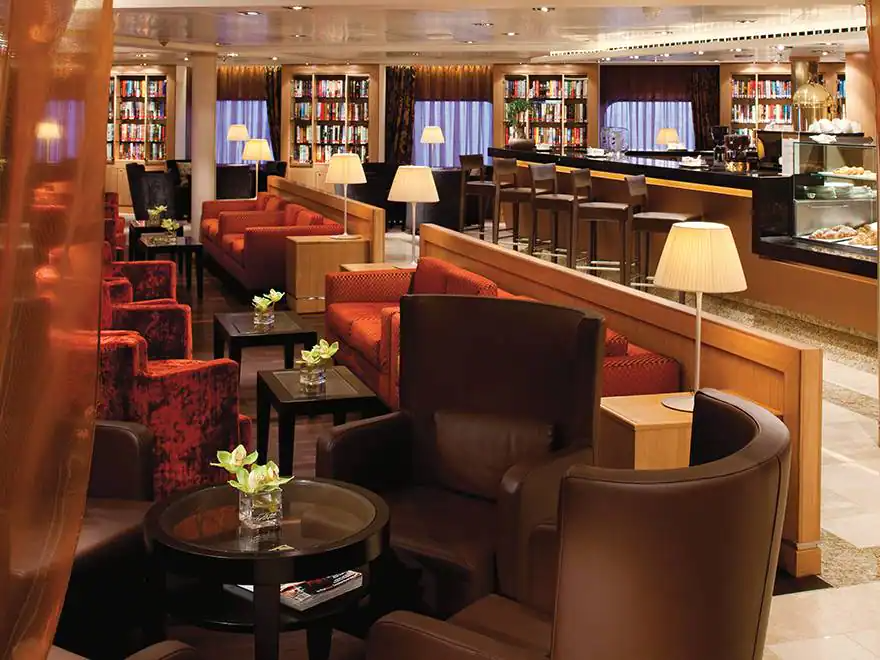
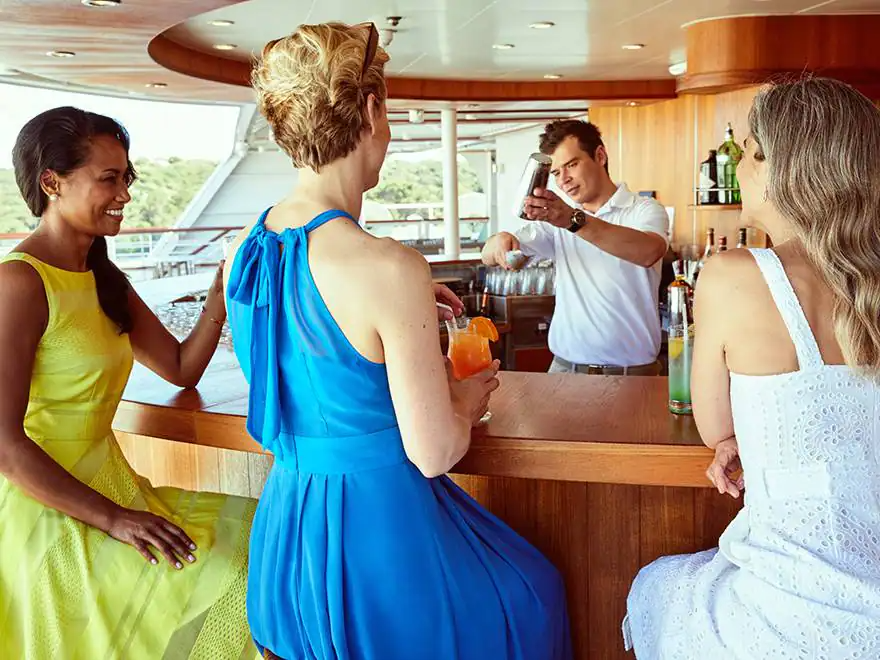
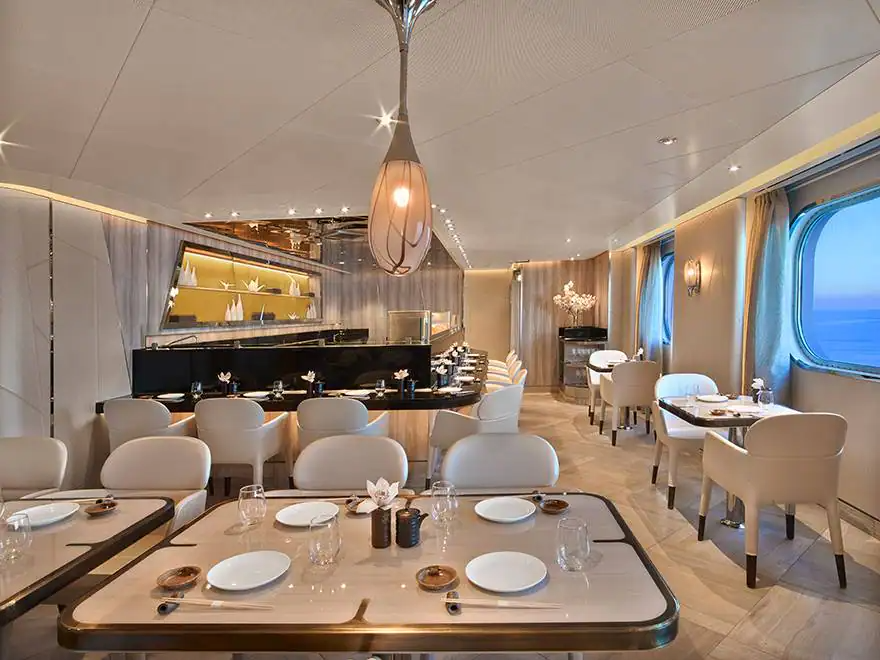
Seabourn’s ultra-luxury purpose-built expedition ship Seabourn Venture, paying tribute to the remote destinations visited by the brand’s highly successful expedition and Ventures by Seabourn excursion programs and the fascinating places yet to be explored in the future. Seabourn Venture is scheduled to launch in June 2021, with a second yet-to-be-named sister ship slated to launch in May 2022. Both ships will be designed and built for diverse environments to PC6 Polar Class standards and will include a plethora of modern hardware and technology that will extend the ships global deployment and capabilities. The new ships, which are being built by T. Mariotti, will be a brand new innovative design, created specifically for the ultra-luxury expedition traveler, and will include many features that have made Seabourn ships so successful. A new and exciting offering will be two custom-built submarines carried onboard, providing an unforgettable view of the world beneath the ocean’s surface. The ships will also be designed to carry a complement of double sea kayaks, mountain bikes and ebikes as well as 24 Zodiacs that can accommodate all onboard guests at once, which will allow for a truly immersive experience. Each ship will feature 132 all veranda, all ocean-front suites.
Hair Dryer
Personal Safe
Slippers
Air Conditioning
Bathroom
Flat Screen TV
Bar
The Verandah
Description
Seabourn’s ultra-luxury purpose-built expedition ship Seabourn Venture, paying tribute to the remote destinations visited by the brand’s highly successful expedition and Ventures by Seabourn excursion programs and the fascinating places yet to be explored in the future. Seabourn Venture is scheduled to launch in June 2021, with a second yet-to-be-named sister ship slated to launch in May 2022. Both ships will be designed and built for diverse environments to PC6 Polar Class standards and will include a plethora of modern hardware and technology that will extend the ships global deployment and capabilities. The new ships, which are being built by T. Mariotti, will be a brand new innovative design, created specifically for the ultra-luxury expedition traveler, and will include many features that have made Seabourn ships so successful. A new and exciting offering will be two custom-built submarines carried onboard, providing an unforgettable view of the world beneath the ocean’s surface. The ships will also be designed to carry a complement of double sea kayaks, mountain bikes and ebikes as well as 24 Zodiacs that can accommodate all onboard guests at once, which will allow for a truly immersive experience. Each ship will feature 132 all veranda, all ocean-front suites.
Other
Hair Dryer
Personal Safe
Slippers
Relaxation
Air Conditioning
Bathroom
Entertainment
Flat Screen TV
Food and Drink
Bar
The Verandah
STATEROOMS

suite
