
Mediterranean Mosaic: Turkey, Greece, Italy & Spain
- 23 Oct ‘27
- 22 nights
- Departing from Istanbul
- Seabourn Ovation

-
Balcony price from$21,419*/pp
-
Suite price from$50,382*/pp
YOUR ITINERARY
Istanbul, Turkey - Canakkale, Turkey - Volos, Greece - Patmos, Greece - Rhodes, Greece - Santorini, Greece - Athens (Piraeus) - Valletta, Malta - Trapani, Sicily, Italy - Cagliari, Sardinia, Italy - Alghero (Sardinia), Italy - Mahon, Spain - Barcelona, Spain - Valencia, Spain - Cartagena, Spain - Motril, Spain - Melilla,Spanish Morocco, Spain - Cadiz (Seville), Spain - Leixoes (Porto), Portugal - Lisbon, Portugal
Spanning Europe and Asia, exotic Istanbul is one of the wor...
Spanning Europe and Asia, exotic Istanbul is one of the world’s most fascinating cities. Domes and minarets enhance the skyline. In the old Stamboul area, traces remain of every city built since the community was established over 600 years before Christ. Once Rome’s eastern capital, Istanbul was also the center of the huge Ottoman Empire. Landmarks include Hagia Sophia, once Christendom’s greatest church; the Blue Mosque with its striking Iznik tiles; Topkapi Palace, containing a sultan’s ransom of treasures; Chora Church with its Byzantine mosaics; and the Grand Bazaar, the ultimate shopping experience.
Between 1865 and 1866, English explorer Frank Calvert an...
Between 1865 and 1866, English explorer Frank Calvert and German archaeologist Heinrich Schliemann began digging trenches through a hillock outside Canakkale and discovered layer upon layer of ancient cities. Ultimately nine cities that had thrived and fallen atop each other were identified with the legendary Greek city of Troy. The site is a UNESCO World Heritage Site.
The span of highrise buildings that line the waterfront at Volo...
The span of highrise buildings that line the waterfront at Volos speak to modern Greece, rather than the ancient land. Indeed Volos is a very Greek city, a busy port and not high on the list of places for a traveler to visit. Yet like most places in Greece, its roots are deep in the mythic and historic soil of the country. Volos lies on the doorstep of the Plain of Thessaly, the pastures of Centaurs. In the nation’s heart, at Kalambaka, the plain erupts into a phalanx of towering granite pillars, each topped by a monastery over 600 years old. This is Meteora, one of the most unforgettable sites in Greece. Nearby, Mt. Pelion looms, its slopes dotted with picturesque villages of characteristic homes with wooden stories stacked atop stone ground floors. In the city itself, an archaeological museum holds treasures dating from the Neolithic through the Bronze Age, including jewelry fashioned 35 centuries ago.
Deserted for centuries because of constant raids by pirates and...
Deserted for centuries because of constant raids by pirates and the Turks, this tiny arid island was first settled in 1088 when the Emperor of Constantinople made it a gift to the monk Christodoulos Latrnos so that he could establish a monastery in honor of St. John the Divine on the site. Patmos has been a place of scholarship and religious enlightenment ever since. Today this modern pilgrimage site is a quiet respite from the tourist havens many other Greek isles have become.
Best known of the Dodecanese Islands, Rhodes is a...
Best known of the Dodecanese Islands, Rhodes is a fascinating architectural patchwork of her past. Here the legacy of the ancient Greeks mingles with that of besieging Turks, crusading knights, and occupying Italians. Twin bronze deer, the symbol of Rhodes, guard the Mandraki Harbor where the 100-foot Colossus is said to have stood, a wonder of the ancient world. The medieval Crusader City is dominated by the Palace of the Grand Masters, while cobbled streets lead to the bustling bazaar and a lively harbor that is a center of the international yachting scene.
“Thira, the Wild Island” and “Kalliste, the ...
“Thira, the Wild Island” and “Kalliste, the Fairest One” – all terms of endearment for this seductive, volcanic Greek island in the Sea of Crete. Extraordinary for its black sand beaches and sheer limestone cliffs, Santorini also showcases remnants of the Phoenician, Spartan and Minoan cultures, which fell under the island’s spell – an unvarying, irresistible lure that continues to this day. Fira, the picturesque, pedestrian-only capital, is reached from the seaport via a short cable car ride that offers thrilling views as you ascend.
Piraeus has been the port for Athens since 482 BC. Th...
Piraeus has been the port for Athens since 482 BC. The busy harbor is filled with ferries and cruise ships making their way to the Greek Islands and other Mediterranean cities. The busy metropolis of Athens and its treasure trove of antiquities lie just a few miles from the port. Even as the reality of the modern city took hold, with its high-rise apartments, crowded sidewalks and bustling traffic, the beauty of the Acropolis, the outstanding museums, charming cafés, sidewalk markets and startling views come together in a cultural mosaic for all to enjoy.
Occupied successively by the Phoenicians, Greeks, Cart...
Occupied successively by the Phoenicians, Greeks, Carthaginians, Romans, Arabs, French and British, Malta has been of strategic importance throughout history. A British Crown Colony until 1964, Malta received the George Cross for its valiant resistance to German occupation in WWII. The island’s rich heritage is reflected in the architecture of Valletta, the current capital, and Medina, the capital until 1565. In Valletta the Knights of St. John built such masterpieces as St. John’s Co-Cathedral and the Palace of the Grand Masters, along with the fortifications that guard the town’s magnificent harbors.
Bright stone buildings mark the rambling layout and baroque arc...
Bright stone buildings mark the rambling layout and baroque architecture of Trapani. Extending out into the sea, the towns characteristic shape of a scythe, frames the majestic Tower of Ligny, which rises from its most extreme point. Originally under Arab dominion, Trapani was a blossoming center for the production of salt, tuna, and coral. The city became famous throughout the Old World in the 16th century, when the work of Trapanese coral artisans was revealed. Their gorgeous collection of works in coral is preserved in the Pepoli Museum.
The pleasingly green, quiet island of Sardinia offers the ...
The pleasingly green, quiet island of Sardinia offers the visitor scenic beauty and a relaxed lifestyle. Cagliari, the island’s capital, features handsome Italianate architecture and several churches reflecting a variety of influences. Impressive views are provided by the city’s hillsides, with one of the best panoramas available from the old walls of Terrazzo Umberto. The island’s natural charm has attracted pleasure-seekers to the Costa Smeralda since the Aga Khan sought shelter ashore from a storm at sea.
The pleasingly green, quiet island of Sardinia offers ...
The pleasingly green, quiet island of Sardinia offers the visitor scenic beauty and a relaxed lifestyle. Cagliari, the island’s capital, features handsome Italianate architecture and several churches reflecting a variety of influences. Impressive views are provided by the city’s hillsides, with one of the best panoramas available from the old walls of Terrazzo Umberto. The island’s natural charm has attracted pleasure-seekers to the Costa Smeralda since the Aga Khan sought shelter ashore from a storm at sea
Mahon is the capital of Menorca, second largest of the Bal...
Mahon is the capital of Menorca, second largest of the Balearic Islands. It stands out from the others because of the abundance of prehistoric structures, and because its culture was influenced by British occupation in the 18th century. The people who built the prehistoric constructions are believed to have been responsible for similar works in Sardinia, and for Stonehenge in England. Believed to have been founded by the Carthaginian General Mago, Mahon was held by the Moors from the 8th to the 13th century and in turn occupied by the English, the French and the Spanish. Mahon was finally ceded to Spain by the Treaty of Amiens in 1802.
Barcelona, the capital of Catalonia, is said to have been founde...
Barcelona, the capital of Catalonia, is said to have been founded by the Phoenicians, and was once the rival of the powerful states of Venice and Genoa for control of the Mediterranean trade. Today, it is Spain’s second largest city and has long rivaled, even surpassed Madrid in industry and commerce. The medieval atmosphere of the Gothic Quarter and the elegant boulevards combine to make the city one of Europe’s most beautiful. Barcelona’s active cultural life and heritage brought forth such greats as the architect Antonio Gaudi, the painter Joan Miro, and Pablo Picasso, who spent his formative years here. Other famous native Catalan artists include cellist Pau Casals, surrealist Salvador Dali, and opera singers Montserrat Caballe and Josep Carreras. Barcelona accomplished a long-cherished goal with the opportunity to host the Olympics in 1992. This big event prompted a massive building program and created a focal point of the world’s attention.
Valencia is located in the middle of Europe’s most ...
Valencia is located in the middle of Europe’s most densely developed agricultural region. Originally a Greek settlement, the town was taken over by Romans in 138 BC and turned into a retirement town for old soldiers. The Moors controlled the land for 500 years, and this fertile plain, which today yields three to four crops, was considered to be heaven on earth. El Cid conquered Valencia for Spain in 1094, but it fell back into Moorish hands after his death. Incorporated into Spain in the 15th century, Valencia remains the nation’s breadbasket.
Founded by Carthaginians in the third century BC, this a...
Founded by Carthaginians in the third century BC, this ancient Mediterranean port city exemplifies the region’s tumultuous history. Romans, Visigoths, Castilians and Moors have all left their marks. Under King Philip II, Cartagena’s naturally deep, sheltered harbor was developed into the nation’s premier naval base, a position it still enjoys today. Ancient ramparts remain, as does a lighthouse erected in Moorish times.
This city of the Mediterranean coast is the second larges...
This city of the Mediterranean coast is the second largest on the so-called Costa Tropical. But for us it is the port from which to ascend the slopes of the snow-capped Sierra Nevada to the ethereal Moorish city of Granada and the astounding complex of the Alhambra, the most beautiful display of Islamic architecture in Europe. Dramatically sited overlooking the city, the walled series of halls, courts, gardens and colonnades drip with airy carving and elaborate decorative reliefs that embody the term Arabesque. The sprawling Generalife Gardens adjoining the fortress are a memorable site unto themselves. Elsewhere in Granada, the Capilla Real is a purely Spanish Gothic building, holding the marble tombs of the Reyes Catolicos Ferdinand and Isabella behind a gilded wrought-iron screen.
To taste the true flavor of this ancient port city, one should ...
To taste the true flavor of this ancient port city, one should stroll its seaside promenade, pausing to rest beneath the huge banyan trees. The narrow, winding streets of the old town fan out from the port, leading you to sunny, palm-lined plazas. Visit the Catedral Nueva (New Cathedral), begun in the early 1800s but not completed for 116 years. Its dramatic, golden dome rises over a striking interior. For those who enjoy people-watching as much as sightseeing, the seafood restaurants along the eastern edge of the port provide the ideal setting.
The commercial center of northern Portugal and hub of the port w...
The commercial center of northern Portugal and hub of the port wine trade, Porto is a gracious, cosmopolitan city noted for its 12th century cathedral and medieval churches, picturesque narrow streets and wine lodges at Vila Nova de Gaia. It is clustered on hills overlooking a river, and is a northern European style city with granite church towers, narrow streets and hidden Baroque treasures.
The great period of “the Discoveries” accoun...
The great period of “the Discoveries” accounted for phenomenal wealth brought back from India, Africa and Brazil by the great Portuguese navigators. Gold, jewels, ivory, porcelain and spices helped finance grand new buildings and impressive monuments in Lisbon, the country’s capital city. As you sail up the Tagus River, be on deck to admire Lisbon’s panorama and see some of the great monuments lining the river. Lisbon is one of Europe’s smallest capital cities but considered by many visitors to be one of the most likeable. Spread over a string of seven hills, the city offers a variety of faces, including a refreshing no-frills simplicity reflected in the people as they go unhurriedly through their day enjoying a hearty and delicious cuisine accompanied by the country’s excellent wines.
YOUR SHIP - The Seabourn Ovation
Introducing Seabourn Ovation, the sister-ship to the already prestigious Seabourn Encore. Seabourn Ovation represents another welcome stage in the evolution of small ship cruising, which Seabourn pioneered and has consistently expanded and enriched for all of our small ship cruises. Both ships will deliver a wealth of new concepts, a fresh vision and a host of illuminating ideas to delight the world’s most discerning travelers.
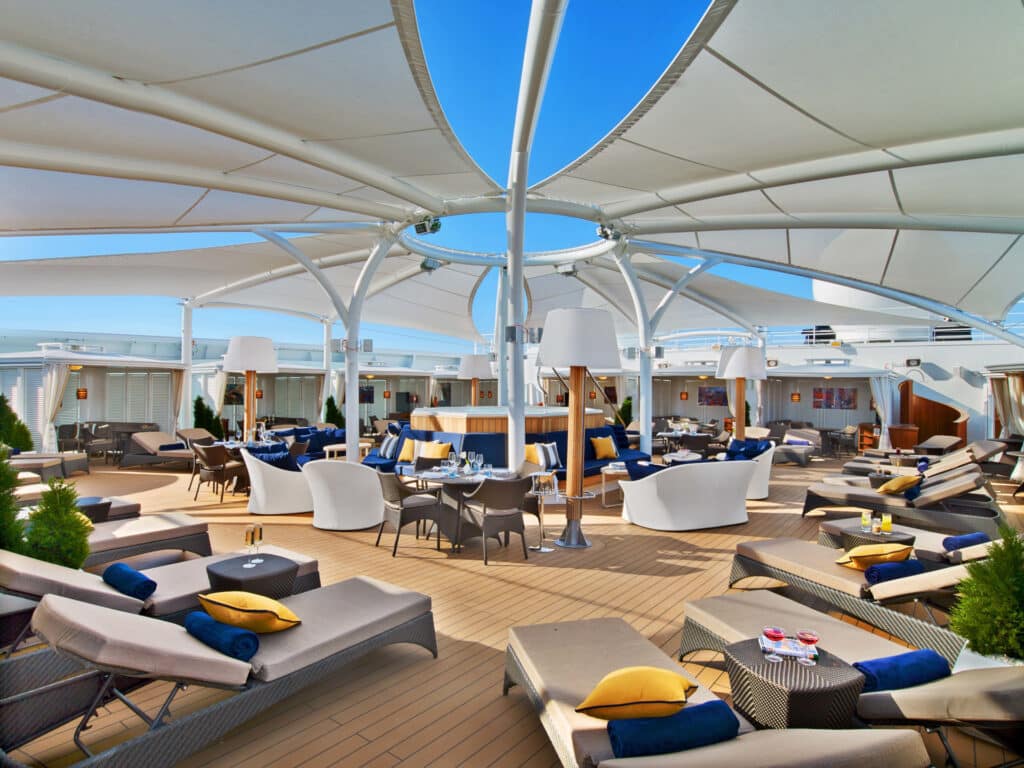

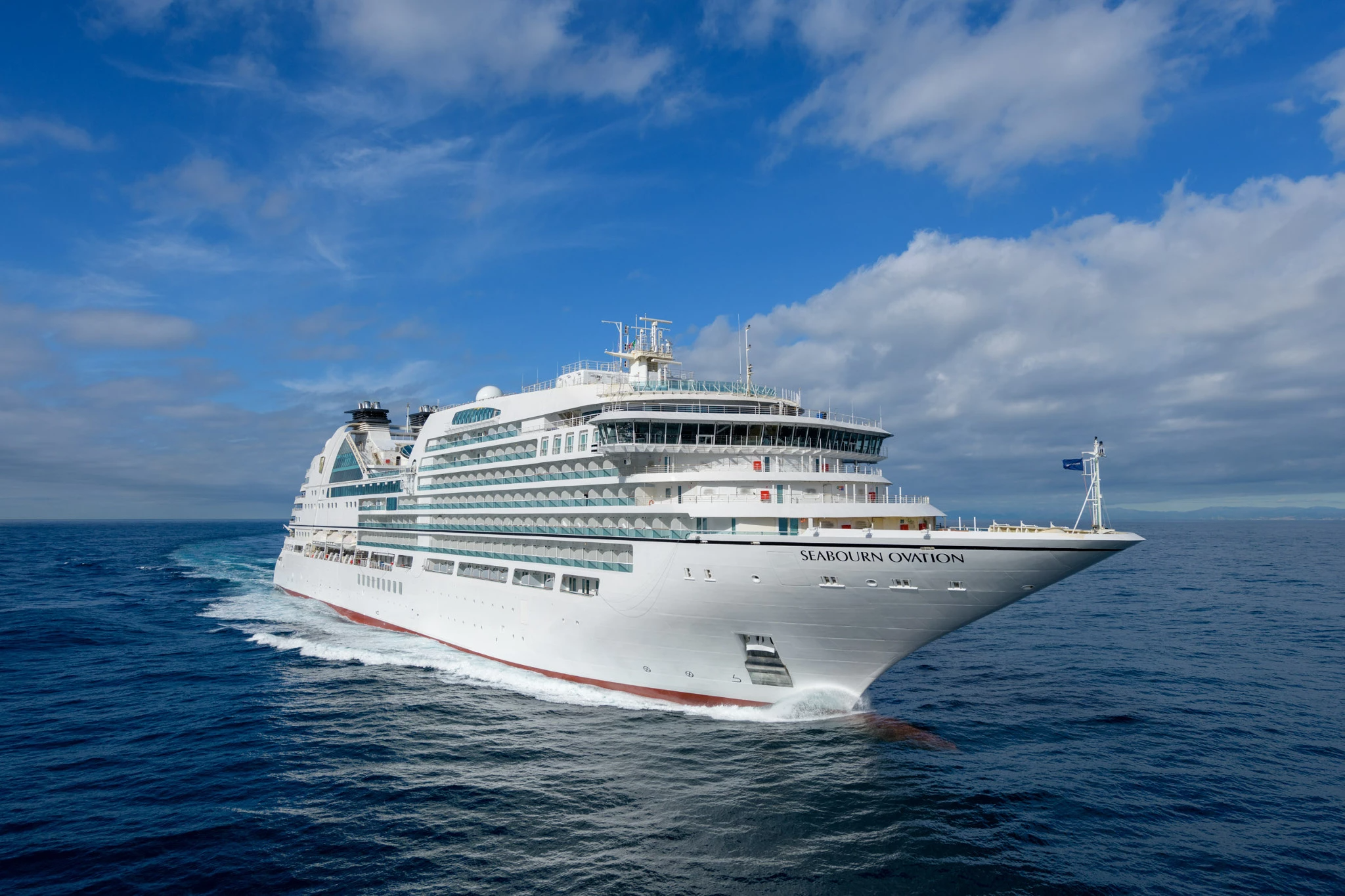


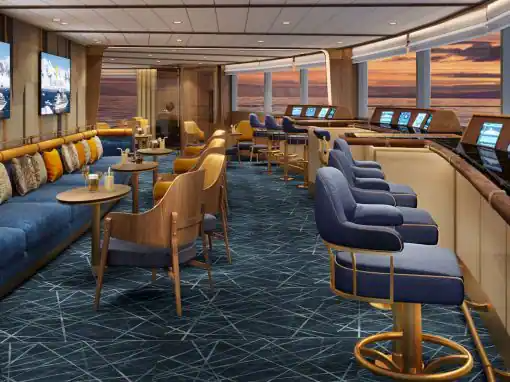
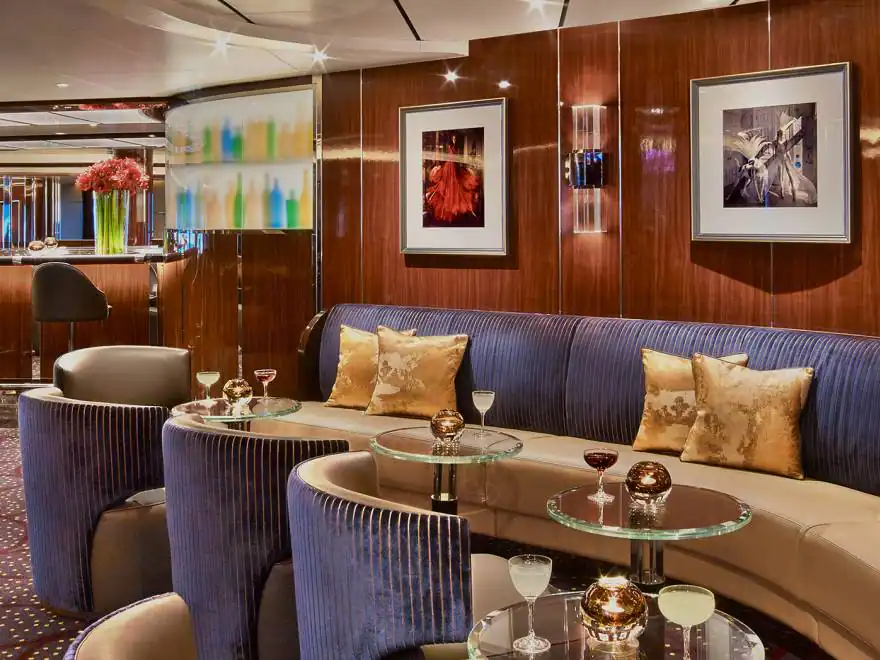
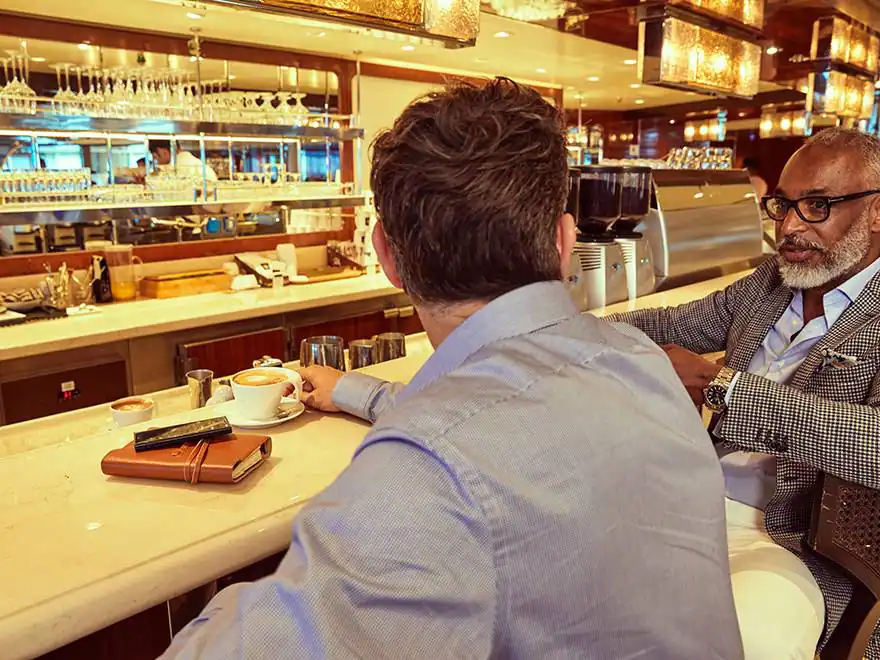
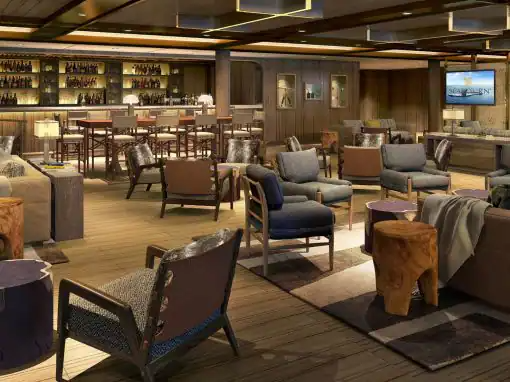
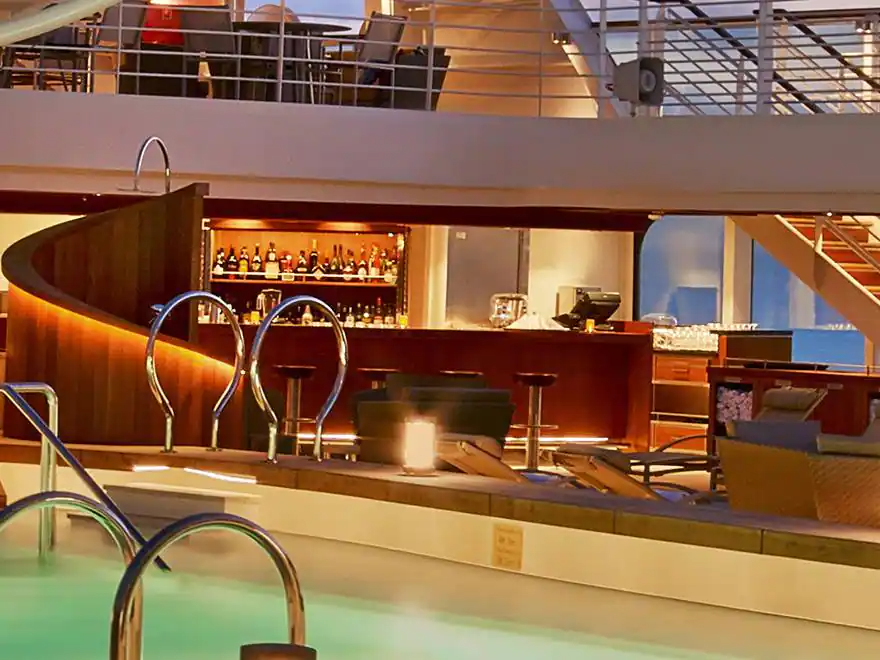

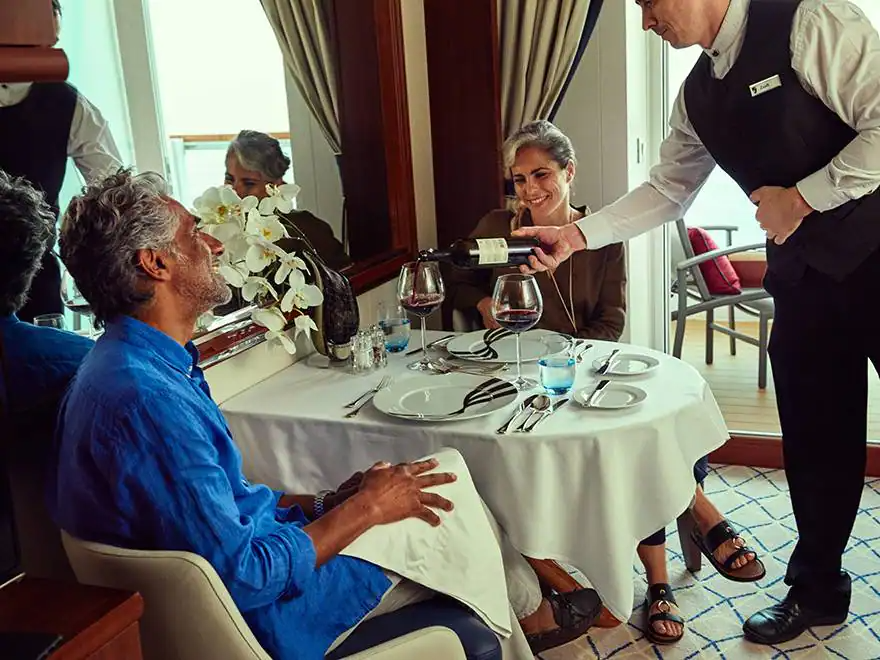
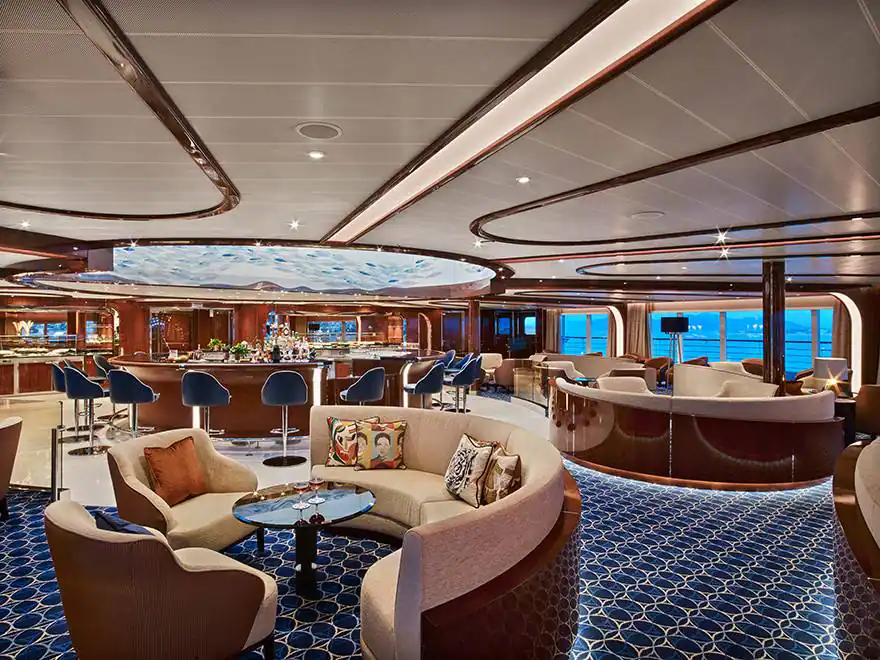
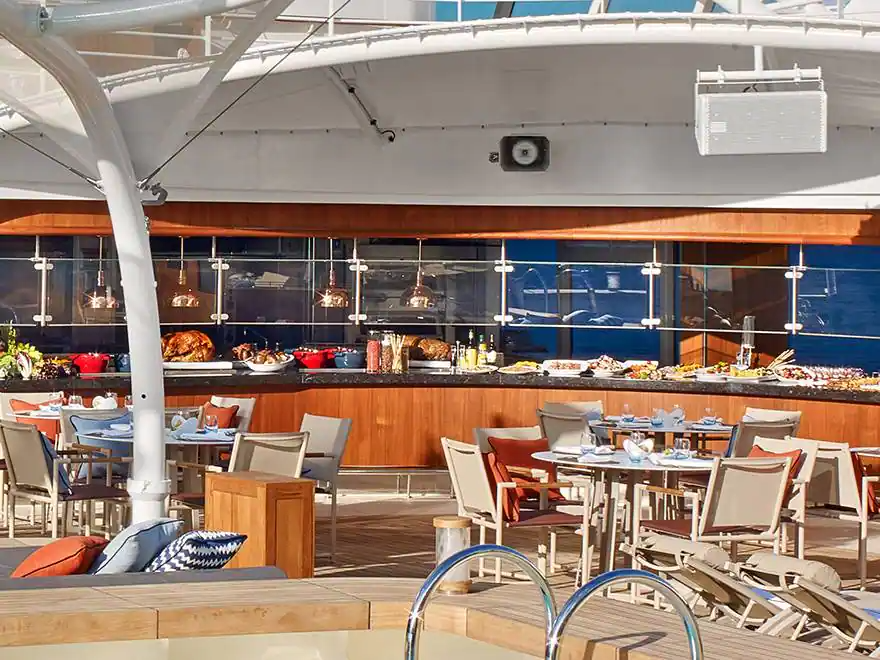
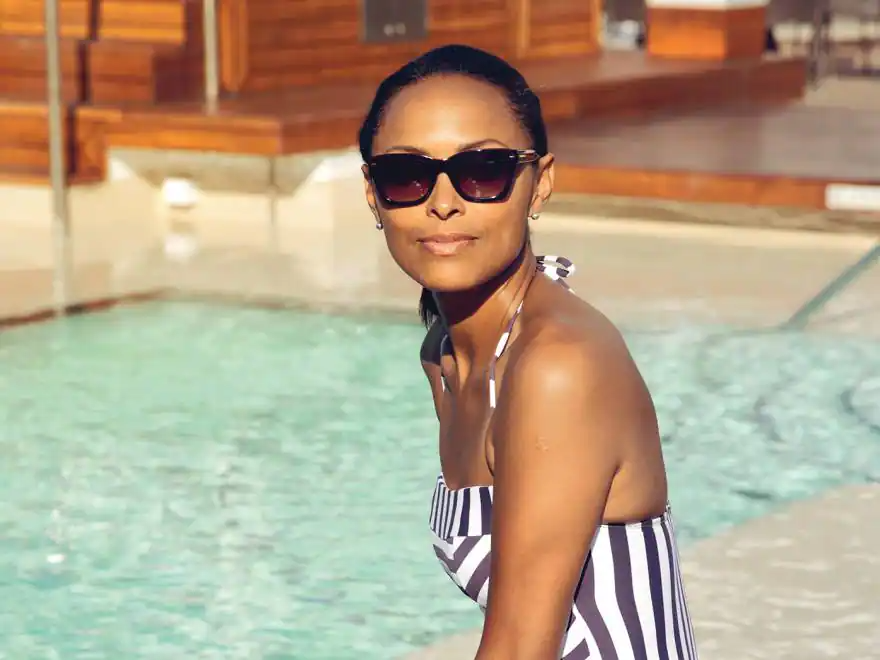
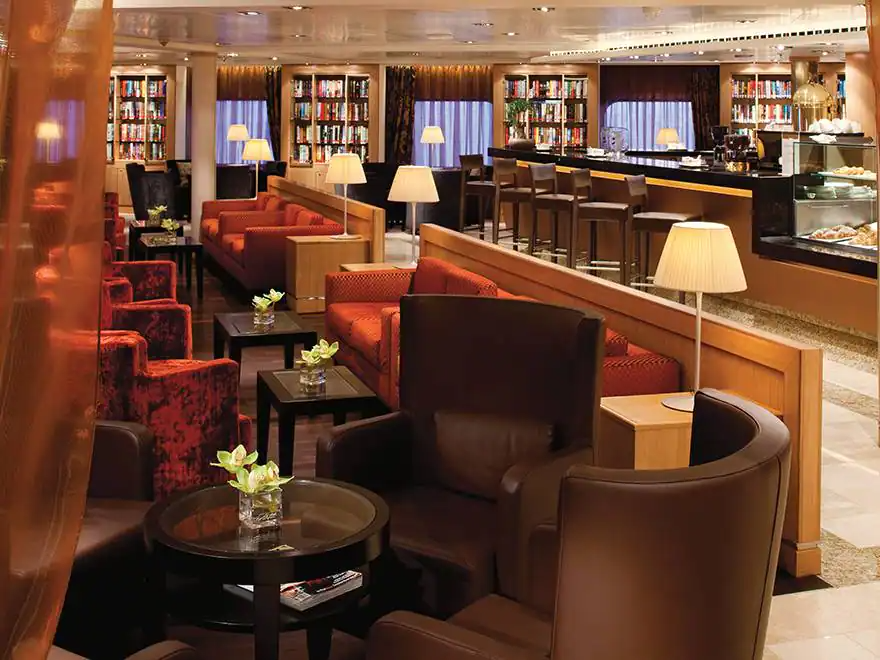
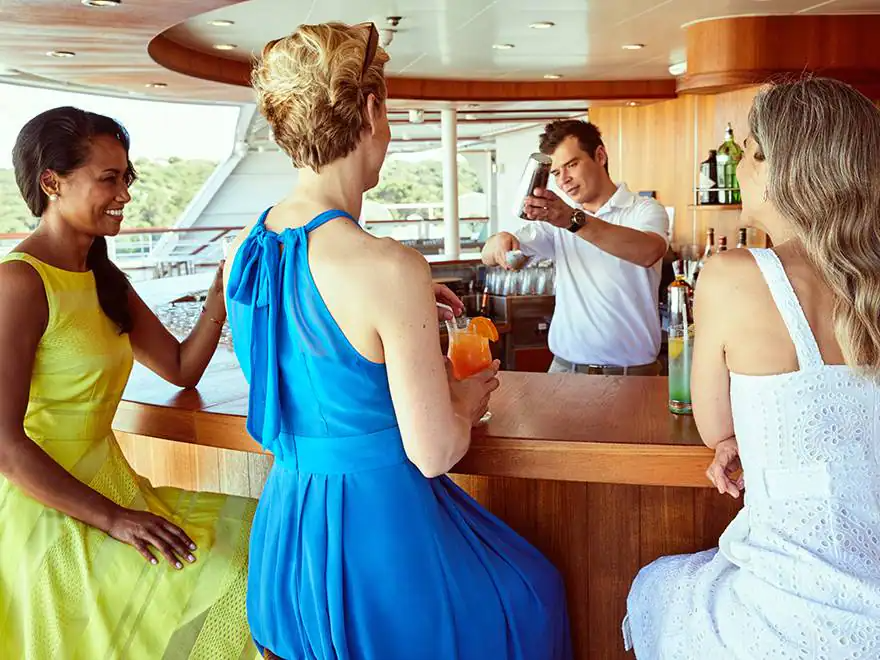
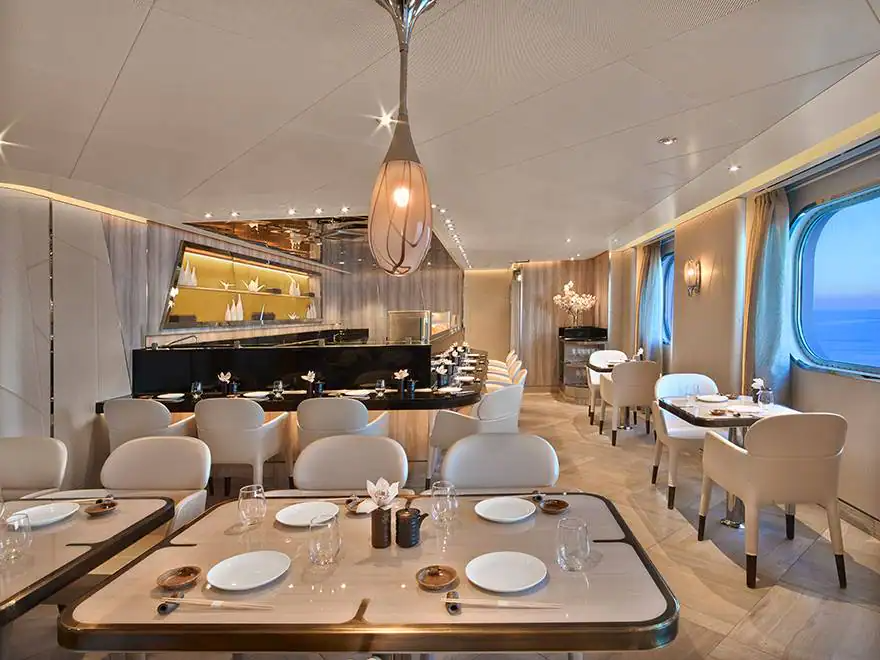
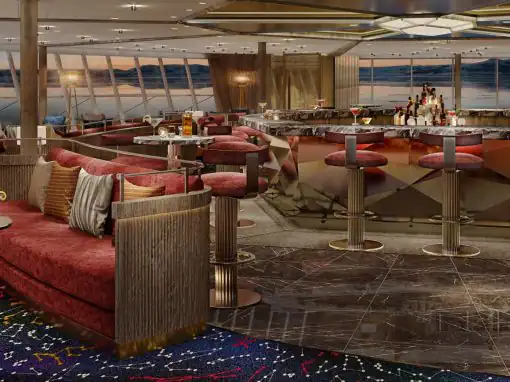
Introducing Seabourn Ovation, the sister-ship to the already prestigious Seabourn Encore. Seabourn Ovation represents another welcome stage in the evolution of small ship cruising, which Seabourn pioneered and has consistently expanded and enriched for all of our small ship cruises. Both ships will deliver a wealth of new concepts, a fresh vision and a host of illuminating ideas to delight the world’s most discerning travelers.
Coffee Bar
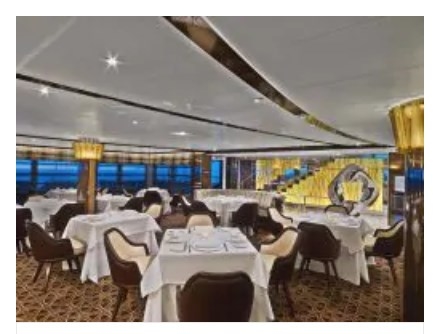
Dining Room
Mariners Patio Bar
Sky Bar
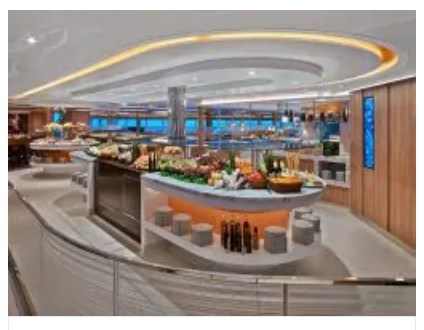
The Colonnade
Photo Gallery
Card Room
Spa
The Retreat
Whirlpool
Conference Room
Medical Centre
Observation Deck
Shops
The Terrace
Description
Introducing Seabourn Ovation, the sister-ship to the already prestigious Seabourn Encore. Seabourn Ovation represents another welcome stage in the evolution of small ship cruising, which Seabourn pioneered and has consistently expanded and enriched for all of our small ship cruises. Both ships will deliver a wealth of new concepts, a fresh vision and a host of illuminating ideas to delight the world’s most discerning travelers.
Food and Drink
Coffee Bar
Dining Room
Mariners Patio Bar
Sky Bar
The Colonnade
Entertainment
Photo Gallery
Recreational
Card Room
Relaxation
Spa
The Retreat
Whirlpool
Other
Conference Room
Medical Centre
Observation Deck
Shops
The Terrace
STATEROOMS
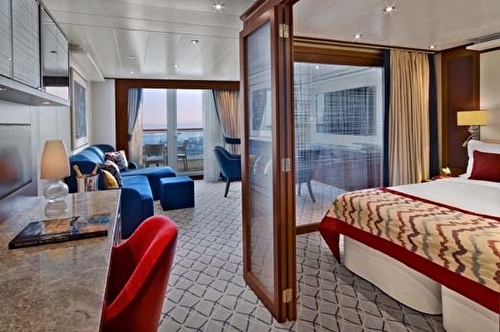
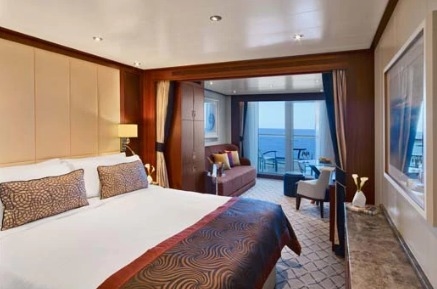
suite