

Lisbon to Lisbon
- 28 Sep ‘27
- 60 nights
- Departing from Lisbon
- Silver Dawn

-
Suite price from$69,100*/pp
YOUR ITINERARY
Lisbon - Oporto (Leixoes), Portugal - Vigo - Gibraltar - Malaga, Spain - Cartagena, Spain - Palma De Mallorca, Spain - Alcudia, Mallorca, Spain - Porto Mahon, Spain - Alghero, Italy - Ajaccio,Corsica, France - Civitavecchia - Naples, Italy - Agropoli - Giardini Naxos, Sicily - Valletta, Malta - Souda Bay, Greece - Nafplion, Greece - Syros, Greece - Bodrum, Turkey - Patmos, Greece - Mykonos, Greece - Athens (Piraeus), Greece - Istanbul, Turkey - Istanbul, Turkey - Cruise the Dardanelles - Rhodes, Greece - Heraklion, Crete, Greece - Gythion, Greece - Katakolon (Olympia), Greece - Ravenna, Italy - Trieste, Italy - Fusina (Venice) - Koper - Zadar, Croatia - Dubrovnik, Croatia - Split, Croatia - Kotor, Montenegro - Bari, Italy - Naples, Italy - Naples, Italy - Porto Santo Steffano - Livorno (Tuscany) - Monte Carlo, Monaco - Marseille, France - Sete, France - Barcelona, Spain - Barcelona, Spain - Valencia, Spain - Cartagena, Spain - Malaga, Spain - Tangier - Casablanca, Morocco - Cadiz, Spain - Lisbon
Lisbon, the capital of Portugal, is a city open to the sea a...
Lisbon, the capital of Portugal, is a city open to the sea and carefully planned with 18th-century elegance. Its founder is said to be the legendary Ulysses, but the theory of an original Phoenician settlement is probably more realistic. Known in Portugal as Lisboa, the city was inhabited by the Romans, Visigoths and, beginning in the 8th century, the Moors. Much of the 16th century was a period of great prosperity and overseas expansion for Portugal. Tragedy struck on All Saints’ Day in 1755 with a devastating earthquake that killed about 40,000 people. The destruction of Lisbon shocked the continent. As a result, the Baixa (lower city) emerged in a single phase of building, carried out in less than a decade by the royal minister, the Marques de Pombal. His carefully planned layout of a perfect neo-classical grid survived to this day and remains the heart of the city. Evidence of pre-quake Lisbon can still be seen in the Belém suburb and the old Moorish section of the Alfama that sprawls below the Castle of St. George.
Lisbon is a compact city on the banks of the Tagus River. Visitors find it easy to get around as many places of interest are in the vicinity of the central downtown area. There is a convenient bus and tram system and taxis are plentiful. Rossio Square, the heart of Lisbon since medieval times, is an ideal place to start exploring. After a fire destroyed parts of the historic neighborhood behind Rossio in 1988, many of the restored buildings emerged with modern interiors behind the original façades.
The city boasts a good many monuments and museums, such as the Jeronimos Monastery, Tower of Belém, the Royal Coach Museum and the Gulbenkian Museum. High above the Baixa is the Bairro Alto (upper city) with its teeming nightlife. The easiest way to connect between the two areas is via the public elevator designed by Gustave Eiffel.
Cruising up the Tagus River to the ship’s berth, you can already spot three of Lisbon’s famous landmarks: the Monument to the Discoveries, the Tower of Belém and the Statue of Christ, which welcomes visitors from its hilltop location high above Europe’s longest suspension bridge.
Lively, commercial Oporto is the second largest city ...
Lively, commercial Oporto is the second largest city in Portugal after Lisbon. Also called Porto for short, the word easily brings to mind the city’s most famous product – port wine.
Oporto’s strategic location on the north bank of the Douro River has accounted for the town’s importance since ancient times. The Romans built a fort here where their trading route crossed the Douro, and the Moors brought their own culture to the area. Oporto profited from provisioning crusaders en route to the Holy Land and enjoyed the riches from Portuguese maritime discoveries during the 15th and 16th centuries.
Located in in Galicia, in the northwest of Spain on the Portugu...
Located in in Galicia, in the northwest of Spain on the Portuguese border, Vigo is perhaps the country’s most underrated destination. Considered by many as “just’ an industrial fishing port (meaning the seafood rarely travels further than a mile to your plate), Vigo seduces everyone with its cuisine, landscape and warm Spanish welcomes. Like many of Galicia’s coastal towns, life in Vigo has been dictated by the ocean. View less
The city dates back to Roman times and Romanesque architecture such as the churches of Santa María de Castrelos, Santiago de Bembrive, San Salvador de Coruxo can be found all over the city. From the 16th-18th centuries it became alive with commercial trade and buccaneers looking for sunken treasure. The town still enjoys its status as having sunken treasure in its waters, and debates about who would own this if ever discovered periodically colour local conversations. The old town and fishermen’s quarter are worth exploring, although unfortunately with the port’s rapid expansion in the 20th century, many of the original fishermen’s houses were demolished. However, remnants of the city’s Medieval past are still visible and a trip along the Spanish-Portuguese border will reward you with the beautiful walled Medieval city of Tui and the Velansa Fortress. The 13th century fortress offers a splendid view of the fortified Cathedral of Tui on the opposite side of the River Miño. Mount Castro, a castle fortress actually in the city, commands a magnificent view of Vigo and the bay.
Gibraltar is the famous promontory located at the w...
Gibraltar is the famous promontory located at the western entrance of the Mediterranean, with Spain to the north and, across the Straits, Morocco to the south. The Straits, a channel 36 miles long that connects the Atlantic with the Mediterranean, are 27 miles wide at the west end, 8 miles at their narrowest and 15 miles between Gibraltar and Almina Point near Ceuta. Africa is clearly visible on a fine day. Gibraltar’s airport is known for its unusual runway that bisects the two-mile-long narrow isthmus linking the colony geographically to mainland Spain.
Situated on Spain’s Costa del Sol, Malaga i...
Situated on Spain’s Costa del Sol, Malaga is the region’s capital and a popular holiday destination. The city is known as the birthplace of Pablo Picasso and for the sweet Malaga dessert wines that come from the hilly vineyards just outside of town. Other points of interest include impressive Gothic architecture, the remains of a Moorish castle and several interesting museums. A pleasant town to explore, Malaga also serves as a popular starting point for trips to Granada and resorts along the Costa del Sol. Granada and the famed Alhambra are the region’s most outstanding attractions. Here, magnificent Moorish palaces and fortifications contrast sharply with Christian churches from Spain’s significant era of the 1492 Reconquest, in which King Ferdinand put an end to eight centuries of Moorish rule. Other worthwhile destinations from Malaga include such well-known resorts as Marbella and the white village of Mijas, located on the hillside above the coastal towns of Torremolinos and Fuengirola.
On the crossroads of mighty cultures, this Murcian port has ...
On the crossroads of mighty cultures, this Murcian port has endless ancient stories to share. A valuable natural harbour attracted many civilisations to this sun-bathed, southeasterly setting – following its foundation by the Carthaginians in 227 BC. Blending the imprints left by countless cultures on this global junction, the presence of everyone from the Vandals to the Phoenicians and Moors can be felt as you explore, walking between ruins and celebrated modernist architecture along Calle Mayor. Cartagena is crowned by the soaring Castillo de la Concepcion – rise to the stout castle aboard a panoramic lift. Inside, look through reams of archaeological treasures, or admire the rolling views down over the port and across the waters. Watch out for the electric blue peacocks who strut flamboyantly. Cartagena’s emergence as a visitor destination coincided with a stunning discovery in 1988 – the bowl of a gloriously preserved Roman Theatre. Enter to sit among the grandiose ancient venue, so evocative, you can’t help but imagine the historic performances that have graced its stage. Wander the breezy waterfront, looking across the narrow strait towards Africa’s distant haze, and spotting gleaming warships. Cartagena’s perfect harbour means it has been one of Spain’s oldest strategic navy positions since the 16th century. Settle to enjoy the joys of tapas in lively bars – sampling crisped paella, squid and honeyed-aubergine. Easter’s Semana Santa festivities are typically lively here, as hooded processions, lavish floats and sombre fiery displays roll through the streets.
The Balearics are comprised of 16 islands; the three p...
The Balearics are comprised of 16 islands; the three principal ones are Mallorca, Ibiza and Minorca. Carthaginians, Romans, Vandals and Arabs have invaded these islands over the centuries. Ruins show evidence of the prehistoric Talayot civilization, a megalithic culture that flourished here between 1500 BC and the Roman conquest. Today the islands are besieged by invaders of a different sort – hordes of tourists.
Lying 60 miles (97 km) off the Spanish mainland, the islands’ lush and rugged landscape combined with an extremely mild, sunny climate proves irresistible, especially to northern Europeans. As a result, the Balearics boast cosmopolitan resorts with lively nightlife and plenty of sports activities.
Mallorca (also spelled Majorca) is the largest of the islands, with an area of more than 1,400 square miles (3626 sq.km). The scenery is magnificent, with cliffs along indented shorelines jutting out of the sea and mountain ranges sheltering the plains from harsh sea breezes. The fertile plain in the centre is covered with almond and fig trees plus olive groves with some trees more than 1,000 years old. Tall pines, junipers and oaks line the mountain slopes.
Palma de Mallorca is the capital of the archipelago. A cosmopolitan city with sophisticated shops and restaurants, it also offers buildings of spectacular Moorish and Gothic architecture.
In the western part of Mallorca, nestled into the mountains, lies the village of Valldemosa. It is known for its Carthusian Monastery where Frédéric Chopin and George Sand spent the winter of 1838-39.
Nothing if not strategic, Alcúdia is the ideal base...
Nothing if not strategic, Alcúdia is the ideal base for exploring Mallorca’s north coast, with the 13-km-long (8-mile-long) beach from Port d’Alcúdia to C’an Picafort and the adjacent Playa de Muro, the bird-watchers’ paradise in the S’Albufera wetlands, and the spectacular drive along the corniche to Cap de Formentor. The charming little walled town itself is a capsule version of Mallorcan history: the first city here was a Roman settlement, in 123 BC.
Happy to sit out of the limelight that Ibiza and Majo...
Happy to sit out of the limelight that Ibiza and Majorca bathe in, Menorca lives life at its own pace, offering endless pine-tree fringed beaches and an appealing, mellow approach. The capital of Menorca is a bashful member of Balearic Islands, which wait off of the sunny Spanish coast. With atmospheric old towns, tiny fishing villages, and unspoiled beach coves, this is one of the group’s lesser-known and explored gems – and all the richer for it
Encircled by dramatic medieval walls, which rise abrupt...
Encircled by dramatic medieval walls, which rise abruptly from deep-blue waters, Alghero’s defences shelter one of Sardinia’s largest and most spectacular old towns. Uneven cobbled streets, rich history and a fiery Catalan flare provide a real depth of character, and the Coral Riviera’s pristine beaches, which stretch out nearby, help to make Alghero a real highlight of Sardinia. Alghero has changed hands numerous times over its tempestuous history, but it’s the Catalan influence that you’ll feel most acutely, as you explore.
It was the Catalans who upgraded the defensive ramparts of the ‘Sardinian Barcelonetta’ into the spectacular, imposing fortress we see today, enclosing the old town’s evocative knot of narrow streets and rose-gold-coloured masonry. Wander the streets at your leisure, enjoying the cooling shade of the tight, cobblestone streets with lemon-gelato in hand, or enjoying fresh tuna steak at the bustling La Boqueria market. Alghero Cathedral is hidden amid the labyrinth of narrow streets, but it’s the distinctive Baroque-dome of Chiesa di San Michele that you’ll immediately notice peeking ostentatiously over the terracotta roofs of the old town, flaunting its rainbow-coloured patterning. Plush restaurants revel in Alghero’s historical collision of cultures and produce delicious fare like plump clams tangled in tagliatelle, and succulent porcetto pork – slowly roasted to perfection in smoky wood ovens. Wash it down with mirto, a crushed berry liqueur, or sample the fruits of local vineyards, with a platter of Sardinia’s renowned pecorino sheep’s cheese. The city dominates Sardinia’s Coral Riviera – so named because of the red coral found here that’s been used for jewellery since Roman times. Lie back and listen to the waves washing ashore at Spiaggia di Maria Pia beach, breathing in the smell of pine-needles on the breeze.
Ajaccio is Corsica’s largest town. As such, it retains th...
Ajaccio is Corsica’s largest town. As such, it retains the image of a typical French Mediterranean resort – palm trees, street cafés and a marina full of yachts from around the world. Set in a magnificent bay with a shadowy mountain range as a scenic backdrop, its first image is of yellow-toned buildings and a majestic citadel.
Ajaccio also serves as a popular departure point for trips into Corsica’s rugged interior
All roads lead to Rome, and with good reason – this city ...
All roads lead to Rome, and with good reason – this city is one of the world’s most thrilling, offering unmatched history along every street. An evocative, inspiring and utterly artistic capital of unrivalled cultural impact, Rome is a city of back-to-back landmarks, which will take you on an exhilarating journey through the ages. This may be one of the world’s oldest cities, but it’s well and truly lived in. The ruins are punctuated with murmuring cafes, and the outdoor seating of restaurants sprawls out across piazzas, enticing you to sample tangles of creamy pasta and crispy pizzas. Rome’s incredible Roman Forum is littered with the ruins of its ancient administrations, which have stood firm for 2,000 years, since the times when the area was the centre of the Western world. Few sites are more simultaneously beautiful and haunting than that of the storied Colosseum, which looms deep into Rome’s rich blue sky. Take a tour to learn details of the grisly goings-on within. The best way to experience Rome is to wander its streets, gelato in hand. There is a lot to see here – whether it’s the domed spectacle of the Pantheon, or the elaborate flowing waters and artistry of the Trevi Fountain. Vatican City is an astonishing, colossal display of Catholic grandeur, while the Spanish Steps – crowned by the Trinità dei Monti church – offer a beautiful spot to gather and soak up the lively atmosphere of this humming city. With so much on the to-do list, you’ll relish the breaks you take, enjoying simple pleasures like a strong espresso, or fresh pasta with tomato sauce and ripped basil.
The region of Campania was home to Greeks settlers some 300 ye...
The region of Campania was home to Greeks settlers some 300 years before Rome was founded. Pompeii, too, was a Greek town before being conquered by the Romans during the 5th century BC. It was under the Romans that Pompeii flourished and grew prosperous. When Mount Vesuvius erupted in 79 AD, the population of 20,000 was wiped out, but dozens of buildings were preserved under layers of cinder more than 20 feet deep. The most important finds from Pompeii are displayed in Naples’ National Archaeological Museum. A visit here will no doubt enhance a visit to ancient Pompeii.
Hugging a long, sweeping bay, Giardini Naxos welcomes you ashore...
Hugging a long, sweeping bay, Giardini Naxos welcomes you ashore to some of Sicily’s most scenic and historic sites. Naxos was the first Greek settlement on Sicily, and it is surrounded by remarkable remains and swirling mythology. With a long arc of sun-soaked golden sand, you can kick back by the waves – and cool off with a dip into the sea’s refreshing embrace. Up above the seaside revelry, the spectacular Taormina hillside town perches – containing rich Roman and Greek history. View less
Visit to encounter one of Sicily’s best views, as you look down over the rejuvenating blue of the sea, and the looming backdrop of Mount Etna rising in the distance. The majestic, honey-coloured Greek theatre is a highlight, standing before the distant loom of the volcano. Head towards the puffs of cloud, and wisps of smoke, that gather around the peak of Sicily’s mighty volcano, which is among the most active in Europe. Arrive through vineyards, thriving in this fertile soil, before taking the 1,737-metre incline to the summit of the legendary mountain of fire, across fields of solidified lava flows. Known to the Greeks as the home of the God of Fire, and the one-eyed Cyclops, the mountain continues to amaze and awe with its restless power. Vineyards carpet the scenery – interrupted by occasional cactai and citrus groves – and produce some of Sicily’s most refined flavors. Enjoy a glass of wine on Giardini Naxos’ seafront, and toast your time on these rich Sicilian shores.
Perched high on the imposing Sciberras Peninsula, Vall...
Perched high on the imposing Sciberras Peninsula, Valletta immediately presents its massive, protective walls and vertical bastions to visitors arriving by sea. Rising to 47 metres in places, the fortifications protect lavish palaces, grand domes and illustrious gardens. Built by the Knights of St John on the narrow peninsular, Valletta is a compact, richly historical treasure trove of Baroque wonders. Ascend to reach the restful, flower-filled Upper Barrakka Gardens, where cannons fire and boom in salute at noon each day, sending echoing cracks of noise out across the waves below. View less
Recognised as 2018’s European Capital of Culture, Valletta is a fascinating and dense haven of history and intrigue. A busy, bustling capital, the breathtaking St John’s Cathedral – commissioned in 1572 – is almost concealed among its narrow streets. The relatively modest exterior is counterpointed by a staggeringly opulent, gold-leaf bathed interior, containing a Caravaggio masterpiece – the shadowy vision of the Beheading of St John. Cinematic and magnificent, Valletta has served as a filming location for Game of Thrones – but real epic history abounds on this rocky isle too. From the prehistoric and megalithic sites of the Hypogeum of Paola and Tarxien, to the fascinating War Museum at Fort St Elmo. Mdina also waits nearby, and the former medieval capital is a striking contrast to the island’s main city. Cars are barred from its streets, and it offers endlessly atmospheric old-time wanders. With a strategic positioning in the Mediterranean, Malta is a jewel that many have wrestled for over the centuries. Independence from Britain was finally achieved in 1964, but the close allegiance remains evident, with English recognised as an official language, cars driving on the left, and red post boxes and telephone gleaming in Malta’s sunshine.
Enter Souda Bay to land on Greece’s largest island, a...
Enter Souda Bay to land on Greece’s largest island, and explore the sun-soaked charms of this fascinating land of legends, landscapes and luxuries. Packed with beautiful beaches and rich maritime history, Souda Bay’s huge natural harbour is a spectacular entrance, opening up the treasures of Crete’s many well-stocked museums, rich archaeological sites, and charming Venetian fishing towns. View less
The massive natural harbour of Souda Bay also makes the site an interesting spot for military history – with a huge NATO base here, as well as the Souda Bay War Cemetery, which honours Allied soldiers of World War II. Soak up some Mediterranean sunshine by heading straight to one of the luxurious white sand beaches – where you can recline to a soundtrack of fizzing waves, and dine with sparkling sea views stretching out before you. Explore olive groves producing golden oil, and savour the deep, fruity flavours. The island’s renowned wineries, also invite you to sample lovingly-crafted Vilana grape wines. Rethymnon’s old town and star-shaped, seafront fortress are impressive sites to explore, or you can head to Akrotiri to discover the Arkadi Monastery’s role in the Cretan resistance – and visit the site where the Greek flag was hoisted high into the sky by rebels in 1897. Crete retains its independent spirit but has gathered countless influences over its history. The island’s most beautiful Venetian port – Chania – is close by, and its picturesque old town and collage of historical influences are a highlight of any trip.
The former capital of Greece is a popular town on the east...
The former capital of Greece is a popular town on the eastern coast of the Peloponnese. Stately, medieval architecture recalls its Venetian occupation in the 15th century. The most dominant structure from this time is the crenellated Palamidi Fortress towering high above the town.
The lively port and resort town spreads around a scenic harbor. Its center is crisscrossed by narrow streets, which are best negotiated on foot. Several monuments remain from the towns’ Turkish past, including a mosque and the parliament building. Relics from ancient sites are on display in the Archaeological Museum. Those who are interested in handicrafts and traditional costumes may enjoy a visit to the Folk Art Museum.
Enjoy exploring along the waterfront and around the main square of the Old Town. Open-air cafés and restaurants invite you for a break to enjoy a light snack or a seafood lunch while taking in the local atmosphere.
Spread out between two crescent bays, Bodrum exud...
Spread out between two crescent bays, Bodrum exudes an “artsy” ambiance. With its gleaming white houses and colorful flower gardens it is one of the prettiest resorts on the South Aegean coast. Recently, it has become very popular with the jet set crowd, while at the same time maintaining an intimate air; there are strict zoning laws preventing over development. Bodrum’s main draws are pristine beaches, a busy yachting center and historic sites – a great combination to attract those sailing the Aegean Sea.
Bodrum was known in antiquity as the site of Halicarnassus, a city whose origin dates back as far as 1000 BC. It was known for its splendid mausoleum, an enormous white marble tomb that King Mausolus had planned for himself. It was one of the Seven Wonders of the Ancient World. Although the structure was obliterated by the ravages of time, archaeologists have arranged models and drawings at the site to provide an idea of what the mausoleum looked like. Bodrum was also the birthplace of Herodotus, who wrote the first comprehensive world history. Today’s major cultural attraction is the massive Castle of St. Peter.
The Holy Isle of Patmos, one of the smaller Dodecane...
The Holy Isle of Patmos, one of the smaller Dodecanese Islands, occupies a narrow strip of land with numerous rocky hills and scant vegetation. The interior is sparsely populated with mostly shepherds and fishermen. In contrast, the waterfront areas see plenty of tourists during the summer months.
There are only two main villages, Chora and Scala; whitewashed houses face Scala harbor or are scattered over the hillsides. The island’s mild, healthy climate, year-round sunshine, delightful coves and numerous chapels combine to form a picture of unique beauty. The history of Patmos can be traced to Dorian and Ionian settlers who established a sanctuary to worship the goddess Artemis.
The island of Mykonos is the most easterly of the northern C...
The island of Mykonos is the most easterly of the northern Cyclades. Its attractive setting and other captivating attributes make it one of the most celebrated holiday destinations in Greece. Mykonos Town is a colorful maze of narrow streets lined by whitewashed houses with bright blue doors and shutters. During the 1960s, it was the Bohemian jet set that discovered Mykonos. Many old houses along the waterfront are now restaurants, bars and discos, catering to an international yachting crowd. The tiny town of cube-shaped houses extends in a semicircle around the picturesque bay. As an attractive backdrop, the famous windmills are lined up like toy soldiers on the hillside, vestiges of a time when wind power was used to grind the island’s grain.
A city of legend, civilisation and enduring culture, ...
A city of legend, civilisation and enduring culture, Athens is a majestic and magical urban sprawl. Extraordinary elegance and grace combine with grit and graft in Greece’s capital, where highways encase ruins from antiquity, and gleaming museums and galleries stand beside concrete sprayed with edgy street art. These contrasts enhance and elevate the wonders of this 2,500-year-old city, however, which can count notable contributions to philosophy, drama and democracy, among its global legacy. Piraeus’ giant port and naval base welcome you to the edge of the Athens’ urban area.
From there it’s a simple jaunt to the centre. The majestic ancient citadel of the Acropolis dominates an elevated platform and is a constant presence as you explore the city. The wonderful remains of the columned temple of the Parthenon – which date back to the 5th century BC – stand here, representing the pinnacle of classical architecture. The nearby Acropolis Museum adds context to your visit and frames the broad views from its giant glass windows. Or rise up Mount Lycabettus, to be rewarded with perhaps Athens’ best panorama of the Acropolis sitting high over the city on its grand stage. See the marble horseshoe of the Old Olympic Stadium, where the first modern Olympics were held in 1896, for more of the city’s enduring legacy. Elsewhere, golden beaches and temples stretch out along the coastline, should you wish to explore a little further afield. Coffee is an art form to the Greeks, and it’s an unwritten rule that coffee time must never be rushed. So prepare to settle down for a couple of hours and lose yourself in a good chat. Feeling hungry – try traditional souvlaki made with sauces handed from generation to generation.
A chaotic, colossal collision of east and west – st...
A chaotic, colossal collision of east and west – start your day in Europe and end it in Asia, all without breaking a sweat. Sprawling across two continents, the city has been toed, froed and yanked between countless civilisations over its history, leaving a multi-layered, majestic tapestry of culture to untangle. An army of narrow minarets puncture the skyline, while the soaring towers of palaces and labyrinths of bazaars – where bargains are the reward for brave hagglers – fill up this dynamic city of 15 million people. View less
With a rich portfolio of Byzantine and Ottoman architecture, Istanbul enjoys one of the world’s most dynamic skylines and has an intense, infectious energy. The vast Aya Sofya is the starting point for exploring this huge city’s deep wealth of cultural treasures. Built in the 6th century as a Greek Orthodox church, it was later transformed into an Ottoman imperial mosque – and latterly a museum. Cast your eyes up to take in the full scale of the colossal dome, one of the world’s largest, which floats on a magnificent bed of light. See the Blue Mosque, with its glorious blue İznik tiles, or head to the Galata Tower which was once the tallest structure in Istanbul, and is ideal for a panoramic view of the city. Grab handfuls of dates and spices, shop for jewellery and patterned fabrics as you’re swallowed whole by the Grand Bazaar – one of the world’s biggest and busiest covered indoor markets. To understand Istanbul is to visit its kahvehans. Few rituals are taken as seriously as Turkish coffee – prepared to be incredibly strong. Sweeten the aftertaste with Turkish delight, or baklava – try the smooth pistachio version called kuru baklava.
A chaotic, colossal collision of east and west ̵...
A chaotic, colossal collision of east and west – start your day in Europe and end it in Asia, all without breaking a sweat. Sprawling across two continents, the city has been toed, froed and yanked between countless civilisations over its history, leaving a multi-layered, majestic tapestry of culture to untangle. An army of narrow minarets puncture the skyline, while the soaring towers of palaces and labyrinths of bazaars – where bargains are the reward for brave hagglers – fill up this dynamic city of 15 million people. View less
With a rich portfolio of Byzantine and Ottoman architecture, Istanbul enjoys one of the world’s most dynamic skylines and has an intense, infectious energy. The vast Aya Sofya is the starting point for exploring this huge city’s deep wealth of cultural treasures. Built in the 6th century as a Greek Orthodox church, it was later transformed into an Ottoman imperial mosque – and latterly a museum. Cast your eyes up to take in the full scale of the colossal dome, one of the world’s largest, which floats on a magnificent bed of light. See the Blue Mosque, with its glorious blue İznik tiles, or head to the Galata Tower which was once the tallest structure in Istanbul, and is ideal for a panoramic view of the city. Grab handfuls of dates and spices, shop for jewellery and patterned fabrics as you’re swallowed whole by the Grand Bazaar – one of the world’s biggest and busiest covered indoor markets. To understand Istanbul is to visit its kahvehans. Few rituals are taken as seriously as Turkish coffee – prepared to be incredibly strong. Sweeten the aftertaste with Turkish delight, or baklava – try the smooth pistachio version called kuru baklava.
Located only seven miles from the Turkish coast, R...
Located only seven miles from the Turkish coast, Rhodes is one of Greece’s favored vacation centers. In ancient times, the entrance to its harbor featured a celebrated landmark, the Colossus of Rhodes. The 105-foot statue rose from a 35-foot stone base and was considered one of the Seven Wonders of the Ancient World. Rhodes was an important cultural center with a well-known School of Rhetoric attended by such historical figures as Cicero and Caesar. From a school for sculptors came the famous Laocoon group, which is now in the Vatican Museum. Rhodes’ most famous attractions originated with the Knights of St. John, who occupied parts of the island from 1308 to 1522. As their legacy they left a medieval town, dominated by the Palace of the Grand Masters and the Knights’ Hospital. The Old Town is encircled by one of the best-preserved walls in Europe. In addition to buildings that showcase the legacy of the Knights of St. John, there are plenty of shops and dining opportunities throughout the Old Town.
It may not be the prettiest place in Crete, but Herak...
It may not be the prettiest place in Crete, but Heraklion’s patchwork of history, bustling activity and cultural intrigue makes it the perfect change of pace. This is certainly no sleepy island fishing village, and Greece’s fifth-largest city is adorned with a rich collection of quality museums, ancient ruins from antiquity, and a lively culture of its own. View less
A refreshing shift-up from the many quaint beach towns and fishing villages you’ll encounter in the Greek islands, Heraklion – also known as Iraklio – has great shopping, extraordinary history and is the ideal base for ventures to the archaeological treasures of Crete. Traded by the Arabic, Venetian and Ottoman empires over the years, Heraklion is a multi-layered place with fascinating tales to tell. The city’s impressive Venetian fortress, which waits over the gently rolling waves of the gleaming Mediterranean, welcomes you ashore. A stroll out along the seawall, alongside creaking fishing boats, will take you out to the squat fortifications that have stood since 1540. Climb to the top for views out across the water, back towards the city’s waterfront. The sun-roasted earth outside the city hides treasures from the realms of history, including the Bronze Age remnants of Europe’s oldest city, Knossos. A visit to the fantastic Archaeological Museum of Heraklion ties all of this history together and exhibits relics from the civilisations and eras of Crete’s past. Elsewhere, Daidalou’s pedestrianised paving is a charming stroll through Heraklion’s shops, with streets branching off to café-lined plazas and twinkling fountains. Stop to try local food – like fresh feta and olive sprinkled dakos mezze – all washed down with a sample of local raki brandy.
One of the most beautiful parts of this region of the Pelop...
One of the most beautiful parts of this region of the Peloponnese is the plain of Laconia which extends from Sparta to the port of Gythion. The many neo-classical houses of this harbor town are built on the slopes of Mount Kourmaros. Aside from its remaining ancient theater and cultural museum, visitors can enjoy local beaches and a variety of dining opportunities. The inhabitants of Gythion claim Hercules and Apollo as its founders. According to mythology, Paris and Helen of Troy were reputed to have spent their first night together on nearby ancient Kranae, now called Marathonissi. Enlarging the natural harbor, it was used by the Spartans as their naval base and the main port of trade. Today Gythion is visited mostly for its scenic beauty and access to numerous historical sites. These include the cliffside city of Mistra, one of the finest surviving examples of Byzantine architecture in Greece, and ancient Sparta.
The tiny port of Katakolon serves primarily as the s...
The tiny port of Katakolon serves primarily as the starting point for an excursion to the archaeological site of ancient Olympia. Adjacent to the port is the small village of Katakolon with a few souvenir shops and typical local restaurants. Ancient Olympia, the great Panhellenic sanctuary, is located 21 miles from the port.
The site of ancient Olympia spreads out at the foot of wooded Mount Kronos. Excavations began in 1875; they are considered one of archaeology’s great achievements. A direct consequence was the revival of the Olympic Games by Baron Pierre de Coubertin.
Today’s visitors walk among the ruins and reflect on their significance. Don’t miss the site where the Olympic flame is lit even today for the modern games.
Ravenna is a city in Emilia-Romagna, Italy. It’s k...
Ravenna is a city in Emilia-Romagna, Italy. It’s known for the colorful mosaics adorning many of its central buildings, like the octagonal Basilica di San Vitale, the 6th-century Basilica di Sant’Apollinare Nuovo and the cross-shaped Mausoleo di Galla Placidia. North of the center, the Mausoleo di Teodorico built in the 6th century for King Theodoric the Great, is a Gothic, circular stone tomb with a monolithic dome
A city happy to keep one foot resolutely in its beautiful, il...
A city happy to keep one foot resolutely in its beautiful, illustrious past, Trieste is a treasure, which sits on a historical frontier of civilisations and cultures. Nestled on the coast by the Slovenian border, the city soaked up many influences before returning to Italy in 1954. Wealth as a trading hub helped to shape Trieste’s grand piazzas and soaring artistic architectural achievements. The legendary Bora wind is greeted like an old friend, and it buffs the city in winter. Just like Trieste itself, it will take your breath away. View less
Piazza Unità d’Italia is the grand, central square, and it opens up to the lap of blue waves at one end. Settle in for a quick caffeine hit in this coffee capital – a word of warning, however, most Trieste baristas don’t serve cappuccinos – so plump for a caffè latte instead. The God of the Sea, Neptune, is honoured in a fountain at Piazza del Borsa nearby. Canale Grande is a centrepiece and was built in the 18th century to allow boats to unload their wares and trade. Lined by grandiose, neoclassical buildings, you can enjoy a picturesque stroll by the water. Three pretty bridges span it, while little boats bob and jostle below. Glorious castles crown the area, towering from esteemed vineyards. Don’t miss the fairytale castle of Miramare, which watches over the azure Gulf of Trieste, and looms above glorious gardens. Trieste Cathedral is a constant and reassuring presence for the city, standing on a hilltop overlooking the old town – it features an enchanting chandelier and remarkable painted ceiling.
Losing none of its allure over the years, this float...
Losing none of its allure over the years, this floating city of canals, bridges and masks is a place of eternal beauty and enduring elegance. The lagoon of more than 100 islands is a heavenly sight, transporting visitors on a journey through time – from its Roman inception, through centuries of trade to the modern face we see today. Navigate Venice’s sparkling waterways by romantic gondola, or on cruises along wide canal boulevards. Span the Grand Canal over its iconic original crossing, the Rialto Bridge, which – with its parade of tiny shops – gives some of the city’s most endearing views. If the crowds unsettle you at any point, take two turns away from the main thoroughfares to find peace alone, amid the city’s labyrinth of tiny streets. Hurry to Piazza San Marco to be immersed in Venice’s elegant glory. Basilica San Marco transports you back to the wealthy days of the Doges, who ruled for over 1,000 years. Initially their private chapel, it’s now decorated with beautiful Byzantine mosaics. Nearby the Campanile di San Marco bell tower offers views over the higgledy-piggledy rooftops of times gone by. Just a hop skip and a jump around the corner is the Doge’s Palace, where the levels of opulence ramp up even further. Justice was meted out in this stunning Palace, with the guilty walking to the cells across the covered Bridge of Sighs. Vaporetto trips to local islands offer even more adventures to float your boat, whether it’s Murano with its world-famous glass, Torcello with its amazing Cathedrals, or Burano with its handmade lace and delightfully colourful painted houses.
Koper is a port city in Slovenia, on the country̵...
Koper is a port city in Slovenia, on the country’s Adriatic coastline. Its medieval old town centers around Titov Trg, a square with Venetian-influenced landmarks such as the Praetorian Palace and a Gothic-style loggia, while nearby Da Ponte Fountain is a replica of Venice’s famed Rialto Bridge
Croatia’s Capital of Cool, Zadar is a dazzling mesh of i...
Croatia’s Capital of Cool, Zadar is a dazzling mesh of influences and creativity. Romans founded the city before the Venetians, Austrians, French and Italians all had their say, leaving a wealth of architectural interest. Glorious turquoise-water beaches and heavenly waterfalls also lie within easy reach of this energetic city of festivals and outdoor fun. See the old town, with its robust city walls, boasting decorative stone gateways and marble streets. View less
The church of St Donatus, was built from stones pillaged from the Roman forum, while Zadar Cathedral – Dalmatia’s biggest – stands among the many architectural treats of this city, which was once an impenetrable stronghold of Venice’s republic. Head for the ‘pillar of shame’ with its chains to humiliate the criminals of a bygone time – or succumb to the tempting treats of shopping in the market. The sparkling Adriatic’s waters calls you, and Kolovare Beach is a mere ten-minute stroll from the old town. A day trip to Kornat National Park – which incorporates the Zadar Archipelago’s immaculate scattering of beach-fringed islands – or to the divine waterfalls of Plitvice Lakes National Park, will introduce you to more of Croatia’s thrilling natural beauty. The sea truly does sing here in Zadar, thanks to a unique waterfront artwork, which encapsulates the city’s playful spirit. Designed to make music when the waves wash over it, the ebb and flow of the Adriatic, plays the Sea Organ instrument like a maestro. Not far away, the Monument to the Sun is a 22-metre-wide disc, which gathers the sun’s rays during the sunny days, and releases the solar energy in the form of a magical light show after dark. Sit and admire the artwork coming to life, as one of the city’s famous sunsets plays out before you.
Croatia’s crowning glory rears up vertically from the t...
Croatia’s crowning glory rears up vertically from the tranquil waters of the Adriatic, and Dubrovnik’s daunting fortresses town is a truly imposing sight to behold. Encircled by chunky stone walls so thick and dramatic they could have been purpose-built as a film set, this city’s unmatched old town is the setting for countless films and shows – from Star Wars to Robin Hood, Game of Thrones and every production in-between seeking a truly authentic medieval flavour.
This fantasy fortress’s walls – which are no less than 12-metres thick at places – are certainly not just for show, however. They kept Dubrovnik safe when it was a maritime republic and they were besieged as recently as 1991, when Serbian and Montenegrin forces attacked, as Yugoslavia broke apart. Fully restored now, the stone streets of the city take you through a beautiful mosaic of architectural splendour, baroque churches and splashing fountains. Tapering alleys rocket up from the central boulevard of Stradun, offering spectacular views down, but you’ll need to walk the city walls to appreciate the fortress city’s full scale. Banking up sharply to the rear, you can gaze across an ocean of terracotta roofs and church spires, clamouring together before the sparkling Adriatic. Visit the neighbouring fort of Lovrijenac, for another perspective, or swing up to Srd fortress’s glorious panorama on a cable car. Dubrovnik’s streets are crammed with eateries and candlelit tables, where couples splash wine into glasses and enjoy gnocchi mixed with creamy truffle sauces. Nearby beaches like Banje are also close by, and hidden bays reward the intrepid who venture out beyond the old town. Take sunset drinks to sit back and watch as flotillas of sea kayaks roll by, or sail on the pristine waters to explore island gems like Lokrum – where peacocks are the only permanent residents.
Split is a busy port with numerous ferries operat...
Split is a busy port with numerous ferries operating to and from nearby islands. It is also a popular resort with beaches, pleasant promenades and good hotels. Venetian Gothic and Renaissance houses and several medieval churches add architectural interest. As a major cultural center, Split does not lack in museums and art galleries. However, the city’s principal attraction is Diocletian’s Palace. It occupies an area of 34,680 square yards and was constructed to serve as a residence and a fortified military camp. By the Middle Ages, the palace had been enclosed within a strong wall with square corner towers, enclosing a town with narrow house-lined alleys. As the city grew, people gradually moved outside the walls and the city center shifted westward.
Embedded into the slopes of the steep Lovćen mountain, a...
Embedded into the slopes of the steep Lovćen mountain, and overlooking the deep blue Adriatic, the fortified town of Kotor boasts a spectacular, imposing staging that few can match. Squeezing in through the tight Bay of Kotor is a daunting and impressive approach in itself, as you arrive via the waterway of Europe’s most southerly fjord. A pearl of Montenegro and the Adriatic, Kotor’s warren-like streets drip with history and authenticity. View less
Under Venetian influence for four centuries, the city’s UNESCO World Heritage Site old town invites you to wander amid atmospheric stone-clad streets, overlooked by a sea of terracotta roofs and the double towers of the cathedral. Protected by thick stone walls – and the mountains behind – Kotor draws comparisons with another fortified Adriatic wonder in Dubrovnik. Many favour Kotor for its compact layout, smaller crowds, and authenticity, however – having been spared from shelling during Yugoslavia’s breakup. The tightknit streets here are patrolled by a slinking population of feline residents, who were adopted as the town’s mascots, after being left behind by transient trader ships. Learn of the city’s extensive heritage on the waves, in the dedicated maritime museum that is contained within Grgurina Palace. Pick your way through tight alleys of workshops and studios, walking below fresh laundry strung from windows, before settling into shiny, paved piazzas for an afternoon coffee or seafood meal. If you’re up for an aerobic challenge, tackle the 1,350 steps up the steep walls to St John’s fortress. The views over the gorgeous bay make the arduous slog worth it, as you rise past the city’s eye-catching 15th-century church bell tower.
Bari, capital of the province of Apulia, lies on sou...
Bari, capital of the province of Apulia, lies on southern Italy’s Adriatic coast. Its busy port is a leading commercial and industrial centre as well as a transit point for travellers catching ferries across the Adriatic to Greece.
Bari comprises a new and an old town. To the north, on a promontory between the old and new harbours, lies the picturesque old town, or Citta Vecchia, with a maze of narrow, crooked streets. To the south is the spacious and regularly planned new town, which has developed considerably since 1930, when the Levant Fair was first held here.
The heart of the modern town is Piazza della Liberta. The busy thoroughfare, Corso Vittorio Emanuele II, separates the new town from the old. At the eastern end of the Corso begins the Lungomare Nazario Sauro, a magnificent seafront promenade that runs along the old harbour.
Bari and the Apulian region were long recognized for their strategic location, attracting a succession of colonizers such as the Normans, Moors and Spaniards, each leaving their mark. Romanesque churches and powerful castles built by 13th-century Holy Roman Emperor Frederick II of Swabia are among the most impressive buildings in the region. Bari’s Basilica of San Nicola became famous as the final resting place of St. Nicholas (Santa Claus). According to local tradition, sailors from Bari went to Myra in Turkey, stole the saint’s remains and brought them back to Bari. St. Nicholas was the popular bishop of Myra, who was revered as the patron of sailors, virgins and children.
In addition to unspoiled scenery and historical sites, Apulia is also known for its hearty cuisine that has evolved from more than 2,000 years of foreign influences. While not as famous as other areas in Italy, Bari and its surrounding region hold many surprise attractions that make it well worth exploring this ancient land and its capital at the heel of Italy’s boot.
The region of Campania was home to Greeks settlers some 300 year...
The region of Campania was home to Greeks settlers some 300 years before Rome was founded. Pompeii, too, was a Greek town before being conquered by the Romans during the 5th century BC. It was under the Romans that Pompeii flourished and grew prosperous. When Mount Vesuvius erupted in 79 AD, the population of 20,000 was wiped out, but dozens of buildings were preserved under layers of cinder more than 20 feet deep. The most important finds from Pompeii are displayed in Naples’ National Archaeological Museum. A visit here will no doubt enhance a visit to ancient Pompeii.
The region of Campania was home to Greeks settlers some 300 ye...
The region of Campania was home to Greeks settlers some 300 years before Rome was founded. Pompeii, too, was a Greek town before being conquered by the Romans during the 5th century BC. It was under the Romans that Pompeii flourished and grew prosperous. When Mount Vesuvius erupted in 79 AD, the population of 20,000 was wiped out, but dozens of buildings were preserved under layers of cinder more than 20 feet deep. The most important finds from Pompeii are displayed in Naples’ National Archaeological Museum. A visit here will no doubt enhance a visit to ancient Pompeii.
A summer escape for Rome’s historic elite, the...
A summer escape for Rome’s historic elite, the stacked waterfront of Porto Santo Stefano is a secluded taste of idyllic southern Tuscany. Physically closer to Rome than Florence, the city is strung to Italy’s western coast by two sandy harnesses, and sits on the unqiue peninsula of Monte Argentario – which was once an island. Flamboyant pink flamingos and herons stroll through the encased lagoon, while Porto Santo Stefano’s waterfront hums with clinking cafes and strolling visitors. View less
The luxury yachts in the harbour show that Porto Santo Stefano has lost none of its luxury appeals, and with beaches, wild hikes and waterfront beauty, it continues to lure visitors to this secluded escape. Known for its fishing and cuisine – which is based around heavy use of the Tyrrhenian Sea’s juicy bounty. Stroll to Piazza dei Rioni for a dripping lemon gelato, or wander the streets noticing the lingering World War II damage – the city was heavily bombed during the conflict. Fortunately, the historic, star-shaped, Spanish fort was spared, and it still watches out resolutely over the waters. Built during the Napoleonic Wars, it fortified the exposed town against pirate raids, and offers beautiful views over the old town’s terracotta roofs. Rugged coastline falls to secluded beaches, with a wilder, unkempt charm. Sail the coves – seeing cascading olive groves – or island-hop to Giglio and Giannuti, which lie 12 miles from shore, and can be seen from the monastery topped Argentario mountain. On the other side of the promontory, you’ll find Porto Ercole – where the lifeless body of the Old Master, Caravaggio, was discovered.
There are few more elegant places to salute the sunset than Te...
There are few more elegant places to salute the sunset than Terrazza Mascagni, Livorno’s refined chessboard piazza. A historic port, and a beachy gateway to Tuscany, Livorno welcomes you ashore to explore this enchanted Italian region’s sun-soaked beauty, rich flavours and world-renowned fine art. Stay in Livorno to explore ‘Piccolo Venezia’, or ‘Little Venice’ – a quarter of the town that’s laced with canals, little marble bridges and plenty of tempting eateries. View less
With its bustling market, fortresses and iconic waterfront, there’s plenty to keep you busy here, but most will be tempted to venture inland to explore more of Tuscany’s many charms and artistic wonders. Test your nose, as you breathe in the subtleties of Tuscany’s vineyard-draped scenery, and visit wineries showcasing the best of the renowned flavours of the Bolgheri wine-growing area. Or head out to Prato, where you’ll find tightly-woven textile history. Pisa’s showpiece tower is within reach, as is Florence’s city of immense and imaginative renaissance beauty. Admire the delicate carving of Michelangelo’s masterpiece, the David statue, and note the provocative stance as he casts a dismissive glance towards Rome. Stand before the city’s majestic black and white cathedral – the Cathedral of Santa Maria del Fiore – with its colossal brick dome. The view down over Florence’s river and grand dome from Piazzale Michelangelo, meanwhile, is one of Italy’s finest. However you choose to spend your time in Tuscany, you’ll discover an artistic region, filled with beauty designed to appeal to every sense.
The independent principality of Monaco is famous as...
The independent principality of Monaco is famous as the playground of the Côte d’Azur. With sandy beaches, elegant hotels and a vibrant nightlife, this tiny domain is a favourite haunt of the jet set. In the possession of the Grimaldi family for more then 700 years, treaties with France guarantee Monaco’s independence.
The population of the fashionable enclave is 32,000 citizens, for an area smaller than New York’s Central Park, but it boasts some of the most expensive real estate in the world. In addition to its luxury hotels and beautiful beaches, Monaco is noted for its mild climate and magnificent scenery. Once an exclusive wintering stop for Europe’s aristocracy and royalty, today there are more than 5 million visitors annually. Of the principality’s four sections – La Condamine, Fontvieille, Monaco-Ville and Monte Carlo, the latter two rank highest on every visitor’s must-see list.
In Monte Carlo, the Grand Casino and Opera is perhaps Monaco’s most outstanding attraction. For more than a century, the principality’s livelihood was centred beneath the copper roof of this splendid establishment. The resemblance to the Paris Opera House is less than accidental since they share the same architect, Charles Garnier. Also facing the square are the famed Hotel de Paris and the more modest Café de Paris. Monte Carlo spells sophistication; it is the epitome of elegance and glamour. Year after year, the rich and famous of business and entertainment gather here to bask in the sun, gamble at the world’s most opulent casino and attend spectacular parties. Nothing typifies more the elegant lifestyle of the Côte d’Azur than glamorous Monte Carlo.
Situated on a rocky peninsula, Monaco-Ville comprises the old town and the seat of Monaco’s government. Narrow streets lead to the Prince’s Palace high above the sea. The 19th-century Romanesque cathedral contains impressive works of art and the tombs of Princess Grace and Prince Rainer III, while the Parliament building and the Oceanographic Museum offer additional points of interest.
As if Monaco’s splendid attributes weren’t enough, the surrounding areas with their incredibly beautiful scenery are additional attractions.
Today, Marseille is the country’s most impo...
Today, Marseille is the country’s most important seaport and the largest one in the Mediterranean. The city is divided into 16 arrondissements fanning out from the Old Port. The large industrial port area virtually rubs shoulders with the intimate, picturesque old harbor, the Vieux Port. Packed with fishing boats and pleasure crafts, this is the heart of Marseille. Two fortresses guard the entrance to the harbor: Fort Saint Nicolas and, across the water, Fort Saint Jean.
The upper part of the town straddles the slopes of ...
The upper part of the town straddles the slopes of Mont St. Clair, offering wonderful views of the port and the vast Bassin de Thau, a breeding ground for mussels and oysters. The lower part is intersected by waterways lined with tall terraces and seafood restaurants. Its pedestrian streets allow visitors leisurely strolls, and scattered café tables invite you to relax, sip an apéritif and people-watch. Other interesting sightseeing destinations include the university city of Montpellier.
The infinite variety of street life, the nooks an...
The infinite variety of street life, the nooks and crannies of the medieval Barri Gòtic, the ceramic tile and stained glass of Art Nouveau facades, the art and music, the throb of street life, the food (ah, the food!)—one way or another, Barcelona will find a way to get your full attention. The capital of Catalonia is a banquet for the senses, with its beguiling mix of ancient and modern architecture, tempting cafés and markets, and sun-drenched Mediterranean beaches.
A stroll along La Rambla and through waterfront Barceloneta, as well as a tour of Gaudí’s majestic Sagrada Famíliaand his other unique creations, are part of a visit to Spain’s second-largest city. Modern art museums and chic shops call for attention, too. Barcelona’s vibe stays lively well into the night, when you can linger over regional wine and cuisine at buzzing tapas bars.
The infinite variety of street life, the nooks and crannies of t...
The infinite variety of street life, the nooks and crannies of the medieval Barri Gòtic, the ceramic tile and stained glass of Art Nouveau facades, the art and music, the throb of street life, the food (ah, the food!)—one way or another, Barcelona will find a way to get your full attention. The capital of Catalonia is a banquet for the senses, with its beguiling mix of ancient and modern architecture, tempting cafés and markets, and sun-drenched Mediterranean beaches.
A stroll along La Rambla and through waterfront Barceloneta, as well as a tour of Gaudí’s majestic Sagrada Famíliaand his other unique creations, are part of a visit to Spain’s second-largest city. Modern art museums and chic shops call for attention, too. Barcelona’s vibe stays lively well into the night, when you can linger over regional wine and cuisine at buzzing tapas bars.
Valencia is Spain’s third largest city and capital of...
Valencia is Spain’s third largest city and capital of the region. It was originally founded by the Romans on the banks of the river Turia in 138 BC. In 711 AD the Moors arrived and converted the area into a rich agricultural and industrial center, establishing ceramics, paper, silk and leather industries. Muslim rule was briefly interrupted in 1094 by the legendary Castillian knight, El Cid. Valencia boomed in the 15th and 16th centuries, becoming one of the strongest Mediterranean trading centers.
Valencia is a vibrant, friendly and chaotic city that boasts an outstanding fine arts museum and one of the most exciting nightlife scenes in Spain. The city center is about 3 miles inland from the coast. Plaza del Ayuntamiento marks the center of Valencia. Surrounded by flower stalls, it is also home to the town hall and the main post office. The cathedral was begun in the 13th century and finished in 1482. It has many architectural styles, including Gothic, Baroque and Romanesque. The octagonal bell-tower, called Miguelete, is one of the city’s landmarks. The small cathedral museum boasts a tabernacle made from 550 pounds of gold, silver, platinum, emeralds and sapphires. It also purports to be the home of the Holy Grail, the cup used by Christ at the Last Supper.
West of the cathedral is the oldest part of the city, known as El Carme. Situated across the river in the Jardines del Real is the Museo de Bellas Artes, the Fine Arts Museum. Works include those by El Greco, Goya and Velázquez.
On the crossroads of mighty cultures, this Murcian port ha...
On the crossroads of mighty cultures, this Murcian port has endless ancient stories to share. A valuable natural harbour attracted many civilisations to this sun-bathed, southeasterly setting – following its foundation by the Carthaginians in 227 BC. Blending the imprints left by countless cultures on this global junction, the presence of everyone from the Vandals to the Phoenicians and Moors can be felt as you explore, walking between ruins and celebrated modernist architecture along Calle Mayor. Cartagena is crowned by the soaring Castillo de la Concepcion – rise to the stout castle aboard a panoramic lift. Inside, look through reams of archaeological treasures, or admire the rolling views down over the port and across the waters. Watch out for the electric blue peacocks who strut flamboyantly. Cartagena’s emergence as a visitor destination coincided with a stunning discovery in 1988 – the bowl of a gloriously preserved Roman Theatre. Enter to sit among the grandiose ancient venue, so evocative, you can’t help but imagine the historic performances that have graced its stage. Wander the breezy waterfront, looking across the narrow strait towards Africa’s distant haze, and spotting gleaming warships. Cartagena’s perfect harbour means it has been one of Spain’s oldest strategic navy positions since the 16th century. Settle to enjoy the joys of tapas in lively bars – sampling crisped paella, squid and honeyed-aubergine. Easter’s Semana Santa festivities are typically lively here, as hooded processions, lavish floats and sombre fiery displays roll through the streets.
Situated on Spain’s Costa del Sol, Malaga is...
Situated on Spain’s Costa del Sol, Malaga is the region’s capital and a popular holiday destination. The city is known as the birthplace of Pablo Picasso and for the sweet Malaga dessert wines that come from the hilly vineyards just outside of town. Other points of interest include impressive Gothic architecture, the remains of a Moorish castle and several interesting museums. A pleasant town to explore, Malaga also serves as a popular starting point for trips to Granada and resorts along the Costa del Sol. Granada and the famed Alhambra are the region’s most outstanding attractions. Here, magnificent Moorish palaces and fortifications contrast sharply with Christian churches from Spain’s significant era of the 1492 Reconquest, in which King Ferdinand put an end to eight centuries of Moorish rule. Other worthwhile destinations from Malaga include such well-known resorts as Marbella and the white village of Mijas, located on the hillside above the coastal towns of Torremolinos and Fuengirola.
Set on the Maghreb coast, Tangier is Africa’s outst...
Set on the Maghreb coast, Tangier is Africa’s outstretched hand to Europe. With its bustling markets and lively waterfront, this city on Morroco’s north is an energetic and invigorating place and an exciting immersion into an incredible continent. The location, on the highly strategic narrowing of the Strait of Gibraltar, made Tangier a vital Phoenician trading town – and the resulting city is an invigorating mesh of cultures and curiosities. View less
Part of the fun of Tangier is the well-rehearsed dance, as you dodge good-natured hawkers, and this is certainly a place to stroll with confidence and purpose. Delve into the mayhem of the walled Medina of Tangier for a rush of stimulation, as bartering and bantering echoes along the tight alleys. Crowded, noisy and busy, you’ll be sold to with a smile as you wander between stands of colourful spices, dried fruits and fabrics in this authentic Moroccan marketplace. Refresh and escape the sun with a fresh orange juice – or a sip of mint tea. Close to the city, you can find the Caves of Hercules, a coastal hollow that opens at both ends. The Phoenicians cut a window in the shape of the African continent, which reveals views of the Atlantic’s waves, and legend says Hercules rested within its confines. From Tangier, you can also venture inland to the Rif Mountains, where gorgeous Chefchaouen – a village of bright blue alleyways – waits. Punctuated by blooming flowers, the entire town is a beautiful, moulded artwork of colour, spilling down the mountain like a waterfall.
Immortal lines from the silver screen may have impr...
Immortal lines from the silver screen may have imprinted a warm, fuzzy visage of old Casablanca into our minds, but this thriving city is a curious example of what Morocco’s modernity looks like. Glistening white art deco buildings line the wide pathways that sweep through Casablanca, as the sea sparkles like a thin mirage on the horizon. There’s an aura of creativity amid Casablanca’s culture and chaos, helping to make the city one of Morocco’s most curious and compelling.
The Hassan II Mosque took a staggering seven years and 10,000 artists to craft its legacy as the country’s largest mosque, and to bring the world’s tallest minaret to sky-high reality. A vision of cool to the touch marble, cavernous prayer rooms and intricate inlays, the mosque is extraordinary in scale and ambition. Retractable roofs let the sun flood in, while dizzying glass floors dazzle, and the blue Atlantic waves surge below your feet. After that humbling visit, stroll along La Corniche – where surfers glide across rough and tumble waves, and chic cafes offer front-row seats for sweet peppermint teas with a side of people-watching. Casablanca is a diner’s city – boulevards laced with French-fusion restaurants, buzzy beachfront joints, and raw seafood bars provide gem-like offerings fresh from the boat. Those seeking a slice of that golden-age Hollywood romance can wander through the medina, with its unabashed ramshackle feel, and maze of alleyways punctuated with busy barber shops and butchers.
More than a hundred watchtowers gaze out across the waves...
More than a hundred watchtowers gaze out across the waves surrounding this ancient Andalusian city. Sprinkled with evocative cobbled side streets, you’ll explore 3,000 years’ worth of history, while stumbling across palm-tree lined plazas of shaded coffee sippers. Cadiz claims the mantle of Western Europe’s oldest city, and every piece of architecture – and every wrong turn – offers a chance to discover fascinating new tales. Founded by the Phoenicians in 1100BC, Christopher Columbus used the city as a base for his exploratory, map-defining voyages of 1493 and 1502.
The port grew in importance and wealth as Cadiz’s strategic location close to Africa’s northern tip helped it blossom into a centre for New World trade. Catedral de Cádiz, is a display of the city’s wealth and importance, looming spectacularly over the Atlantic’s waves, with cawing seagulls sweeping between its twin bell towers. Inside, treasures from the city’s trading exploits in the West Indies and beyond – which helped fuel the growth of this historically prosperous city – are on display. Enveloped by ocean on almost every side, Cadiz has something of an island feel, and you can cool off from southern Spain’s unrelenting sunshine on the sweeping golden sand beach of Playa Victoria. The two towers of the new El Puente de la Constitución de 1812 mark a contemporary landmark in this most ancient of cities, in the form of a spectacular new road bridge. Torre Tavira, meanwhile, is the most famous of Cadiz’s army of watchtowers, and the highest point in the city. Reach the top for a view of the ocean fringing the city’s expanse, and to learn about the towers – constructed so trading merchants could survey the harbour from their lavish homes. The Central Market is a chaotic place of bartering, where flashing knives dissect fresh fish. Stop in at the orbiting bars to enjoy tapas, freshly prepared with the market’s produce.
Lisbon, the capital of Portugal, is a city open to the...
Lisbon, the capital of Portugal, is a city open to the sea and carefully planned with 18th-century elegance. Its founder is said to be the legendary Ulysses, but the theory of an original Phoenician settlement is probably more realistic. Known in Portugal as Lisboa, the city was inhabited by the Romans, Visigoths and, beginning in the 8th century, the Moors. Much of the 16th century was a period of great prosperity and overseas expansion for Portugal. Tragedy struck on All Saints’ Day in 1755 with a devastating earthquake that killed about 40,000 people. The destruction of Lisbon shocked the continent. As a result, the Baixa (lower city) emerged in a single phase of building, carried out in less than a decade by the royal minister, the Marques de Pombal. His carefully planned layout of a perfect neo-classical grid survived to this day and remains the heart of the city. Evidence of pre-quake Lisbon can still be seen in the Belém suburb and the old Moorish section of the Alfama that sprawls below the Castle of St. George.
Lisbon is a compact city on the banks of the Tagus River. Visitors find it easy to get around as many places of interest are in the vicinity of the central downtown area. There is a convenient bus and tram system and taxis are plentiful. Rossio Square, the heart of Lisbon since medieval times, is an ideal place to start exploring. After a fire destroyed parts of the historic neighborhood behind Rossio in 1988, many of the restored buildings emerged with modern interiors behind the original façades.
The city boasts a good many monuments and museums, such as the Jeronimos Monastery, Tower of Belém, the Royal Coach Museum and the Gulbenkian Museum. High above the Baixa is the Bairro Alto (upper city) with its teeming nightlife. The easiest way to connect between the two areas is via the public elevator designed by Gustave Eiffel.
Cruising up the Tagus River to the ship’s berth, you can already spot three of Lisbon’s famous landmarks: the Monument to the Discoveries, the Tower of Belém and the Statue of Christ, which welcomes visitors from its hilltop location high above Europe’s longest suspension bridge.
YOUR SHIP - The Silver Dawn
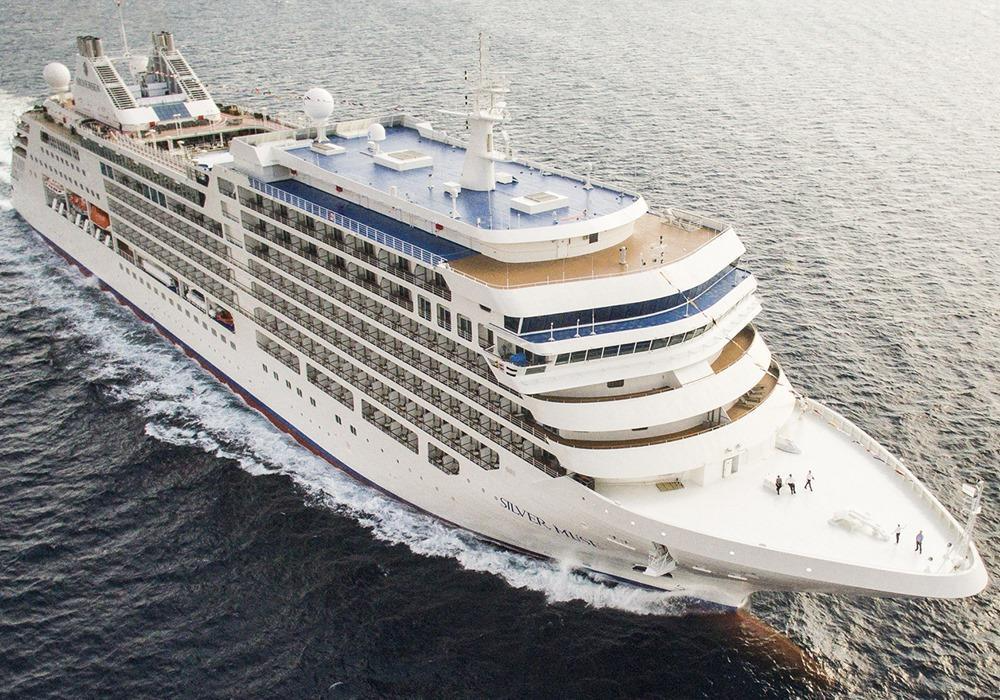
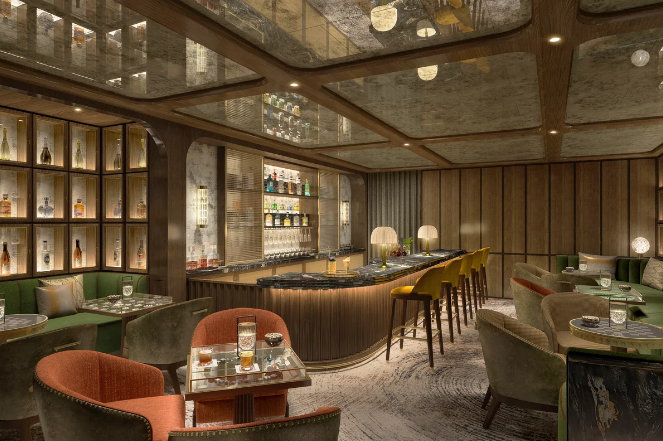
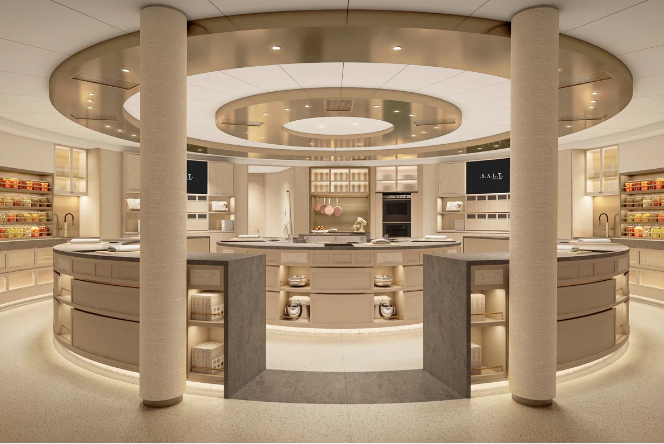
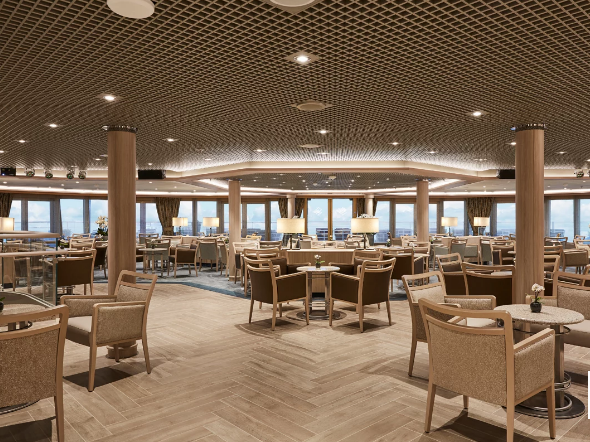
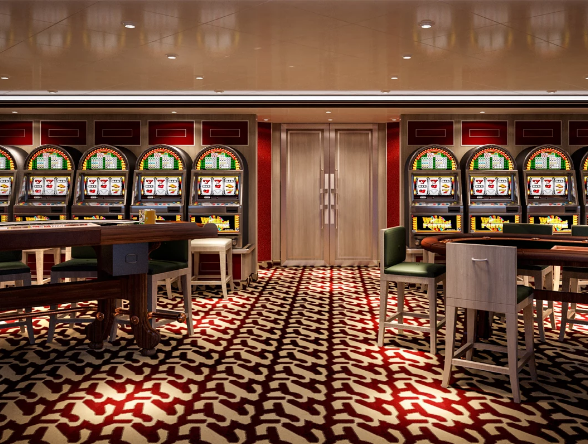
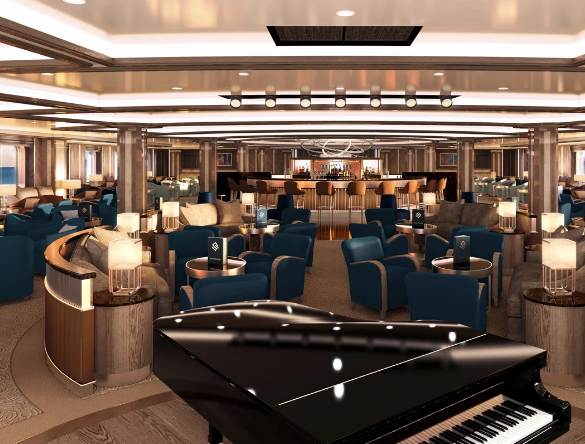
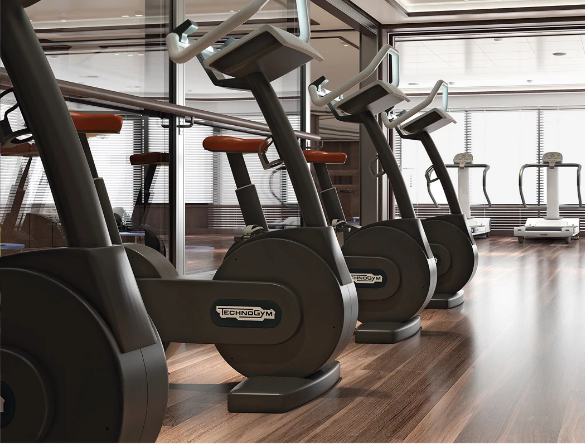
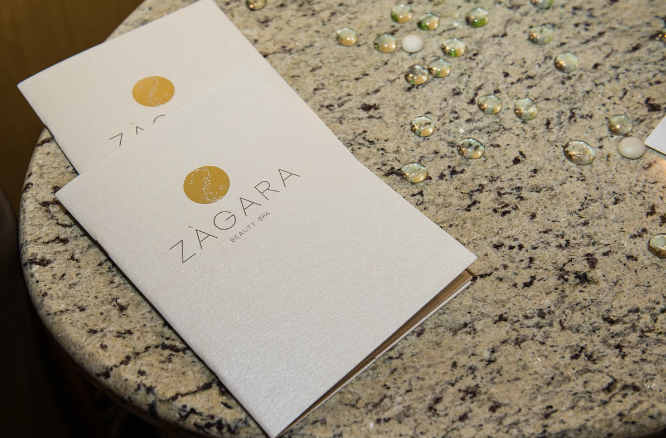
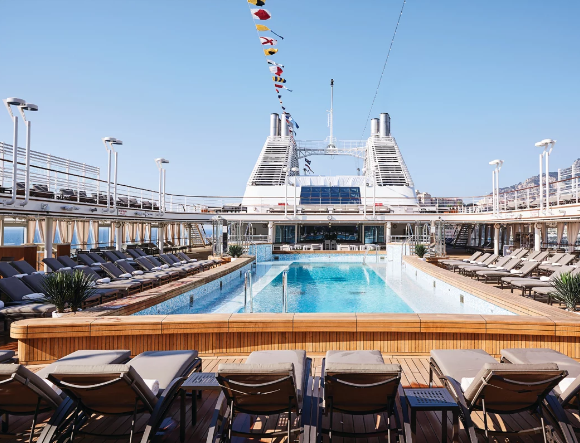

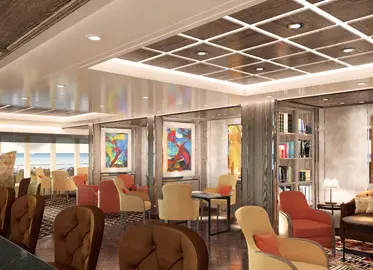
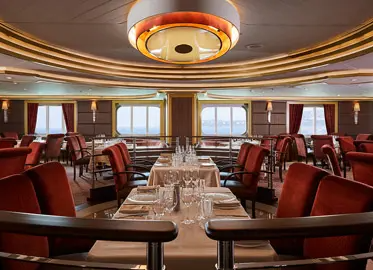

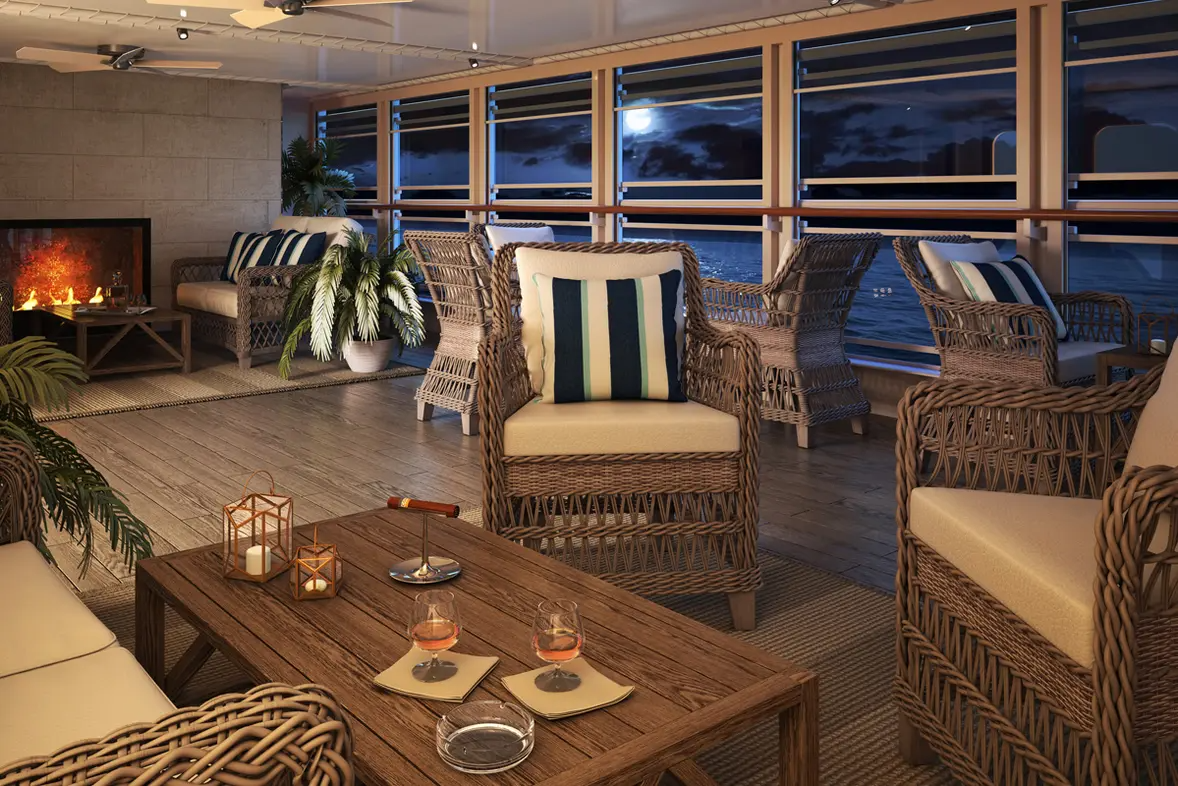
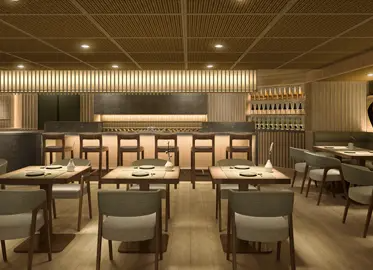
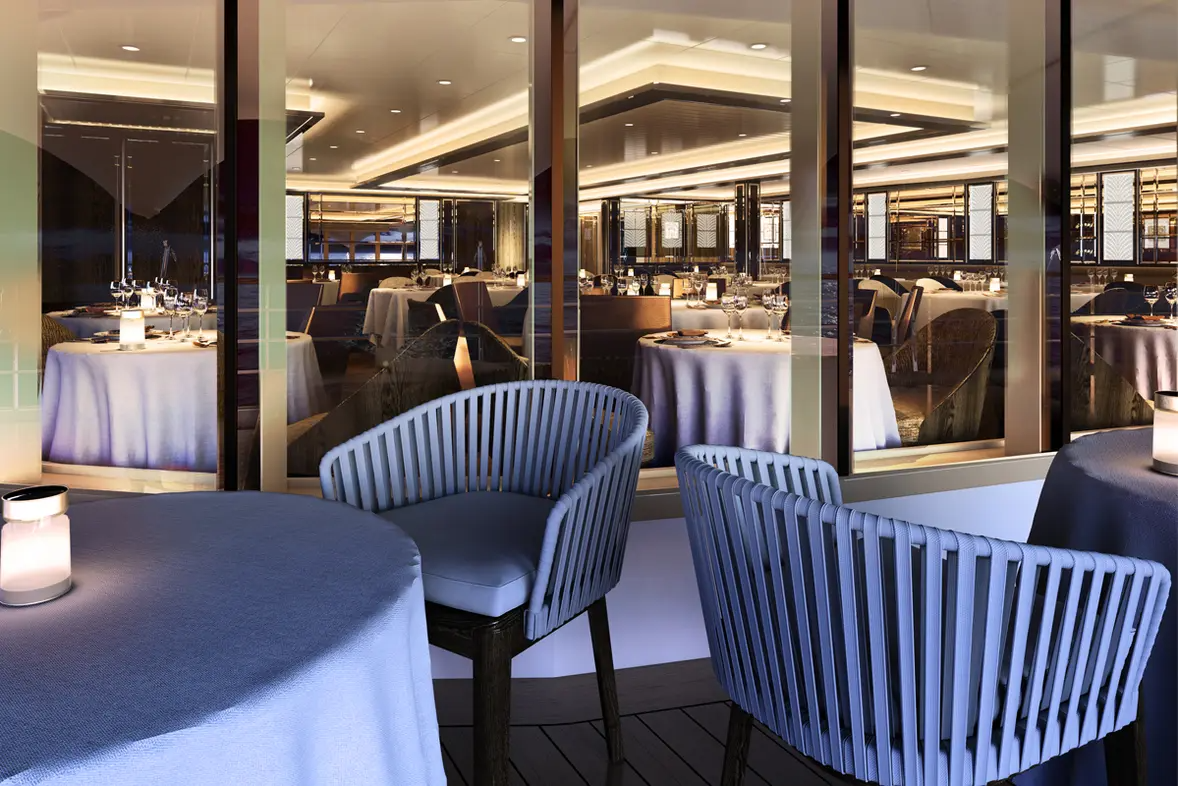
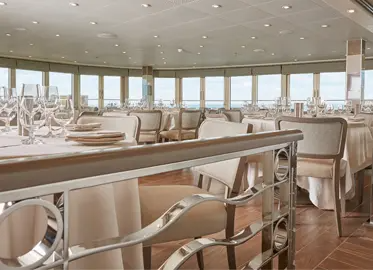
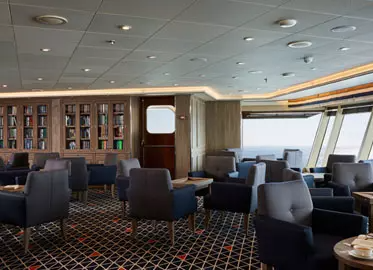
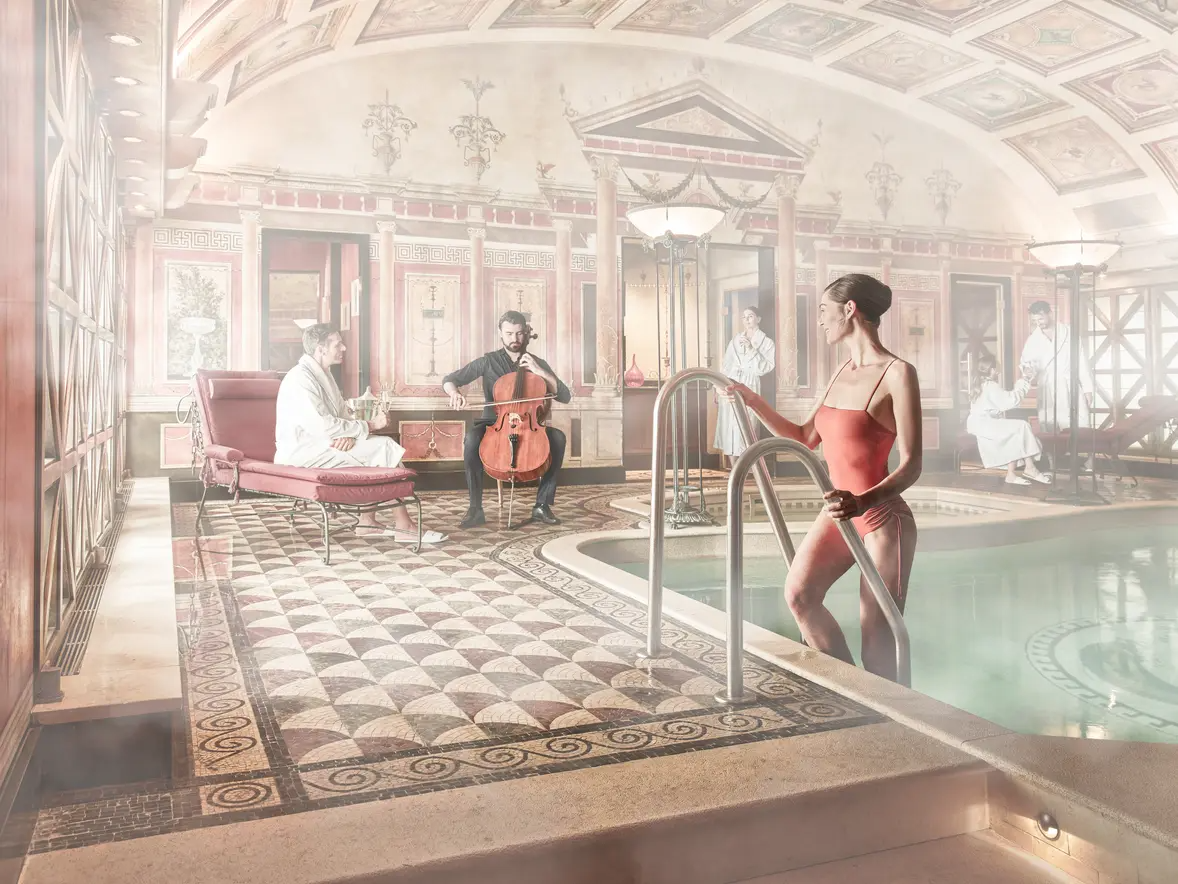
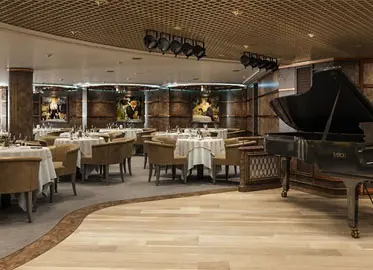
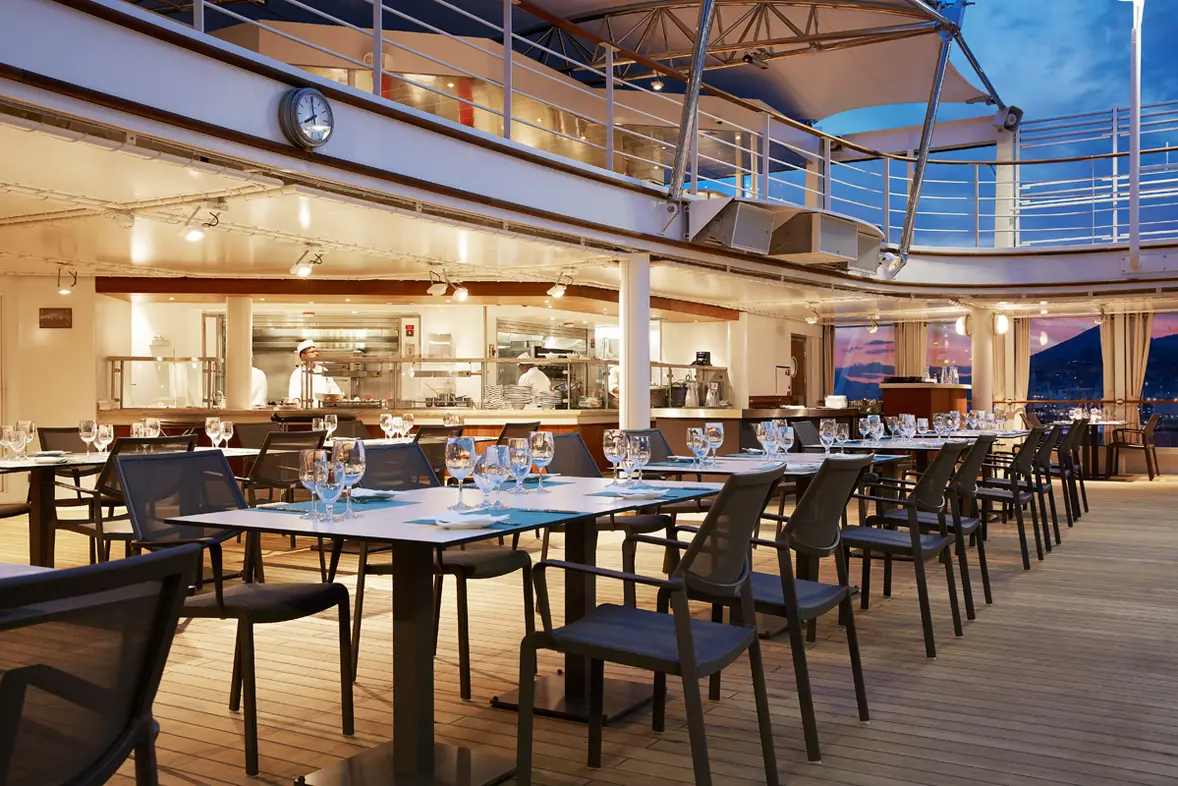
A new world of luxury is waiting aboard Silver Dawn. Elegant and modern, Silver Dawn is the natural evolution of our fleet. Large enough to offer eight dining options – including the superb Sea and Land Taste (S.A.L.T.) programme – yet small enough for the famed Silversea onboard ambience, Silver Dawn inherits the best features of her sister ships Silver Muse and Silver Moon, but is in a class all of her own. With sumptuous suites, outstanding itineraries, plus cutting-edge design and technology and the outstanding OTIVM wellness concept, Silver Dawn sets new standards of luxury. Wake up to a new dawn with Silversea.
Fitness Center
Jogging Track
Pool
Wellness Centre
Boutique
Arts Cafe
Atlantide
Dolce
La Dame
La Terrazza
Spaccanapoli
The Grill
Venetian
Casino
Connoisseur Club
Connoisseur’s Corner
Observation Lounge
Panorama Lounge
Silver Note
Beauty Salon
Day Spa & Fitness Centre
Jacuzzi
Panoramic Lounge
Pool Deck
Spa
Swimming Pool
Whirlpool
Description
A new world of luxury is waiting aboard Silver Dawn. Elegant and modern, Silver Dawn is the natural evolution of our fleet. Large enough to offer eight dining options – including the superb Sea and Land Taste (S.A.L.T.) programme – yet small enough for the famed Silversea onboard ambience, Silver Dawn inherits the best features of her sister ships Silver Muse and Silver Moon, but is in a class all of her own. With sumptuous suites, outstanding itineraries, plus cutting-edge design and technology and the outstanding OTIVM wellness concept, Silver Dawn sets new standards of luxury. Wake up to a new dawn with Silversea.
Fitness
Fitness Center
Jogging Track
Pool
Wellness Centre
Other
Boutique
Food and Drink
Arts Cafe
Atlantide
Dolce
La Dame
La Terrazza
Spaccanapoli
The Grill
Venetian
Entertainment
Casino
Connoisseur Club
Connoisseur’s Corner
Observation Lounge
Panorama Lounge
Silver Note
Relaxation
Beauty Salon
Day Spa & Fitness Centre
Jacuzzi
Panoramic Lounge
Pool Deck
Spa
Swimming Pool
Whirlpool
STATEROOMS
