 Sign In

Japan (Cherry Blossom)
- 25 Mar ‘29
- 12 nights
- Departing from Tokyo
- Silver Muse

 Earn & redeem points on all travel* with World360 Rewards – join free today!
-
Suite price from$12,300*/pp
YOUR ITINERARY
Tokyo, Japan - Shimizu - Kagoshima - Nagasaki - Yeosu - Hiroshima, Japan - Beppu - Kochi, Japan - Komatsushima - Kobe, Japan - Kobe, Japan
Dense and delightful, there’s nowhere else l...
Dense and delightful, there’s nowhere else like Japan’s kinetic capital – a city where ancient traditions blend seamlessly with a relentless pursuit for the future’s sharpest edge. See the city from above, as elevators rocket you up to towering viewing platforms, from which you can survey a vast urban ocean, interspersed with sky-scraping needles. Look out as far as the distant loom of Mount Fuji’s cone on clear days. View less
Futuristic – second-accurate – transport seamlessly links Tokyo’s 14 districts, while the glow of flashing advertisement boards, clanks of arcade machines, and waves of humanity flowing along its streets, adds to the sense of mesmerising, dizzying and glorious sensory overload. One of Tokyo’s most iconic sights, don’t miss the flood of people scrambling to cross Shibuya’s famous intersection. Join the choreographed dance, as crowds of briefcase-carrying commuters are given the green light to cross at the same time – bathed in the light of massive neon advertisements. The culture is immensely rich and deep, with 7th-century, lantern-decorated temples, stunning palaces and tranquil scarlet shrines waiting below cloaks of incense and nestling between soaring skyscrapers. Restaurants serve up precisely prepared sushi, and wafer-thin seafood slivers, offering a unique taste of the country’s refined cuisine. Settle into traditional teahouses, to witness intricate ceremonies, or join the locals as they fill out karaoke bars to sing the night away. In the spring, cherry blossom paints a delicate pink sheen over the city’s innumerable parks and gardens.
Feel your heart thumping, at your first sight of Japan’...
Feel your heart thumping, at your first sight of Japan’s most heavenly vision – Mount Fuji’s cone emerging through the haze. With its summit dipped in pure white snow, the iconic volcano’s cone is one of the most famous natural landmarks in the world – and a picturesque backdrop for Shimizu. View less
Come ashore to this serene vision of beauty – and whether you head straight for the siren-call of the volcano’s slopes, or the sanctuary of gorgeous, heritage-rich shrines, and tranquil tea plantations – spine-tingling views of Japan’s most tallest mountain are never far away. A perfectly symmetrical spectacle, visible for miles around, Mount Fuji is an adored national symbol of Japan. Travel closer to its slopes to soak in some of the country’s finest panoramas. Or take in the views with a dash of local culture, at the Fujisan Hongu Sengen Shrine – an elegant shrine, that stands in thrall to the salt and pepper volcano close by. The Shiraito Waterfall World Heritage Site flows just beneath the volcano – visit to see the gloriously wide curtain of water gushing through the thick vegetation. Visit Kunozan Toshogu Shrine for another perspective, or to soak up the tranquil site before swinging above on a scenic ropeway. Located on the adjacent Mount Kuno – privileged views of the mountain and Suruga Bay will unroll before you. Nihondaira Plateau is another option, where you can soak in panoramic views of the bay and Mount Fuji dominating behind. However you choose to experience it, Shimizu welcomes you into the heart of Japan, to absorb the mesmerising panoramas of the country’s most famous sight.
One of Japan’s most southerly major cities, Kagoshima is...
One of Japan’s most southerly major cities, Kagoshima is dominated by the imposing Sakurajima volcano’s cone – a legendary active volcano that broods, churns and puffs out ash nearby. A pretty old-time ferry chugs across the still waters to the gently sloping foothills of the volcano’s cone, and it’s easy to imagine where the comparisons with its sister city Naples materialised, as you sail the glorious sweeping Kinko Bay, below beaming sunshine, towards the immense volcanic spectacle. View less
This is certainly no historic relic, and the volcano remains revered and feared, with the most dramatic recent eruption taking place in 1914, and spewing out a new bridge of land into the sea. Make the most of the geothermal activity in the area by indulging in a stress-simmering black sand bath. Incredibly relaxing, you’ll be submerged in the warm sand, as you feel your muscles relaxing in the heat, and rejuvenating blood pumping around your body. Enjoy a privileged view of the iconic volcano’s loom from the terraced garden of Senganen Garden. Built in 1658, this elegant, traditional garden has belonged to the Shimadzu family for 350 years. Wander the gardens – which bloom with Japan’s renowned cherry tree blossoms and feature tiny bridges looping over ponds and rock pools – before sitting back and sipping a wholesome green matcha latte. Elsewhere, museums offer Feudal Era and Satsuma Province history, as well as insights into the Kamikaze squadrons of World War II. Lake Ikeda is also close by, so be sure to keep an eye out for the legendary Issie monster.
You will want to be on deck as the ship cruises into this spl...
You will want to be on deck as the ship cruises into this splendid natural harbor, which has played such an important role in the history of this city, and Japan as a whole.
The accidental arrival of an off-course Portuguese ship in 1543 was the beginning of Nagasaki’s longtime role as Japan’s “Door to the West.” The missionary St. Francis Xavier visited briefly, and there was a substantial number of converts during the period known as the “Christian Century.” Eventually the Japanese authorities perceived the growing influence of Christianity to be a threat, leading to the banning of the religion. The Catholic Spanish and Portuguese were expelled in favor of the Dutch, who were felt to be more interested in trade than religion. All contact with foreigners was forbidden, and no Japanese were allowed to travel abroad. The only exception was the closely watched Dutch enclave of Dejima. Through this small outpost a trickle of Western thought and science continued to filter into the country, and Nagasaki became an important scientific and artistic center. When the city was again opened to the West in 1859, Nagasaki was quickly reestablished as a thriving industrial center, especially in shipbuilding, the industry that made it a prime target in World War II.
As South Korea becomes increasingly popular as a ...
As South Korea becomes increasingly popular as a tourist destination, Yeosu remains a hidden gem. Punctuated by cliffs, islands and peninsulas the Scenic shorelines are nothing short of spectacular. Host to the EXPO 2012 World Fair meant that Yeosu received generous government funding in order to develop its waterfront and the exhibition centre still stands. This is worth exploring if you want to learn what South Korea is doing to preserve its waters and what we can do to help. View less The butterfly-shaped peninsula is known for its succulent seafood and, in spring, camellia blossoms abound. Set in the very south of the country, the city is split in two by a mountain, and the two sides are connected by a narrow, keyhole-shaped tunnel. Enjoy the dichotomy of travelling from the modern west side to the stillness and peace of the Manseongri Black Sand Beach in the traditional east. There is a multitude of islands dotting the coast of Yeosu. For those wanting to see it all, ferry buses offer scenic boat trips so that you can island hop and spend as long or as little as you like in each place. However, if time doesn’t permit, a short taxi ride (or long walk) to either Odongdo or Dolsan via a man-made causeway is the best bet. Additionally, if you are feeling sporty, why not walk to the top of the rather mild hill, and be greeted with beautiful 360 views of the surrounding area. Because of its coastal location, fish lovers will be in their element here. Raw fish is a delicacy in all of coastal South Korea, though standard Korean fare, such as kimchi stew and pork loin soup is well worth a try if you are feeling adventurous. For those who want an authentic Korean dining experience, traditional Korean food include the famous ganjang gejang (raw crabs marinated in soya sauce) as well as other variants like the yangnyeom gejang (raw crabs marinated in spicy sauce).
History buffs will want to write home Hiroshima. Desp...
History buffs will want to write home Hiroshima. Despite being devastated in 1945, this Japanese city is known to all for its commitment peace – its ruin on the 6th August 1945 led to the end of the war and today, the Peace Memorial (a UNESCO World Heritage Site) , is a constant reminder of the destruction that war brings. A walk in the leafy boulevards of Peace Memorial Park brings quiet contemplation. View less
The Flames of Peace – set in the park’s central feature pond – burn brightly and will continue to do so until all the nuclear bombs I the world have been destroyed. There are many other inspiring messages of hope around the city too; the Children’s’ Peace Monument just north of the park is a homage to little Sadako Sasaki, who was just two in 1945. When she developed leukemia in 1956, she believed that if she folded 1,000 paper cranes – a symbol of longevity and happiness in Japan – she would recover. Sadly she died before she finished her task but her classmates finished the rest. If you are lucky enough to visit during the unpredictable and short-lived Sakura (cherry blossom) season, then the extraordinary sight of the delicate pink blossom floating across the water to the red gate, means you can consider yourself one of the luckiest people on the planet.
The lantern-lit hot springs of Beppu, known for its eight scorch...
The lantern-lit hot springs of Beppu, known for its eight scorching “Hells”, is a town that’s prettier than a picture. The town is found in a particularly volcanically active part of Japan (hence the abundance of hot springs, or in Japanese, onsens). The viewing pools have evocative names; think Sea Hell, Blood Pond Hell and Tornado Hell. While the names might seem a little off putting, the reality is stunning; sulphur laced air and vast spectrums of blues and reds, depending on the mineralisation of the earth.
As if the gorgeous palette of colours at the onsen was not enough, Beppu is also world famous for its Sakura, or cherry blossom season. More than 2,000 cherry trees near the base of the ropeway to Mount Tsurumi make for one of Beppu’s most impressive hanami (flower viewing) spots. If not lucky enough to be in the area during Sakura, from May to June rhododendrons colour the mountain. The view from this 1,375m mountain is beyond impressive, allowing you to see all the way to the Kuju Mountains, Chugoku and Shikoku. If brave enough to climb all the way to the top, the stone Buddhas that were carved into the mountainside during the Heian Period (794-1185) are a worthy reward! As with much of Japan, duality is ever present. Modernity sits very comfortably by ancient buildings. While Beppu’s biggest pull is by far the hot springs and the thermal baths, nearby (10 km) Yufuin has a wealth of art museums, cafes and boutiques, catering to trend setters and urbanites alike.
The Japanese city of Kobe needs no introduction. The name is s...
The Japanese city of Kobe needs no introduction. The name is synonymous with its home grown superstar. We are not talking of its stunning shrines, cherry trees laden with blossom during sakura or effervescent city, buzzing with life 24/7. We are of course talking of a much more grass roots hero – its eponymous beef. The delicacy might have put the city on the map, but there is far more to Kobe than its meat. Naturally, Kobe wears its cuisine as a badge of honour. View less
Its port history has given it a gastronomy that is quite different from its neighbours. Seafood and sushi is naturally some of the freshest and most diverse you can find, but Kobe’s multi-cultural nature (the city is home to 98 different nationalities) means that it has one of the most diverse gastronomic cultures in Japan. Bread and bakeries are also an (unexpected) delicacy. Additionally, Sake is taken very seriously – Kobe even has its own museum dedicated to the national spirit. Historically, Kobe has always been a key city for Japan. Renamed in 1889, it was known as Owada no Tomari during the Nara Period (710-784 C.E.). Kobe’s location on the calm Inland Sea between Osaka and Kyoto has proven to be pivotal in Japanese history; it is mentioned in famous literary works such as The Tale of Genji (from approximately late 9th century) and the Taiheiki (14th century). The city and region are home to many attractions including the Himeji Castle (widely considered to be Japan’s most beautiful feudal castle), a short ride away.
The Japanese city of Kobe needs no introduction. The name...
The Japanese city of Kobe needs no introduction. The name is synonymous with its home grown superstar. We are not talking of its stunning shrines, cherry trees laden with blossom during sakura or effervescent city, buzzing with life 24/7. We are of course talking of a much more grass roots hero – its eponymous beef. The delicacy might have put the city on the map, but there is far more to Kobe than its meat. Naturally, Kobe wears its cuisine as a badge of honour. View less
Its port history has given it a gastronomy that is quite different from its neighbours. Seafood and sushi is naturally some of the freshest and most diverse you can find, but Kobe’s multi-cultural nature (the city is home to 98 different nationalities) means that it has one of the most diverse gastronomic cultures in Japan. Bread and bakeries are also an (unexpected) delicacy. Additionally, Sake is taken very seriously – Kobe even has its own museum dedicated to the national spirit. Historically, Kobe has always been a key city for Japan. Renamed in 1889, it was known as Owada no Tomari during the Nara Period (710-784 C.E.). Kobe’s location on the calm Inland Sea between Osaka and Kyoto has proven to be pivotal in Japanese history; it is mentioned in famous literary works such as The Tale of Genji (from approximately late 9th century) and the Taiheiki (14th century). The city and region are home to many attractions including the Himeji Castle (widely considered to be Japan’s most beautiful feudal castle), a short ride away.
YOUR SHIP - The Silver Muse
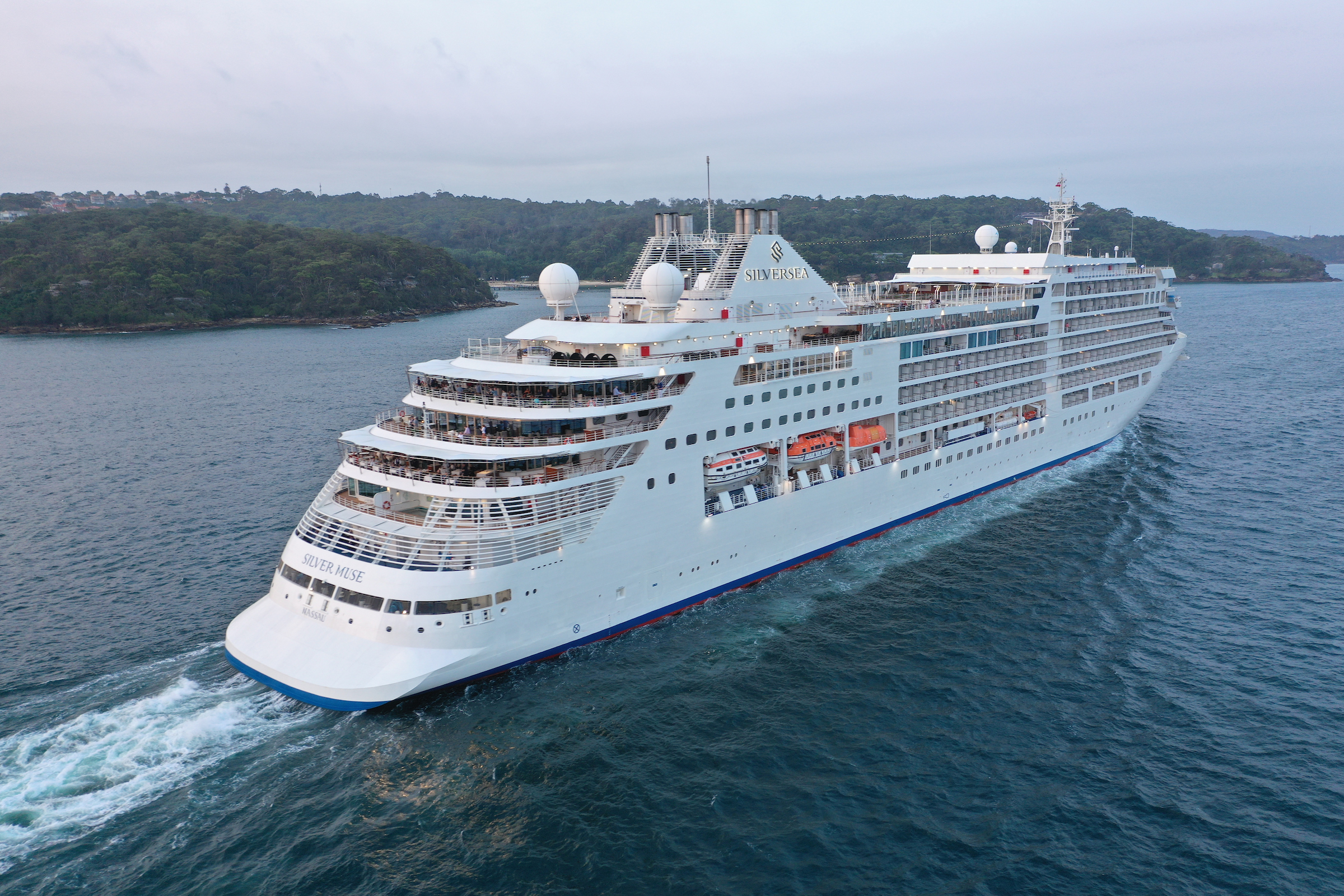
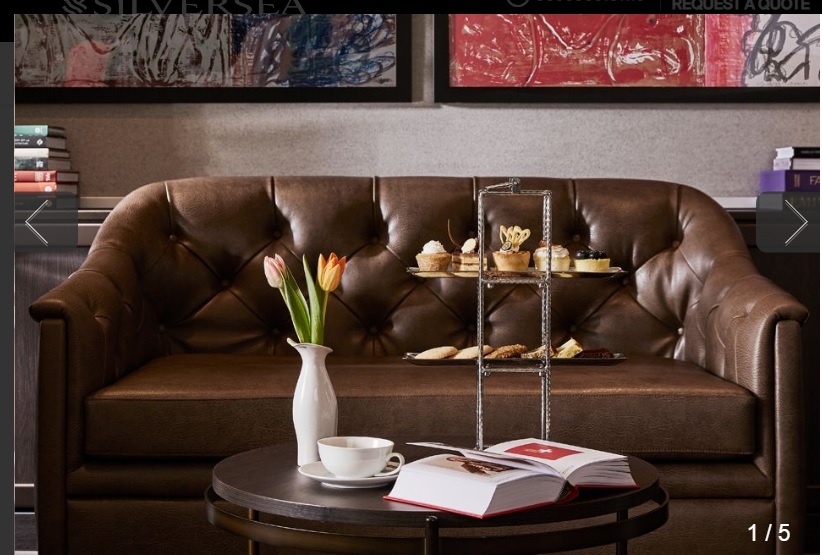
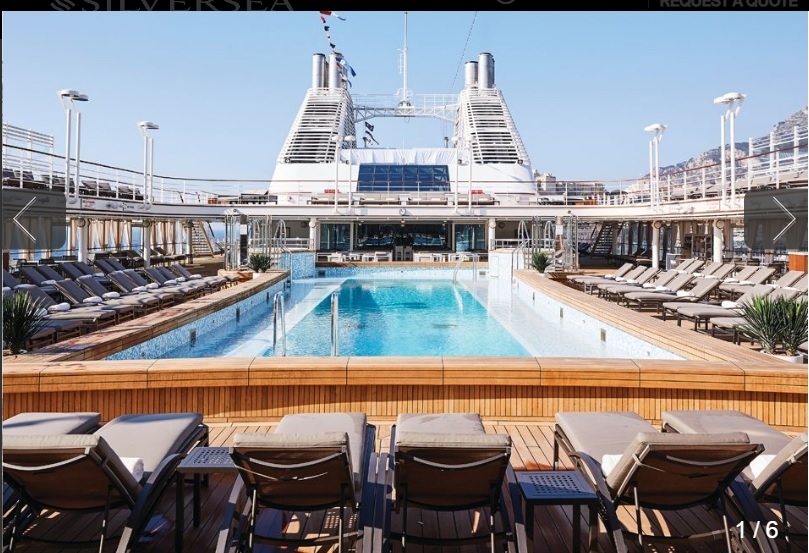
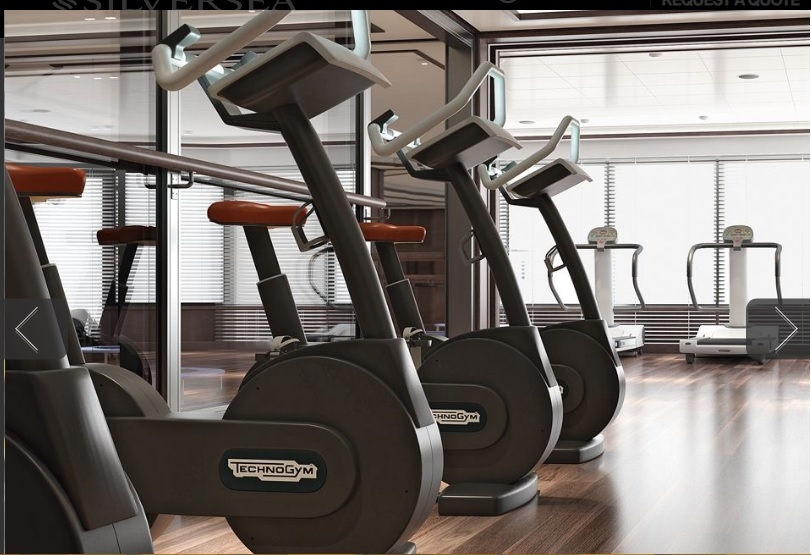
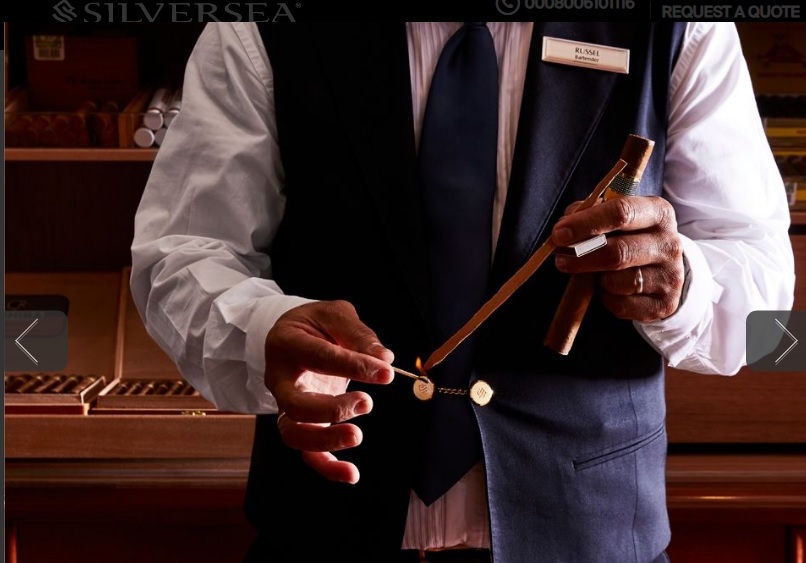
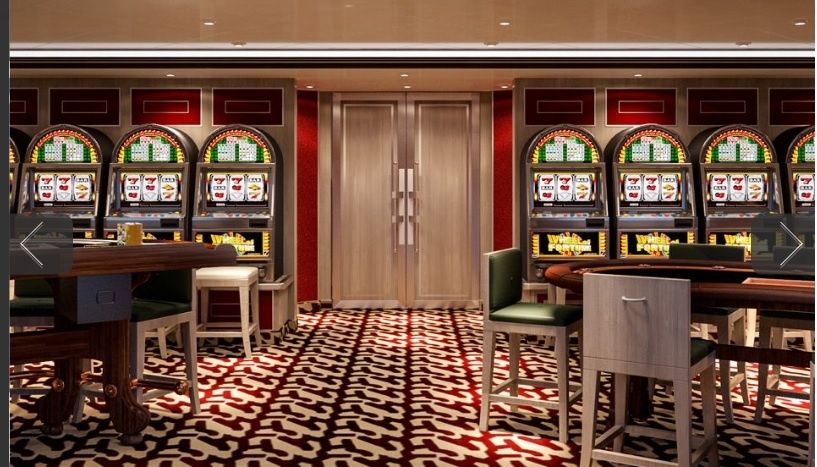
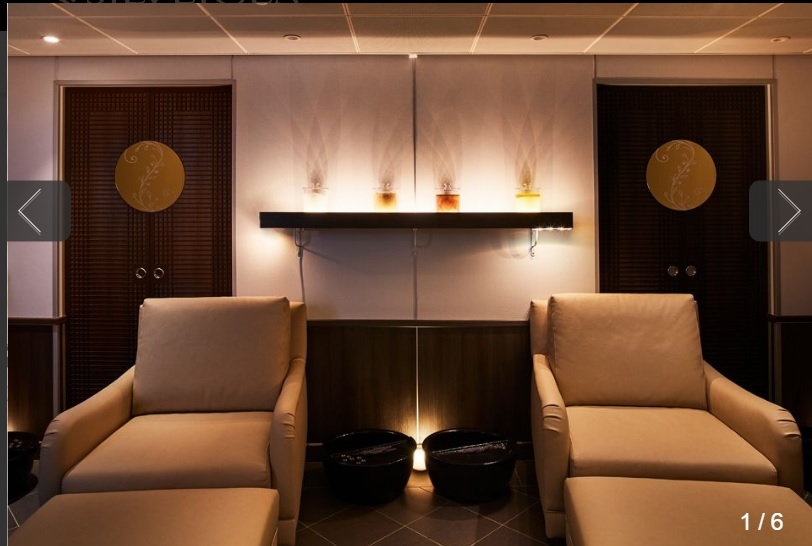
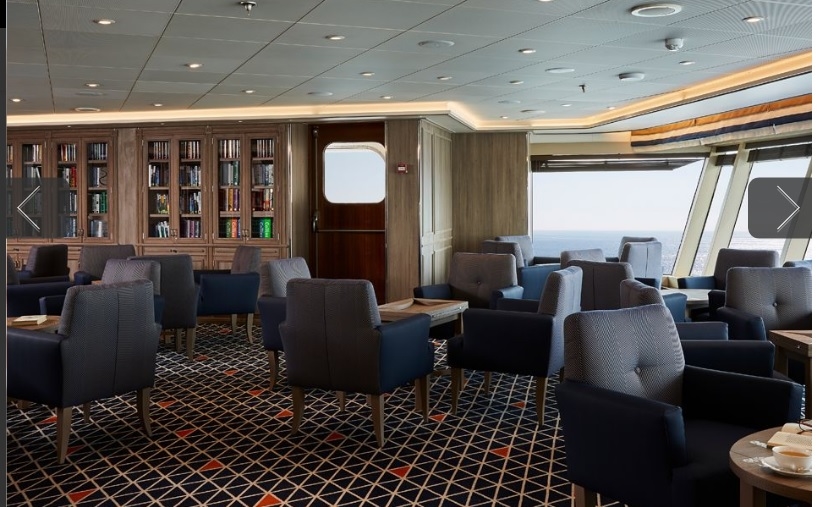

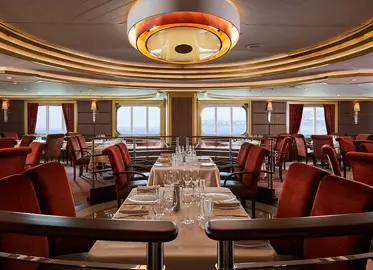

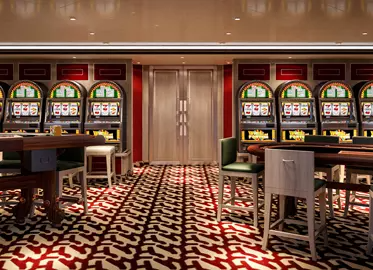
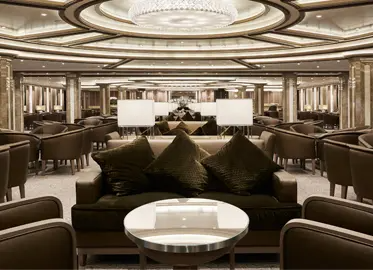
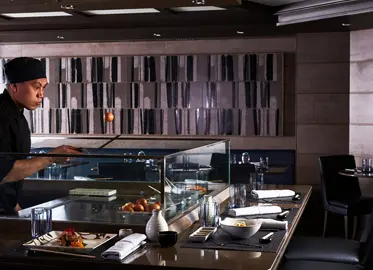
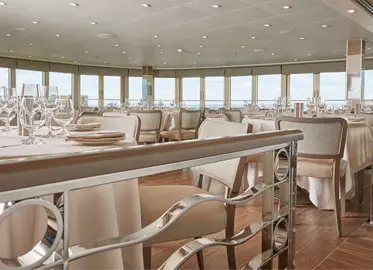
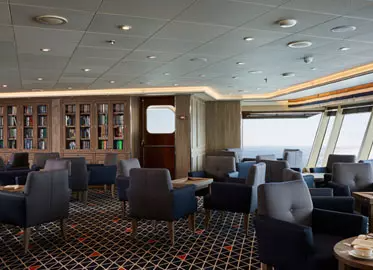
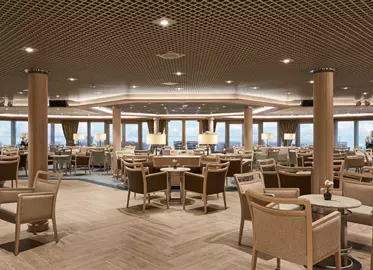

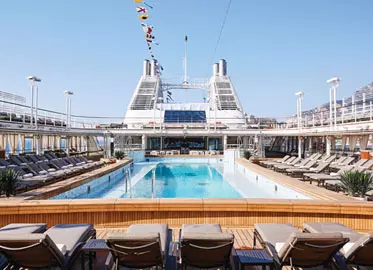

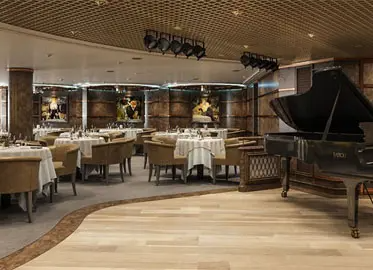

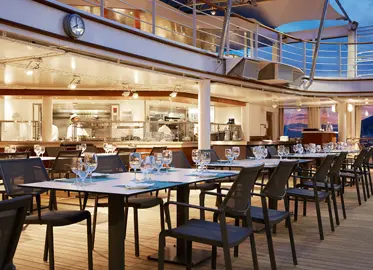

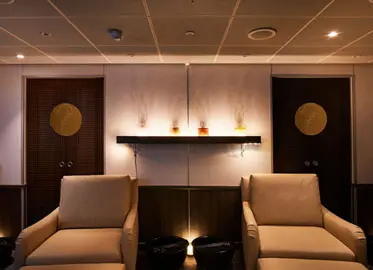


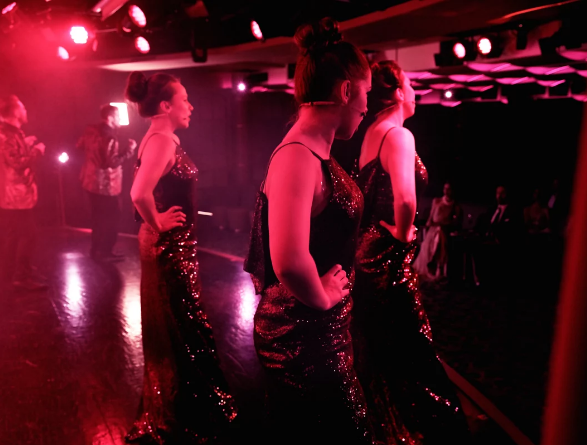
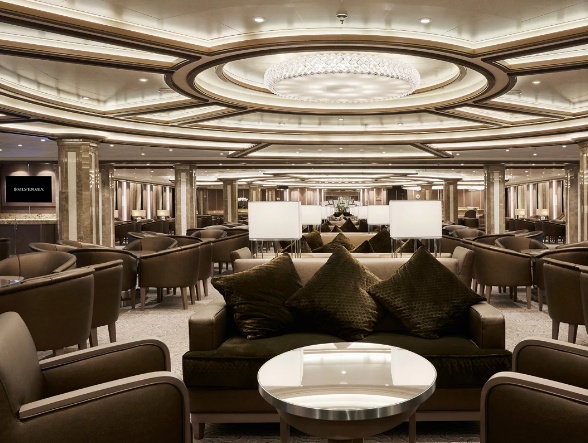
Silver Muse is without question an inspirational work of art. The best place between sea and sky, eight dining venues, spacious outdoor areas and up-to-the-minute technology makes her simply divine. Silversea Cruises is happy to present our new flagship, Silver Muse. Delivered in spring of 2017, the new ultra-luxury ship was built by Fincantieri and at 40,700 grt accommodates 596 guests. Representing an exciting evolution of Silver Spirit, Silver Muse redefines ultra-luxury ocean travel – enhancing the small-ship intimacy and spacious all-suite accommodations that are the hallmarks of the Silversea experience. The addition of Silver Muse expands Silversea’s fleet to nine ships, and once again significantly raises the bar in the ultra-luxury cruise market with a wealth of enhancements to the onboard experience, while satisfying the uncompromising requirements for comfort, service, and quality of the world’s most discerning travellers.
Boutique
Conference Room
Observation Lounge
Reception
Card Room
Childrens Play Room
Library
Casino
Connoisseur Club
Connoisseur’s Corner
Observation Lounge
Panorama Lounge
Silver Note
Theatre
Arts Cafe
Bar
Dolce
Grill
La Dame
La Terrazza
Spaccanapoli
The Grill
Venetian
Beauty Salon
Day Spa & Fitness Centre
Jacuzzi
Panoramic Lounge
Pool Deck
Spa
Swimming Pool
Fitness Center
Jogging Track
Pool
Wellness Centre
Description
Silver Muse is without question an inspirational work of art. The best place between sea and sky, eight dining venues, spacious outdoor areas and up-to-the-minute technology makes her simply divine. Silversea Cruises is happy to present our new flagship, Silver Muse. Delivered in spring of 2017, the new ultra-luxury ship was built by Fincantieri and at 40,700 grt accommodates 596 guests. Representing an exciting evolution of Silver Spirit, Silver Muse redefines ultra-luxury ocean travel – enhancing the small-ship intimacy and spacious all-suite accommodations that are the hallmarks of the Silversea experience. The addition of Silver Muse expands Silversea’s fleet to nine ships, and once again significantly raises the bar in the ultra-luxury cruise market with a wealth of enhancements to the onboard experience, while satisfying the uncompromising requirements for comfort, service, and quality of the world’s most discerning travellers.
Other
Boutique
Conference Room
Observation Lounge
Reception
Recreational
Card Room
Childrens Play Room
Library
Entertainment
Casino
Connoisseur Club
Connoisseur’s Corner
Observation Lounge
Panorama Lounge
Silver Note
Theatre
Food and Drink
Arts Cafe
Bar
Dolce
Grill
La Dame
La Terrazza
Spaccanapoli
The Grill
Venetian
Relaxation
Beauty Salon
Day Spa & Fitness Centre
Jacuzzi
Panoramic Lounge
Pool Deck
Spa
Swimming Pool
Fitness
Fitness Center
Jogging Track
Pool
Wellness Centre
STATEROOMS
