

28-Day Yacht Harbors Of France, Spain & Atlantic Crossing
- 11 Nov ‘28
- 28 nights
- Departing from Civitavecchia (Rome)
- Seabourn Ovation

-
Balcony price from$24,599*/pp
-
Suite price from$38,899*/pp
YOUR ITINERARY
Civitavecchia (Rome), Italy - Livorno (Florence/Pisa), Italy - Monte Carlo, Monaco - La Joliette (Marseille),France - Sete, France - Port Vendres, France - Barcelona, Spain - Mahon, Spain - Palma de Mallorca, Spain - Cartagena, Spain - Motril, Spain - Melilla,Spanish Morocco, Spain - Tangier, Morocco - Cadiz (Seville), Spain - Lisbon, Portugal - Casablanca, Morocco - Bridgetown, Barbados
Originally built by Emperor Trajan who had a vill...
Originally built by Emperor Trajan who had a villa here, Civitavecchia has flourished as a major port for Rome since the 13th century. Today it is an important ferry terminal and for many travelers the gateway to the Eternal City, Rome. The Renaissance fortifications that surround the harbor area were begun by Bramante and completed by Michelangelo in 1535.
Livorno is the gateway to the region of Tuscany, which as...
Livorno is the gateway to the region of Tuscany, which as Goethe once observed, looks like Italy should. Fortunately for today’s visitor not much has changed in the two centuries since the German poet was himself a tourist in Toscana. The remarkable wealth of beauty here mellowed to a golden patina by history and tempered by the hand of man, awaits. Everywhere there is history, from the Etruscan stronghold of Fiesole, to the Roman colony of Volterra to the Renaissance splendor of Florence, Pisa, Sienna and San Gimignano. If the landscape evokes a sense of the familiar it is because the great masters have used it as a backdrop for their great works. Michelangelo and Leonardo da Vinci were archtypal Tuscans and Renaissance men who headed an extensive list of geniuses who lived, worked and created within a single period of time.
The Principality of Monaco is the epitome of Rivi...
The Principality of Monaco is the epitome of Riviera chic. This tiny enclave of 370 acres surrounds a sheltered harbor that draws yachts from around the world to enjoy the beautiful scenery, mild weather and elegant casino. Glamorous Monte Carlo is one of Monaco’s four quarters, which also include La Condamine, the business district; Monaco-ville, the capital; and Fontvieille, an area built on reclaimed land. Ruled by Prince Albert II, Monaco has a population of over 32,000, of which about 16 percent are citizens, or Monégasques.
Marseille is the second largest city in France after P...
Marseille is the second largest city in France after Paris. It is also one of the oldest continuously inhabited cities in the Mediterranean. Cave paintings in the nearby Calanques are estimated to be 30,000 years old, and remains of brick habitations date from 6,000 BCE. The more recent history begins with a Hellenic port in about 600 BCE, some remains of which are on view at the city’s History Museum. It has been one of the world’s major seaports almost from its founding, and served as the main European terminus of the French colonial empire in Africa and the Far East. It is located in the Provence-Alpes-Cote d’Azur region and is the capital of the Bouches-du-Rhone department. On an island in the expansive bay of Marseille stands the prison of Chateau d’If made famous by the Alexandre Dumas novel “The Count of Monte Cristo.” The Vieux-Port with its atmospheric buildings and wharves is the area where visitors can search for the perfect example of the local specialty bouillabaisse, a rich fish stew containing at least three, and often more varieties of local fishes. Marseille’s newly renovated port at the venerable Joliette Docks is situated very close to the striking Cathédrale de la Major and the fascinating collections at the Museum of African, Oceanic and American Indian Arts.
The port town of Sete hugs the tiny Mont St. Clair, and is caugh...
The port town of Sete hugs the tiny Mont St. Clair, and is caught between the Mediterranean and the Bassin de Thau, a salt lake directly behind it. It is crisscrossed by numerous canals which link the lake to the sea, and connected by 12 bridges. Along the quay, renovated buildings provide a multitude of architectural details from the 18th and 19th centuries. The life of the town is found in its squares: Place Leon Blum, with its fountain and Wednesday morning flower market; Place Aristide, with its old fashioned bandstand; and Place de la Republique, with its huge retaining walls and vaulted loggias. Sete retains its historic purpose as a fishing boat haven for North African trade; the old harbor dates from the time of Louis XIV.
The gem of the Vermillion Coast, the chosen retreat...
The gem of the Vermillion Coast, the chosen retreat of kings past, the inspiration of great 20th-century artists, Collioure is nestled in a small, rocky bay, dwarfed by the Alberes Mountains. The village is perfectly integrated into the countryside; the church and the stone chateau are the color of the rocks, the beach and the mountains. The town has kept much of its medieval character, with the bay separated into halves by the 13th-century royal castle of the Kings of Mallorca. Between the castle and the sea is a bustling old town, full of cafes, shops and art galleries. Among the great artists who have congregated here are Matisse, Picasso, Braque, Dufy and Derain.
Barcelona, the capital of Catalonia, is said to h...
Barcelona, the capital of Catalonia, is said to have been founded by the Phoenicians, and was once the rival of the powerful states of Venice and Genoa for control of the Mediterranean trade. Today, it is Spain’s second largest city and has long rivaled, even surpassed Madrid in industry and commerce. The medieval atmosphere of the Gothic Quarter and the elegant boulevards combine to make the city one of Europe’s most beautiful. Barcelona’s active cultural life and heritage brought forth such greats as the architect Antonio Gaudi, the painter Joan Miro, and Pablo Picasso, who spent his formative years here. Other famous native Catalan artists include cellist Pau Casals, surrealist Salvador Dali, and opera singers Montserrat Caballe and Josep Carreras. Barcelona accomplished a long-cherished goal with the opportunity to host the Olympics in 1992. This big event prompted a massive building program and created a focal point of the world’s attention.
Mahon is the capital of Menorca, second largest of the ...
Mahon is the capital of Menorca, second largest of the Balearic Islands. It stands out from the others because of the abundance of prehistoric structures, and because its culture was influenced by British occupation in the 18th century. The people who built the prehistoric constructions are believed to have been responsible for similar works in Sardinia, and for Stonehenge in England. Believed to have been founded by the Carthaginian General Mago, Mahon was held by the Moors from the 8th to the 13th century and in turn occupied by the English, the French and the Spanish. Mahon was finally ceded to Spain by the Treaty of Amiens in 1802.
Spain’s Balearic Islands are among Europe’s ...
Spain’s Balearic Islands are among Europe’s most popular resort destinations. Mallorca is the largest and most developed of these islands. Rome and Carthage battled over this territory and portions of ancient Roman constructions still remain. Founded almost 2,100 years ago, the city of Palma de Mallorca, the island’s busy capital city boasts a considerable store of history. Mallorca welcomes its visitors to an island, which can be both exciting and tranquil. The abundant sightseeing and sunshine are yours to enjoy.
Founded by Carthaginians in the third century BC, thi...
Founded by Carthaginians in the third century BC, this ancient Mediterranean port city exemplifies the region’s tumultuous history. Romans, Visigoths, Castilians and Moors have all left their marks. Under King Philip II, Cartagena’s naturally deep, sheltered harbor was developed into the nation’s premier naval base, a position it still enjoys today. Ancient ramparts remain, as does a lighthouse erected in Moorish times.
This city of the Mediterranean coast is the second largest on ...
This city of the Mediterranean coast is the second largest on the so-called Costa Tropical. But for us it is the port from which to ascend the slopes of the snow-capped Sierra Nevada to the ethereal Moorish city of Granada and the astounding complex of the Alhambra, the most beautiful display of Islamic architecture in Europe. Dramatically sited overlooking the city, the walled series of halls, courts, gardens and colonnades drip with airy carving and elaborate decorative reliefs that embody the term Arabesque. The sprawling Generalife Gardens adjoining the fortress are a memorable site unto themselves. Elsewhere in Granada, the Capilla Real is a purely Spanish Gothic building, holding the marble tombs of the Reyes Catolicos Ferdinand and Isabella behind a gilded wrought-iron screen.
Situated just across the narrow Strait of Gibraltar from Europ...
Situated just across the narrow Strait of Gibraltar from Europe, Tangier has long comprised a hybrid culture that is nearly as European as it is African. Standing atop Cap Spartel, one can gaze down on the place where the Atlantic meets the Mediterranean. The “Hollywood” district where the foreign embassies have traditionally been located reflects the European influence. But ascending the hill above the waterfront, one enters the narrow, winding alleys of the Kasbah, the city’s oldest, most Moroccan section. Down the coast, nearby Tetouan retains a nearly untouched walled medina, with sections originally occupied by Andalusian, Berber and Jewish populations. It is small enough that visitors can explore it without risking becoming lost, making it a perfect choice as a UNESCO World Heritage Site.
To taste the true flavor of this ancient port city, one should ...
To taste the true flavor of this ancient port city, one should stroll its seaside promenade, pausing to rest beneath the huge banyan trees. The narrow, winding streets of the old town fan out from the port, leading you to sunny, palm-lined plazas. Visit the Catedral Nueva (New Cathedral), begun in the early 1800s but not completed for 116 years. Its dramatic, golden dome rises over a striking interior. For those who enjoy people-watching as much as sightseeing, the seafood restaurants along the eastern edge of the port provide the ideal setting.
The great period of “the Discoveries” accounted for ...
The great period of “the Discoveries” accounted for phenomenal wealth brought back from India, Africa and Brazil by the great Portuguese navigators. Gold, jewels, ivory, porcelain and spices helped finance grand new buildings and impressive monuments in Lisbon, the country’s capital city. As you sail up the Tagus River, be on deck to admire Lisbon’s panorama and see some of the great monuments lining the river. Lisbon is one of Europe’s smallest capital cities but considered by many visitors to be one of the most likeable. Spread over a string of seven hills, the city offers a variety of faces, including a refreshing no-frills simplicity reflected in the people as they go unhurriedly through their day enjoying a hearty and delicious cuisine accompanied by the country’s excellent wines.
Casablanca, located on the Atlantic coast, is with 4 mill...
Casablanca, located on the Atlantic coast, is with 4 million inhabitants Morocco’s largest city, and at the same time the largest port in Africa. Built on the site of ancient Phoenician Anfa, it remained a small fishing village for many centuries until the French arrived in 1912. Since then Casablanca has become a vast modern city, ever on the increase since Morocco’s independence from France in 1956. A successful blend of oriental-style, white cubic dwellings with modern Moroccan quarters gives the city an interesting flair. Lovely beaches and attractive hotels make for a popular year-round holiday resort. To help understand Moroccan culture a visit to the Medina, the quaint old Moorish quarter, is a must for all visitors.
Barbados has retained many of the trappings of its ...
Barbados has retained many of the trappings of its British colonial heritage. Judges and barristers wear proper robes and wigs, police don helmets styled after London bobbies and cricket remains a national passion. Barbados also has all the sporting appeal of the rest of the Caribbean, with pristine beaches, powerful surf and crystal clear waters. Brightly colored homes and hibiscus flowers mingle with mahogany trees and English churches dating back to the 17th century.
YOUR SHIP - The Seabourn Ovation
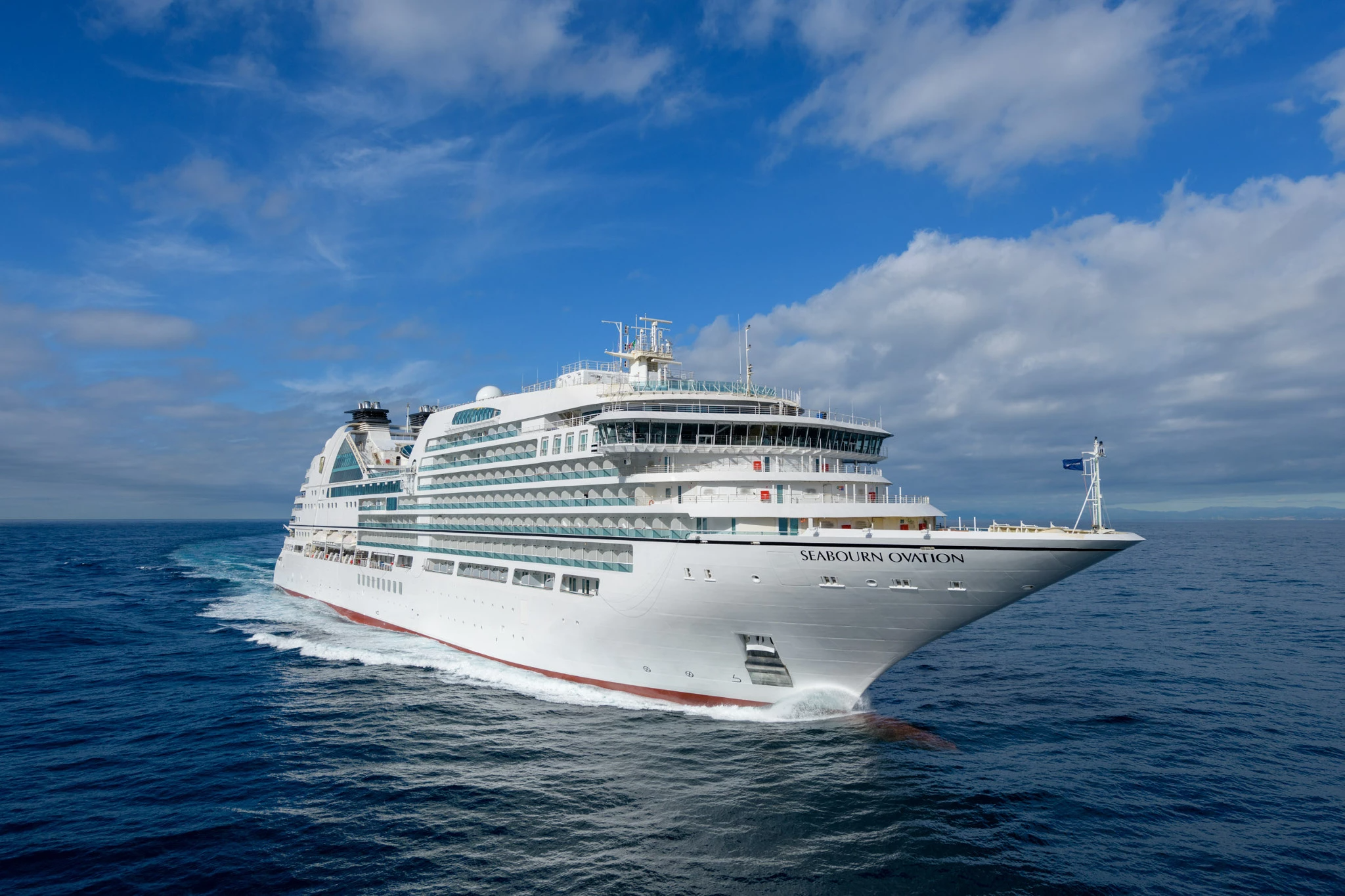
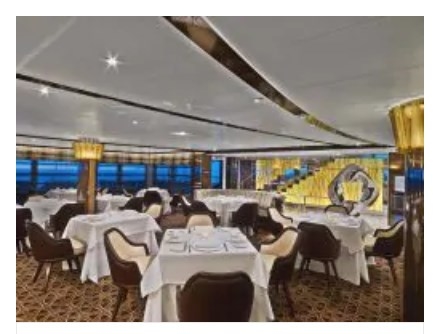
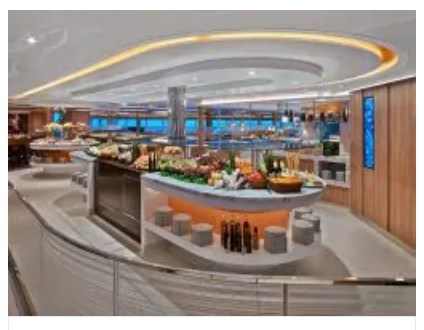


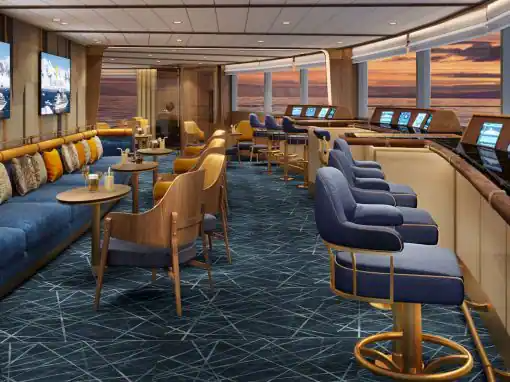
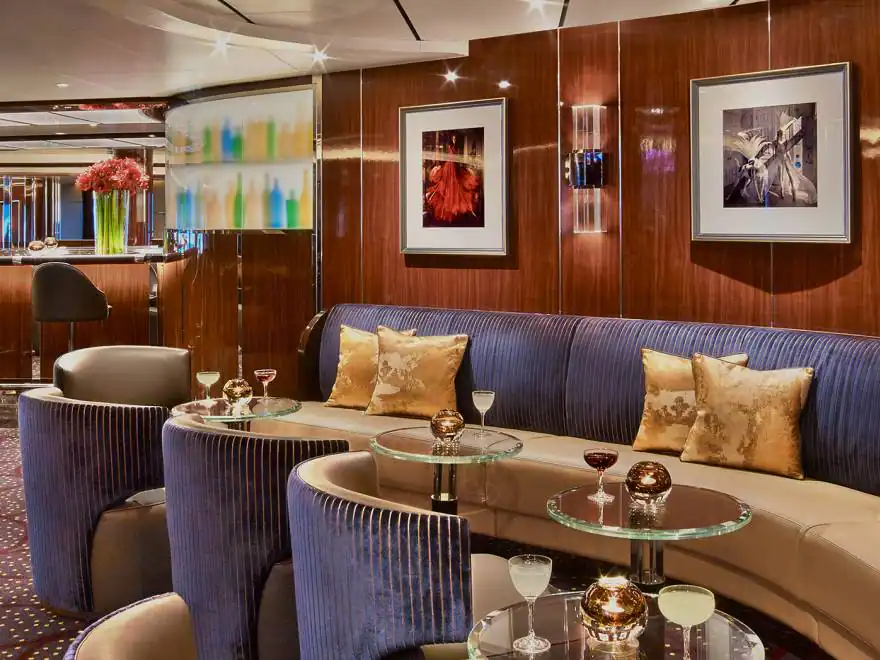
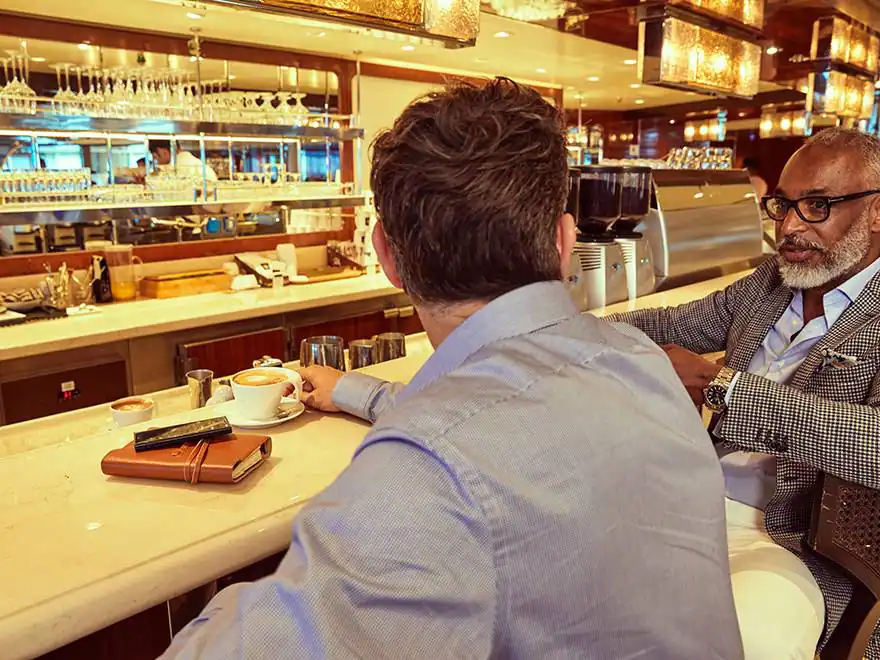
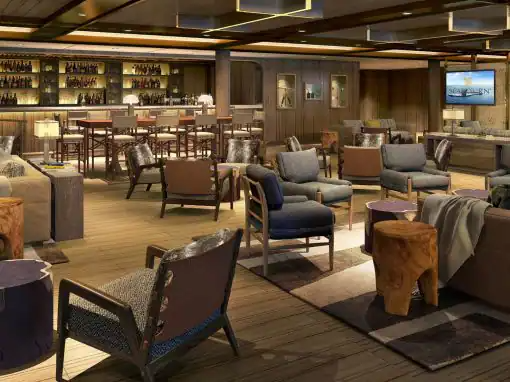
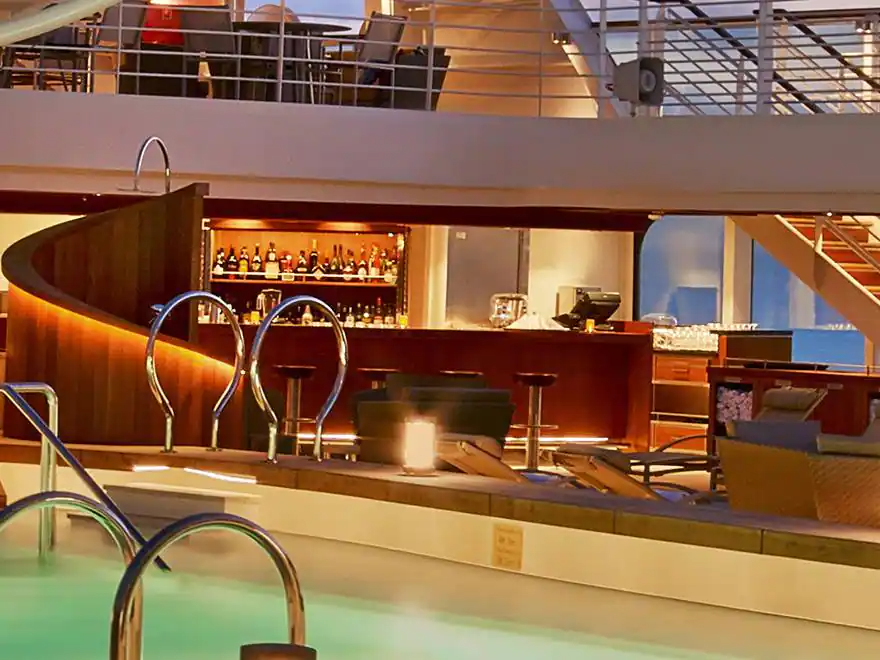

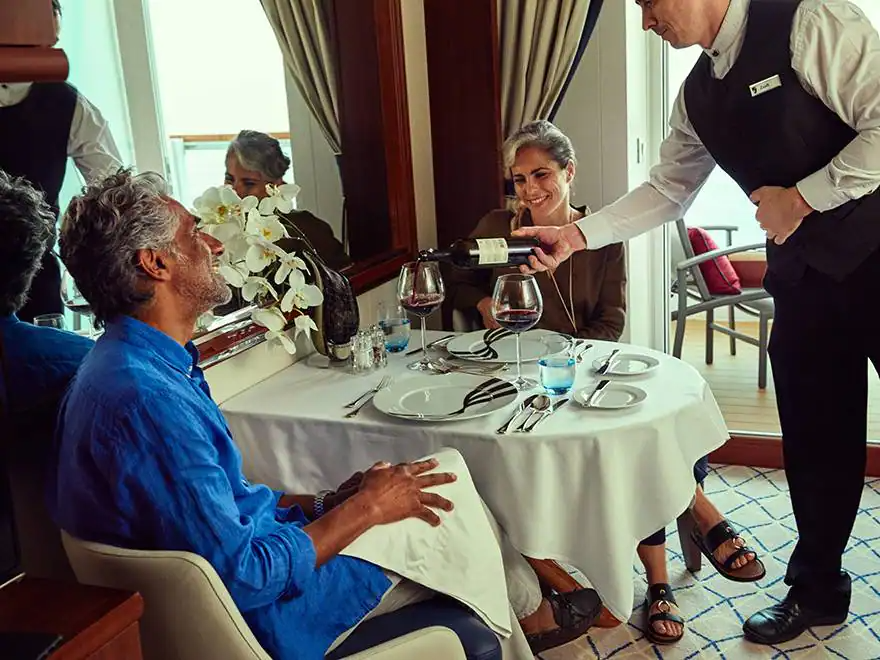
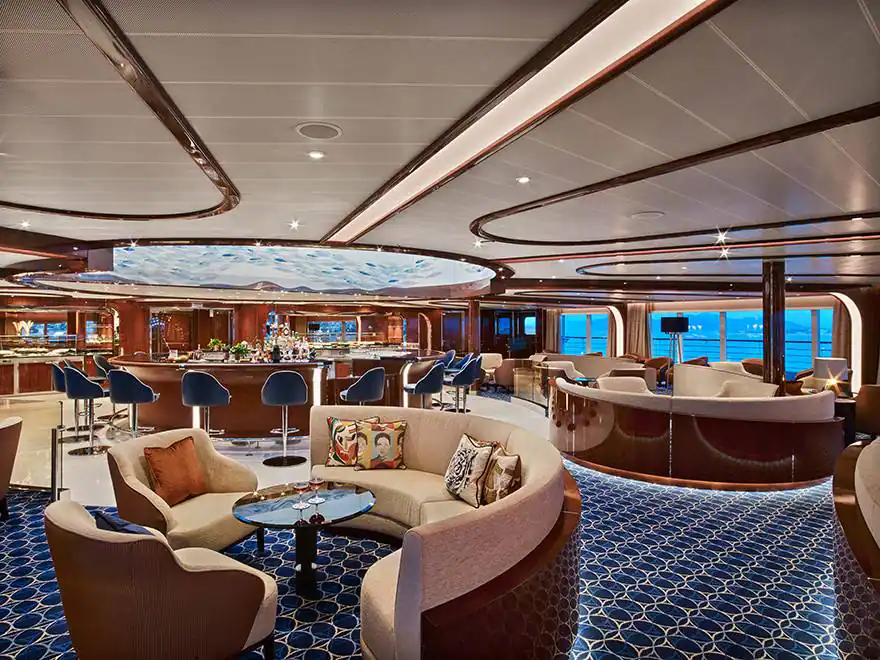
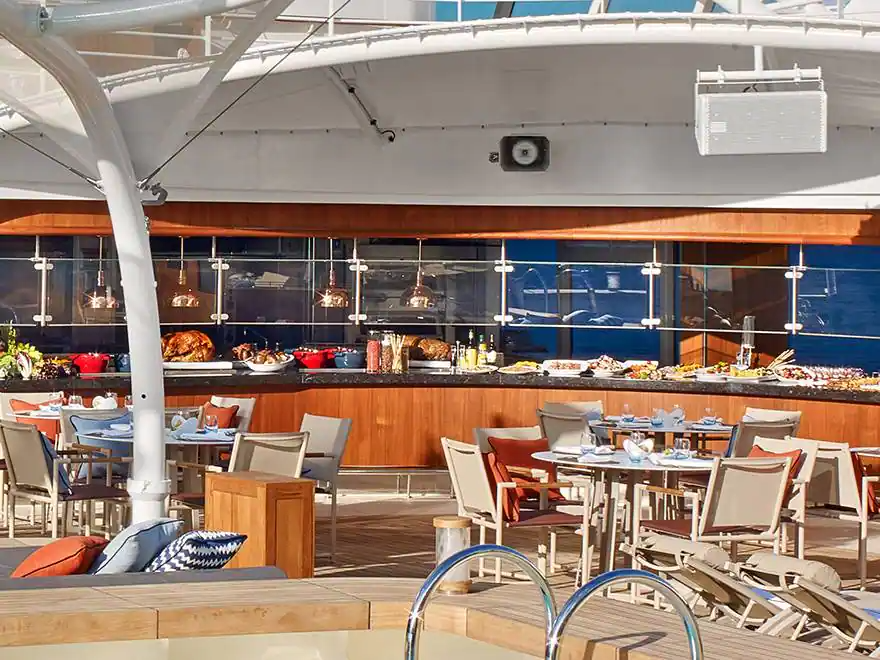
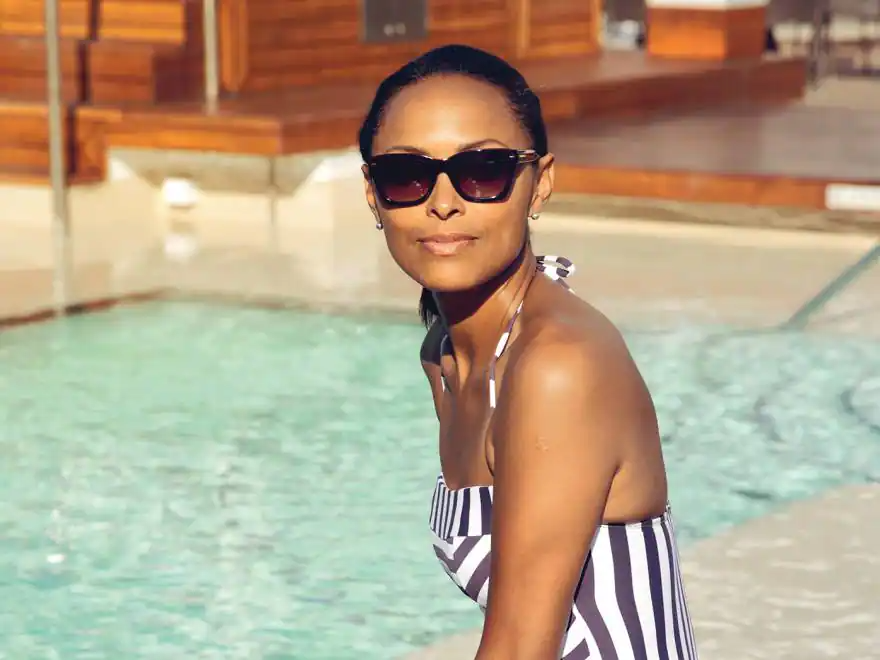
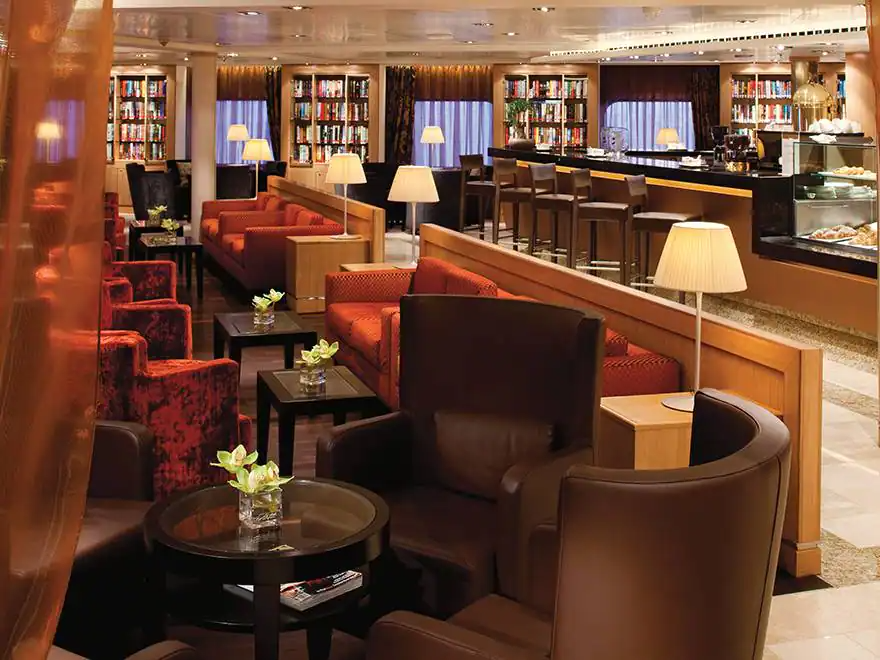
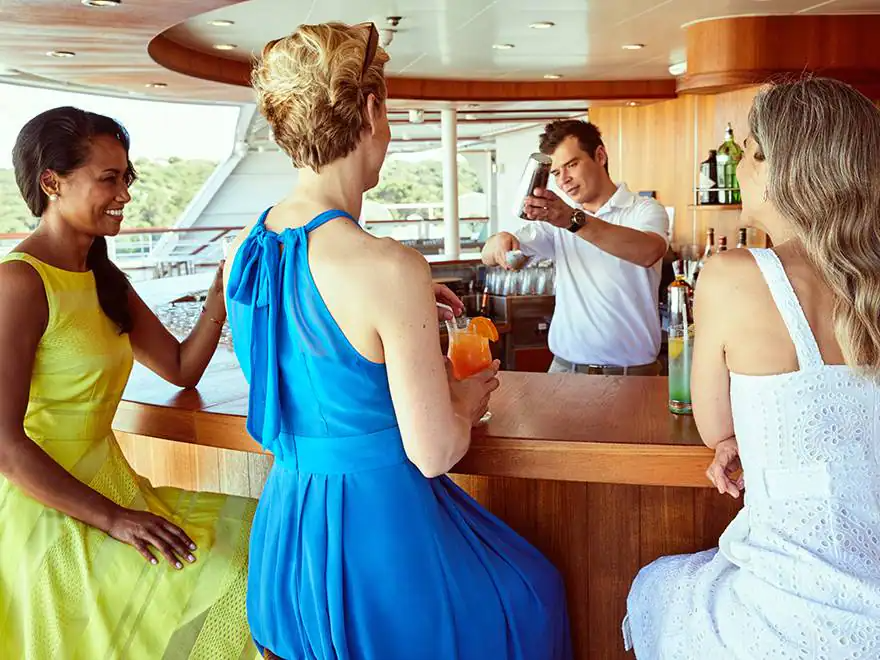
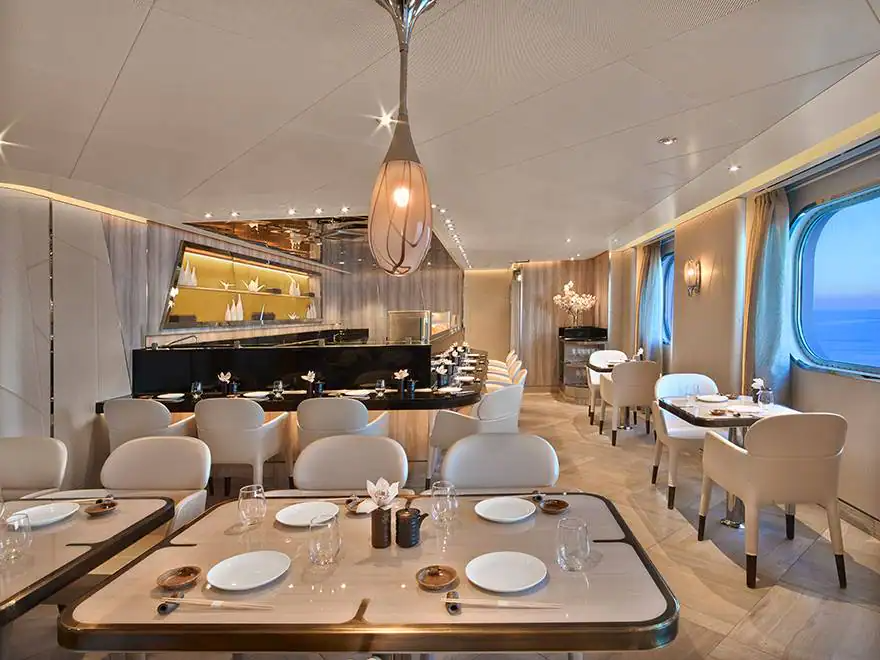
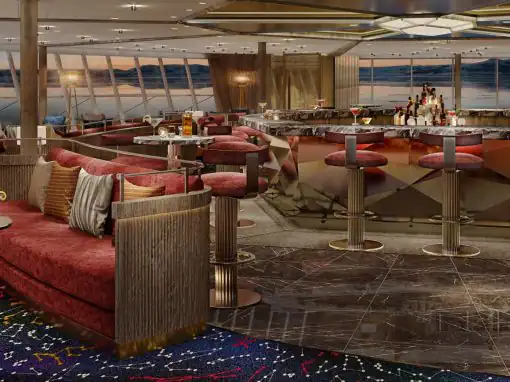
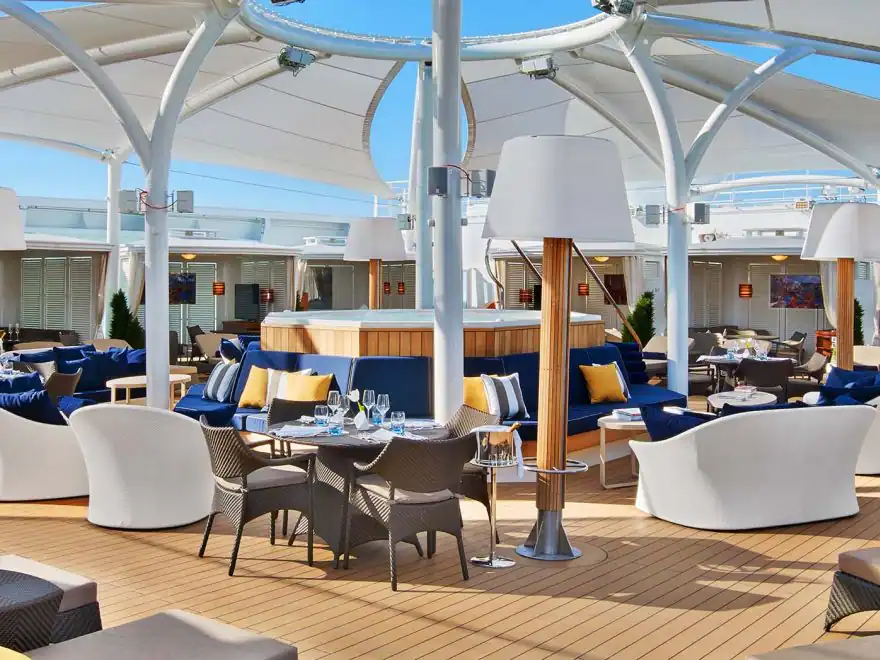
Introducing Seabourn Ovation, the sister-ship to the already prestigious Seabourn Encore. Seabourn Ovation represents another welcome stage in the evolution of small ship cruising, which Seabourn pioneered and has consistently expanded and enriched for all of our small ship cruises. Both ships will deliver a wealth of new concepts, a fresh vision and a host of illuminating ideas to delight the world’s most discerning travelers.
Coffee Bar
Mariners Patio Bar
Sky Bar
The Colonnade
Spa
The Retreat
Whirlpool
Card Room
Photo Gallery
Conference Room
Medical Centre
Observation Deck
Shops
The Terrace
Description
Introducing Seabourn Ovation, the sister-ship to the already prestigious Seabourn Encore. Seabourn Ovation represents another welcome stage in the evolution of small ship cruising, which Seabourn pioneered and has consistently expanded and enriched for all of our small ship cruises. Both ships will deliver a wealth of new concepts, a fresh vision and a host of illuminating ideas to delight the world’s most discerning travelers.
Food and Drink
Coffee Bar
Mariners Patio Bar
Sky Bar
The Colonnade
Relaxation
Spa
The Retreat
Whirlpool
Recreational
Card Room
Entertainment
Photo Gallery
Other
Conference Room
Medical Centre
Observation Deck
Shops
The Terrace
STATEROOMS

suite
