

Cape To Cape World Cruise: Miami To Dover
- 7 Jan ‘28
- 120 nights
- Departing from Miami
- Seabourn Quest

-
Outside price from$108,499*/pp
-
Balcony price from$124,199*/pp
-
Suite price from$266,999*/pp
YOUR ITINERARY
Miami, Florida - Panama Canal Cruising - Fuerte Amador (Panama City), Panama - Fuerte Amador (Panama City), Panama - Guayaquil (Quito), Ecuador - Salaverry (Trujillo), Peru - Callao (Lima), Peru - Callao (Lima), Peru - Callao (Lima), Peru - General San Martin (Pisco), Peru - Easter Island, Chile - Easter Island, Chile - Robinson Crusoe Island - Santa Clara Island, Chile - Valparaiso (Santiago), Chile - Puerto Montt, Chile - Castro, Chiloe Island, Chile - Gulf of Corcovado - Puerto Chacabuco, Chile - Scenic Cruising Wide Channel - Eyre Fjord - Pio XI Glacier - Peel Fjord - Brujo Glacier - Sarmiento Channel - Strait of Magellan - Punta Arenas, Chile - Garibaldi Glacier, Chile - Ushuaia, Argentina - Antarctic Experience - Antarctic Experience - Antarctic Experience - Antarctic Experience - Antarctic Experience - The Seabourn Falkland Island Experience - The Seabourn Falkland Island Experience - Stanley/Falkland Is/Islas Malvinas - Montevideo, Uruguay - Buenos Aires, Argentina - Buenos Aires, Argentina - Inaccessible Island, St Helena - Tristan da Cunha, Saint Helena - Nightingale Island, St Helena - Richards Bay, South Africa - Maputo, Mozambique - Durban, South Africa - Port Elizabeth, South Africa - Mossel Bay, South Africa - Cape Town, South Africa - Cape Town, South Africa - Luderitz, Namibia - Walvis Bay, Namibia - Walvis Bay, Namibia - Luanda, Angola - Sao Tome, Sao Tome & Principe - Cotonou - Accra - Takoradi, Ghana - Dakar, Senegal - Mindelo, Cape Verde - Las Palmas, Spain - Arrecife, Canary Islands - Casablanca, Morocco - Tangier, Morocco - Cadiz (Seville), Spain - Lisbon, Portugal - Leixoes (Porto), Portugal - A Coruna, Spain - St Malo (Le Mont Saint Michel), France - Cherbourg, France - Rouen (Paris), France - Rouen (Paris), France - Scenic Cruising Seine River - Dover (London), England
Miami is the busiest cruise port in the world, hosting a ...
Miami is the busiest cruise port in the world, hosting a myriad of ships year-round from all over the globe. Although it is technically not on the Caribbean Sea, no other American city exudes more of the diverse tropical appeal of the Caribbean. The city is home to a large and vibrant immigrant population that blends snowbird refugees from more northern climes with emigres from all Latin America and the Caribbean, as well as sizable groups from Europe, the Middle East and Asia. From the hot-blooded Art Deco haunts of South Beach to the natural wonders of the UNESCO-inscribed Everglades and the laid-back charms of the Keys, South Florida offers a bounty of appealing attractions that make an extended stay in the region nearly mandatory for those either embarking or disembarking here.
Formerly a fortified armory, this newly developed port is the...
Formerly a fortified armory, this newly developed port is the portal to colonial Panama City and an in-depth look at Miraflores Locks. Also from here, you can visit an Embera Indian village.
Formerly a fortified armory, this newly developed port...
Formerly a fortified armory, this newly developed port is the portal to colonial Panama City and an in-depth look at Miraflores Locks. Also from here, you can visit an Embera Indian village.
Perched on the banks of the Guayas River, Guayaqu...
Perched on the banks of the Guayas River, Guayaquil is the country’s principal seaport and economic center. Cargo ships, ferry boats and dugout canoes compete for space on the busy waterfront where sailing ships once departed for Europe with stores of gold and silver.
Salaverry is the port city for Trujillo, the second larg...
Salaverry is the port city for Trujillo, the second largest city in Peru. Like Lima, Trujillo was founded by the Spanish conquistador Pizarro. Here you will find colonial mansions with fronts containing distinctive wrought-iron grillwork and pastel color paint. This area is also known for its numerous ancient archeological sites including the ancient Chimu capital of Chan Chan.
A 45-minute drive from the port city of Callao brings you ...
A 45-minute drive from the port city of Callao brings you to exciting Lima, the City of Kings. From its founding in 1535 until today, it remains one of the most important cities in all South America. The handsome old buildings from the earliest colonial days surrounding the Plaza de Armas contrast with the soaring modern towers rising in the newer sections of the city.
A 45-minute drive from the port city of Callao brings you to e...
A 45-minute drive from the port city of Callao brings you to exciting Lima, the City of Kings. From its founding in 1535 until today, it remains one of the most important cities in all South America. The handsome old buildings from the earliest colonial days surrounding the Plaza de Armas contrast with the soaring modern towers rising in the newer sections of the city.
A 45-minute drive from the port city of Callao brings y...
A 45-minute drive from the port city of Callao brings you to exciting Lima, the City of Kings. From its founding in 1535 until today, it remains one of the most important cities in all South America. The handsome old buildings from the earliest colonial days surrounding the Plaza de Armas contrast with the soaring modern towers rising in the newer sections of the city.
Pisco dates from 1640, and its Plaza de Armas is a S...
Pisco dates from 1640, and its Plaza de Armas is a Spanish colonial treasure. Another treasure is the Ballestas Islands, an offshore cluster of rocky outcroppings teeming with seabirds, penguins, sea lions, dolphins and other wildlife. Many visitors take the opportunity to take a scenic flight over the huge, mysterious Nazca Lines pictographs etched into the nearby desert surface 2,000 years ago. And still more belly up to a bar to sample a Pisco Sour cocktail made with the Pisco brandy distilled from locally grown grapes.
The southeastern-most point in the Polynesian Triangle, tiny...
The southeastern-most point in the Polynesian Triangle, tiny Easter Island in the South Pacific is one of the most remote places on earth. Even more oddly, it belongs to Chile, which lies 3,700 miles away over the eastern horizon. In fact, a large slice of the island is Chile’s Rapa Nui National Park, preserving the sculptural heritage of the indigenous Rapa Nui people, whose ancestors carved the huge human effigies called moai that give the island its renown and earned it UNESCO World Heritage Site status. These stylized sculptures stand on the slopes of the island, gazing implacably out to sea, often on stone platforms called ahu. They were apparently carved between the 13th and 16th centuries, for reasons that are debated. But the enigmatic effigies, the dramatic volcanic landscape, the Rapa Nui people themselves and the sheer isolation of the island combine to draw visitors from every corner of the globe to this speck in the world’s largest ocean.
The southeastern-most point in the Polynesian Triangl...
The southeastern-most point in the Polynesian Triangle, tiny Easter Island in the South Pacific is one of the most remote places on earth. Even more oddly, it belongs to Chile, which lies 3,700 miles away over the eastern horizon. In fact, a large slice of the island is Chile’s Rapa Nui National Park, preserving the sculptural heritage of the indigenous Rapa Nui people, whose ancestors carved the huge human effigies called moai that give the island its renown and earned it UNESCO World Heritage Site status. These stylized sculptures stand on the slopes of the island, gazing implacably out to sea, often on stone platforms called ahu. They were apparently carved between the 13th and 16th centuries, for reasons that are debated. But the enigmatic effigies, the dramatic volcanic landscape, the Rapa Nui people themselves and the sheer isolation of the island combine to draw visitors from every corner of the globe to this speck in the world’s largest ocean.
Picturesque Valparaiso was one of the first Chilean cities f...
Picturesque Valparaiso was one of the first Chilean cities founded by the Spanish. The city is an historic port and university town, famous for its labyrinth hills, which are covered in quaint, colorful old houses and accessible only by a steep climb or by the citys unique system of funicular railways. Through the efforts of the Chilean government emphasizing the citys culture, heritage preservation, and economic development via tourism, Valparaiso was bestowed designation as a World Heritage Site by UNESCO in 2003.
The lake country of southern Chile seems to be alto...
The lake country of southern Chile seems to be altogether another world from the deserts of the north. The Lake District is graced with spectacular scenery, including the magnificent snowcapped volcanic cone, Mt. Osorno. Puerto Montt serves as the principal port for this region and as a gateway for cruises southward into Chile’s fjords.
The towns are largely built of abundant local woods, and many ho...
The towns are largely built of abundant local woods, and many houses are elaborately shingled in intricate designs. Even the cathedral is a beautiful, vaulted structure crafted of local hardwoods. The forest and the sea are the source of livelihood and much more in this rustic outpost.
The wild and beautiful Aysén District of Chile lies south of ...
The wild and beautiful Aysén District of Chile lies south of Chiloe and Puerto Montt. Here you find cliffs that drop into immense river valleys, numerous waterfalls and ravines that open into vast valleys, while the Andes form a continuous barrier. Puerto Chacabuco is a popular entry port to the Aysén region. It lies at the eastern end of a very narrow fjord and has replaced Puerto Aysén as the main shipping port and ferry terminal to this region. Puerto Chacabuco is also a departure point for sailings to Laguna San Rafael. Local vessels make the scenic trip through the channels and islands of Western Patagonia.
The Wide Channel is an inside passage along the coas...
The Wide Channel is an inside passage along the coast of southern Chile. It separates the eastern lobe of the huge Wellington Island from the Chilean mainland, starting between Saumarez Island and Icy Channel in the north and opening into the Concepcion Channel in the south adjacent to the Bernardo O’Higgins National Park on the mainland Wilcock Peninsula. Surrounded by precipitous mountains, its shoreline on the mainland side is interrupted by two large fjords, the Europa and Penguin fjords. Join your expedition team members on deck or in an observation lounge for expert insights into the area.
The Strait of Magellan is a 350-mile/570 km channel separatin...
The Strait of Magellan is a 350-mile/570 km channel separating the mainland of South America from the large Isla Grande de Tierra del Fuego and connecting the Atlantic and Pacific Oceans. It was first navigated by the explorer Ferdinand Magellan during his circumnavigation voyage in 1520. He named it the Strait of All Saints, because his transit started on November 1, All Saints Day. It was also Magellan who name the southern island Tierra del Fuego, after seeing the smokes from fires in the camps of the native Yahgan people, whom he named the Patagones, meaning “big feet,” and their land Patagonia. The strait is between two and 20 miles wide, and earned the nickname Dragon’s Tail among sailors, for its tortuous path. Along with the Beagle Channel, it was one of two protected channels for sailing between the oceans prior to the construction of the Panama Canal The third alternative was the notoriously turbulent open ocean Drake Passage beyond Cape Horn. There is one sizeable port city in the strait, Punta Arenas, Chile, which has an interesting harbor breakwater consisting of two ship hulks, the Cavenga and an old iron four-mast sailing ship, the County of Peebles. There are several Chilean national parks and monuments in the strait, including Los Pinguinos National Monument and a sanctuary for protecting humpback whales. Southern right whales are also known to frequent the strait’s waters. There are 41 light signals in the strait, including the San Isidro Lighthouse that has been restored and is now a museum, and the Evangelistas Lighthouse at the western entrance. The strait was very difficult for sailing ships, due to unpredictable winds and tidal currents. Depending on tide conditions, even modern ships often opt for one of the alternative routes, because the tidal speeds are greatly exaggerated by the Venturi effect through narrows.
Red roofs and smoking chimneys decorate the gently...
Red roofs and smoking chimneys decorate the gently sloping hillsides of Punta Arenas (Sandy Point), the bustling center of one of the world’s largest sheep farming areas. This pleasant community welcomes you with attractive parks and delightful Victorian architecture.
The southernmost city in the world, Ushuaia is the capital of Ar...
The southernmost city in the world, Ushuaia is the capital of Argentine Tierra del Fuego and an important naval base boasting a strategic as well as a picturesque location on the shores of Ushuaia Bay and the Beagle Channel. This rustic coastal town is set among waterfalls, glaciers, snow-clad mountains and beech forests, and the nutrient-rich local waters abound with marine life. Though the houses here are painted warm, pastel colors, the weather is chilly year-round and winter sports such as downhill and cross-country skiing and skating are popular. Ushuaia’s principal industries are raising sheep, logging, fishing and trapping. It became a boomtown with 30,000 residents in the late 1980’s when the government sought to increase Argentina’s presence near Antarctica by giving tax breaks to citizens who settled here.
An archipelago of over 700 islands spread over 4,700 sq...
An archipelago of over 700 islands spread over 4,700 square miles lies about 300 miles east of the coast of Argentina. Its political affiliation is with the United Kingdom, and it is named the Falkland Islands, although this is disputed by Argentina, which calls the island group Islas Malvinas. The islands were the focus of a short, violent military confrontation between the two nations in 1982 which resulted in many lives lost. Most visitors come to the islands attracted by the severe beauty of the landscape and the unusual wildlife to be seen there, especially colonies of penguins. Port Stanley, the capital, is a plucky outpost supporting the hardy islanders who farm and fish and, lately, newcomers set on exploiting the recently discovered oil reserves offshore.
Tucked in between Brazil and Argentina, the republic o...
Tucked in between Brazil and Argentina, the republic of Uruguay has nevertheless maintained its own identity and traditions. As South America’s second smallest country, it has been called a city surrounded by a big ranch. Montevideo has also been referred to as “The Switzerland of South America,” for its same secretive bank system guaranteed by law. Uruguay is principally middle class and boasts the most highly educated citizens on the continent.
Founded in 1536, Buenos Aires was administered by a Spa...
Founded in 1536, Buenos Aires was administered by a Spanish viceroy for nearly three centuries before winning its independence in 1816. A sleepy port town for most of that time, it wasn’t until the turn of the 20th century that the city finally emerged as an important shipping center. Today, Argentina’s democratically elected government has made it South America’s safest (and most expensive) country. This cosmopolitan city is characterized by broad boulevards with huge shade trees, beautiful residential districts, plazas containing monuments and fountains, interspersed with 20th-century high-rise buildings. It is a truly great walking city.
Founded in 1536, Buenos Aires was administered by a...
Founded in 1536, Buenos Aires was administered by a Spanish viceroy for nearly three centuries before winning its independence in 1816. A sleepy port town for most of that time, it wasn’t until the turn of the 20th century that the city finally emerged as an important shipping center. Today, Argentina’s democratically elected government has made it South America’s safest (and most expensive) country. This cosmopolitan city is characterized by broad boulevards with huge shade trees, beautiful residential districts, plazas containing monuments and fountains, interspersed with 20th-century high-rise buildings. It is a truly great walking city.
Inaccessible Island is an extinct volcano, last active six ...
Inaccessible Island is an extinct volcano, last active six million years ago, with Cairn Peak reaching 449 m. The island is 12.65 km² in area, rising out of the South Atlantic Ocean 31 km south-west of Tristan da Cunha.
Saint Helena, Ascension and Tristan da Cunha is a B...
Saint Helena, Ascension and Tristan da Cunha is a British Overseas Territory located in the South Atlantic and consisting of the island of Saint Helena, Ascension Island and the archipelago of Tristan da Cunha including Gough Island.
Nightingale Island is an active volcanic island in the South Atl...
Nightingale Island is an active volcanic island in the South Atlantic Ocean, 3 square kilometres in area, part of the Tristan da Cunha group of islands. They are administered by the United Kingdom as part of the overseas territory of Saint Helena, Ascension and Tristan da Cunha
Richards Bay is in the province of KwaZulu-Natal, the ...
Richards Bay is in the province of KwaZulu-Natal, the traditional homeland of the Zulu people on the Indian Ocean coast. Not surprisingly, most visitors are attracted here by interest in the Zulu culture and the indigenous wildlife of the region. Richards Bay offers Seabourn guests opportunities to experience both. The Zulu Nyala Private Game Reserve is one option, for an evening including a game drive and a dinner on the reserve. The Dumazulu is a fascinating living museum of traditional Zulu life and culture, populated by members of the group and endorsed by the tribal authorities. Hluhluwe Umfolozi Game Reserve is famous for its population of rare white rhinos, while a cruise on Lake St. Lucia gives visitors a view of two of South Africa’s most notorious animals: hippopotamus and crocodiles, on the iSimangaliso Nature Reserve, a UNESCO World Heritage Site.
The interests of the Portuguese in Africa were the earliest...
The interests of the Portuguese in Africa were the earliest of any European power. And the independence of Africa’s Lusophone colonies was invariably the most bitterly disputed during the revolutions of the mid-20th century. As elsewhere, the departing colonials took much of the value and the skills with them when they fled. Maputo has been slowly rebuilding itself into a city worthy of its setting along the Indian Ocean coast, and you will be among only a few travelers to see the architectural treasures of its past and the spirit of its future.
At its founding in 1835, the city was named in honor of the the...
At its founding in 1835, the city was named in honor of the then Governor of the Cape, Sir Benjamin D’Urban. Sugar cane transformed Durban into a vital port city, and its attractive parks and meticulously groomed gardens continue to testify to the land’s richness. Today, the city sprawls along the coast, its golden beaches hugging the ice-blue Indian Ocean.
Port Elizabeth is one of South Africa’s largest cities, (s...
Port Elizabeth is one of South Africa’s largest cities, (second in area and fifth in population), stretching 16 miles along the bay named “Algoa” by the Portuguese. The name indicated that it was from here their trading ships departed for the Goa coast of India on the favorable monsoon winds. Today it is renowned as a playground on the Indian Ocean coast, the breezes attracting surfers and yachtsmen to sport in the warm seas. The 2010 FIFA World Cup was held here, and spread even further its reputation as a world-class beach resort.
South Africa’s Garden Route is among the world̵...
South Africa’s Garden Route is among the world’s most attractive destinations, and Mossel Bay will welcome Seabourn guests to the heart of it. Those interested in wildlife will be thrilled with a visit to the Botlierskop Private Game Reserve for the chance to spot a rare white rhino and interact with huge, gentle African elephants at a feeding. The Diaz Museum Complex is named for Bartolomeu Diaz, the Portuguese explorer who was the first European to set foot in South Africa right here. It contains historical displays including the famous Post Office Tree that served as the message station for early sailors, a maritime museum and an aquarium. Another option is to travel along the coast to the famous seaside resort community at Knysna Heads and up into the arid, scenic Outeniqua Mountains.
Nestled at the foot of Table Mountain and flanked by Devil̵...
Nestled at the foot of Table Mountain and flanked by Devil’s Peak and Lion’s Head, Cape Town is known by South Africans simply as ‘the Cape,’ an acknowledgment of its uniqueness and its status as the Mother City. The first area to be settled by Europeans in the 17th century, it is today a major seaport and the legislative capital of South Africa. The feeling here is not African but cosmopolitan, and a sense of history remains.
Nestled at the foot of Table Mountain and flanked by Devil&#...
Nestled at the foot of Table Mountain and flanked by Devil’s Peak and Lion’s Head, Cape Town is known by South Africans simply as ‘the Cape,’ an acknowledgment of its uniqueness and its status as the Mother City. The first area to be settled by Europeans in the 17th century, it is today a major seaport and the legislative capital of South Africa. The feeling here is not African but cosmopolitan, and a sense of history remains.
In 1883, a German businessman, Adolf Luderitz, purchased a parce...
In 1883, a German businessman, Adolf Luderitz, purchased a parcel of land enclosing a small bay for purposes of speculation. The so-called Skeleton Coast had limited potential in many ways, being largely made up of the shifting sands of the Namib Desert. Then, in 1906, a local railway worker noticed an oddly sparkly stone beside the tracks. It proved to be a diamond, and it became clear that there were many like it lying literally on the surface of the sands. By 1909 a diamond rush was in full sway, and a thriving, German-styled town called Kolmanskop sprouted out of the desert to house the gem-seekers. When the easy pickings ended, the townspeople simply walked away, and the desert climate preserved the town as it was slowly engulfed by the shifting sands. Today it makes an evocative and haunting place to visit. The bay still hosts a bounty of wildlife as well, including seals, whales and flamingos. Other endeavors have started, too, such as the culture of delicious oysters in the clean, cold ocean waters.
Its name in Afrikaans means “Whale Bay,” but...
Its name in Afrikaans means “Whale Bay,” but those days are long gone. Today its dramatic setting is inseparable from any impression of this deep-water port on Namibia’s desolate, but beautiful “Skeleton Coast.” Here the undulating dunes of the Namib Desert meet the sea, and its lagoon is spangled with white pelicans, pink flamingos and other seabirds. Up the coast road is Dune Seven, the highest along Namibia’s coast, and a great place to take off your shoes and feel some sand between your toes after your Atlantic crossing.
Its name in Afrikaans means “Whale Bay,̶...
Its name in Afrikaans means “Whale Bay,” but those days are long gone. Today its dramatic setting is inseparable from any impression of this deep-water port on Namibia’s desolate, but beautiful “Skeleton Coast.” Here the undulating dunes of the Namib Desert meet the sea, and its lagoon is spangled with white pelicans, pink flamingos and other seabirds. Up the coast road is Dune Seven, the highest along Namibia’s coast, and a great place to take off your shoes and feel some sand between your toes after your Atlantic crossing.
Luanda looks to be booming. Development and construction is f...
Luanda looks to be booming. Development and construction is fueled by extractive industries such as petroleum and diamonds. However over half the city’s residents live in poverty. It has for several years dominated the chart of the most expensive cities in the world for expatriates, outstripping such notorious places as Hong Kong and London. Like the rest of Portugal’s African colonies, Angola won its independence under force of arms in the mid-1970s. But the country immediately descended into a disastrous civil war that lasted decades, severely stunting development. Sites of interest include the 16th century Fortess of Sao Miguel, which looms over the harbor. Any visitor will assuredly be directed to the towering monument at the mausoleum of Agostinho Neto, the hero of the revolution. The National Museum of Anthropology is a good place to learn about the folkloric traditions, including a collection of exemplary masks.
Cotonou is a large port city on the south coast of Ben...
Cotonou is a large port city on the south coast of Benin, in West Africa. At the eastern end of central Boulevard St. Michel is the huge Dantokpa Market, which features religious items and spices alongside everyday objects. To the southwest, the 19th-century Cotonou Cathedral has a striking red-and-white striped facade. Nearby, in the Haie Vive district, the Fondation Zinsou museum shows contemporary African art.
Tema port is about 25 km from Ghana’s teeming cap...
Tema port is about 25 km from Ghana’s teeming capital. The cultures of West Africa share a traditional propensity to be busy. It’s exciting and can be dazzling to newcomers. Accra is a bustling, colorful city where everybody is rather joyfully struggling to get ahead. Enjoy it. The oldest section, Jamestown, is centered around the 17th century James Fort, where the British converted a traditional market for precious metals to a trade in slaves. Climb the red-and-white lighthouse for a view of the busy city. Visit the National Museum to get a glimpse of the elaborate and very ancient cultures of Ghana through exhibits of art and artifacts. Then survey Independence Square, and its memorial to the independent nation’s first leader Kwame Nkrumah. Once your pulse is up to speed, perhaps venture into the sea of humanity that is the Makola Market. The Artists Alliance gallery contains works in every medium imaginable from the fertile community of Ghanaian artists. The ANO Centre for Cultural Research is another place to discover the rich vein of creativity that runs from antiquity into today’s culture. A more vivid example can be experienced at Labadi Beach, where enterprising entertainers, venders and artists gather to ply their trades among the visitors from neighboring luxury hotels. Like the pulsing, jazzy Ghanaian popular music, the beat of Accra is fast-paced and insistent, but full of joy.
Takoradi is a very important and busy West African seaport o...
Takoradi is a very important and busy West African seaport on Ghana’s Cape Coast, a main transport depot for container ships and oil tankers. Two of the main tourist sites near Takoradi are the village of Nzulemo and the old Portuguese slave depots called “castles.” The village of Nzulezo, on Lake Tadane, is a stilt community inscribed as a UNESCO World Heritage Site for its unique architectural and cultural characteristics. At Akatekyi, crocodiles play part in the activities of a fetish priest. Elmina Castle is about an hour away, and one of the best preserved slave barracoons on the coast.
One of the most vibrant and cosmopolitan African citie...
One of the most vibrant and cosmopolitan African cities, the Senegalese capital bears many visual reminders of its past as a French colonial outpost. Despite the Parisian-style boulevards and buildings, however, there is a distinctly African feel to the city. Bankers and executives can be seen going about their businesses dressed in the flamboyant traditional Grand Boubou costume, and women wear the feminine version with an equally striking headpiece. The common language is French, although many citizens may also speak as many as five or six ethnic languages, since the whole coast of West Africa has been steeped in a heritage of mutual trade for centuries. Among the many sights and sounds greeting visitors, none is more evocative and sobering than a visit to Goree Island and its House of Slaves. This fortress, just offshore of the city waterfront, displays many reminders of the brutal trade in human beings, including an unimposing doorway, set just above the waterline in the seaside wall, identified simply as the “Door of No Return.”
The most important city on the Cape Verde island ...
The most important city on the Cape Verde island of São Vicente, Mindelo originally thrived as a coal depot for steamships plying the Atlantic. With the advent of diesel engines, its importance waned, although it is still an important port for the maritime trade. The island is volcanic, dry and mostly low. The town has replica of Lisbon’s Belem Tower, located near the fish market, in an interesting part of the city. The late Cape Verdean singer Cesaria Evora started her career singing in the taverns of Mindelo, and later brought the uniquely lilting Cape Verdean form of fado music to the world through her bestselling records and concert tours.
Las Palmas is a large Spanish city, which just happens to ...
Las Palmas is a large Spanish city, which just happens to be on the island of Gran Canaria. That fact adds the exotic, slightly African and international flavor to the place. It played an important part in the early exploration and exploitation of Africa and the New World, some of which is recounted in the Casa de Colon Museum. Columbus may have slept there, but it was never his house. It was actually the mansion of early governors. Other museums of note are the Museo Canaria with a number of Cro Magnon skulls, and the fascinating Elder Museum of Science and Technology. For shopping, strolling and general local interest, head to La Vegueta, the oldest quarter and a UNESCO World Heritage Site, and the adjacent Triana high street shopping district. Most visitors are here for the beaches, and the municipal Playa de Las Canteras is a long, clean and safe option if that is your intention. The Canaria in the name of the islands refers to the indigenous Presa Canaria breed of dogs, which are large, strong and made quite an impression on the earliest Spanish visitors.
Lanzarote is the northernmost of the Canary Islands, often known...
Lanzarote is the northernmost of the Canary Islands, often known as “volcano island.” Its capital is Arrecife, a quiet town of about 30,000 inhabitants. Present day Lanzarote consists of two quite distinct massifs: Famara in the north, and Los Ajaches in the south, where centuries of erosion have sculpted abrupt cliffs and deep ravines, contrasting sharply with the smoothly rounded hills of the island’s central region.
Casablanca, located on the Atlantic coast, is with 4 mi...
Casablanca, located on the Atlantic coast, is with 4 million inhabitants Morocco’s largest city, and at the same time the largest port in Africa. Built on the site of ancient Phoenician Anfa, it remained a small fishing village for many centuries until the French arrived in 1912. Since then Casablanca has become a vast modern city, ever on the increase since Morocco’s independence from France in 1956. A successful blend of oriental-style, white cubic dwellings with modern Moroccan quarters gives the city an interesting flair. Lovely beaches and attractive hotels make for a popular year-round holiday resort. To help understand Moroccan culture a visit to the Medina, the quaint old Moorish quarter, is a must for all visitors.
Situated just across the narrow Strait of Gibraltar fro...
Situated just across the narrow Strait of Gibraltar from Europe, Tangier has long comprised a hybrid culture that is nearly as European as it is African. Standing atop Cap Spartel, one can gaze down on the place where the Atlantic meets the Mediterranean. The “Hollywood” district where the foreign embassies have traditionally been located reflects the European influence. But ascending the hill above the waterfront, one enters the narrow, winding alleys of the Kasbah, the city’s oldest, most Moroccan section. Down the coast, nearby Tetouan retains a nearly untouched walled medina, with sections originally occupied by Andalusian, Berber and Jewish populations. It is small enough that visitors can explore it without risking becoming lost, making it a perfect choice as a UNESCO World Heritage Site.
To taste the true flavor of this ancient port city, one sho...
To taste the true flavor of this ancient port city, one should stroll its seaside promenade, pausing to rest beneath the huge banyan trees. The narrow, winding streets of the old town fan out from the port, leading you to sunny, palm-lined plazas. Visit the Catedral Nueva (New Cathedral), begun in the early 1800s but not completed for 116 years. Its dramatic, golden dome rises over a striking interior. For those who enjoy people-watching as much as sightseeing, the seafood restaurants along the eastern edge of the port provide the ideal setting.
The great period of “the Discoveries” a...
The great period of “the Discoveries” accounted for phenomenal wealth brought back from India, Africa and Brazil by the great Portuguese navigators. Gold, jewels, ivory, porcelain and spices helped finance grand new buildings and impressive monuments in Lisbon, the country’s capital city. As you sail up the Tagus River, be on deck to admire Lisbon’s panorama and see some of the great monuments lining the river. Lisbon is one of Europe’s smallest capital cities but considered by many visitors to be one of the most likeable. Spread over a string of seven hills, the city offers a variety of faces, including a refreshing no-frills simplicity reflected in the people as they go unhurriedly through their day enjoying a hearty and delicious cuisine accompanied by the country’s excellent wines.
The commercial center of northern Portugal and hu...
The commercial center of northern Portugal and hub of the port wine trade, Porto is a gracious, cosmopolitan city noted for its 12th century cathedral and medieval churches, picturesque narrow streets and wine lodges at Vila Nova de Gaia. It is clustered on hills overlooking a river, and is a northern European style city with granite church towers, narrow streets and hidden Baroque treasures.
A Coruna is the largest Galician city with a culture uniquely it...
A Coruna is the largest Galician city with a culture uniquely its own, a rich folkloric tradition and its own language. Of historically remote origin, A Coruna has preserved a considerable heritage of monuments and ancient buildings, among which are Romanesque churches and a Roman lighthouse. Its most beautiful and original feature is perhaps the characteristic façade of its houses, which are completely covered by mirador windows.
Saint-Malo is a port city in Brittany, in France’...
Saint-Malo is a port city in Brittany, in France’s northwest. Tall granite walls surround the old town, which was once a stronghold for privateers (pirates approved by the king). The Saint-Malo Cathedral, in the center of the old town, is built in Romanesque and Gothic styles and features stained-glass windows depicting city history. Nearby is La Demeure de Corsaire, an 18th-century privateer’s house and museum.
The seaport and naval station of Cherbourg is situated along th...
The seaport and naval station of Cherbourg is situated along the English Channel northwest of Paris at the mouth of the Divette River. Believed to rest on the site of an ancient Roman station, Cherbourg has been occupied since ancient times and was frequently contested by the French and English in the Middle Ages because of its strategic location. Most recently passed to France in the late 18th century, the town was extensively fortified by Louis XVI. During WWII the Germans held Cherbourg until it was captured by the American forces shortly after the Normandy landings. Following a vast rehabilitation program that returned it to working condition, Cherbourg became an important Allied supply port. Today, Cherbourg is important for transatlantic shipping, shipbuilding, electronics and telephone equipment manufacturing, yachting and commercial fishing.
The capital of upper Normandy and fifth largest port i...
The capital of upper Normandy and fifth largest port in France, picturesque and historic Rouen is renowned as a treasury of medieval architecture. With a large part of the city destroyed during World War II resulting in massive postwar reconstruction, Rouen today appears as an interesting blend of ancient and modern. Fortunately, it has kept its medieval character with still-inhabited houses dating from the 15th century, which line its narrow cobblestone streets. Among the city’s most noteworthy attractions are the magnificent Cathedrale Notre-Dame built during the 13th century, and the famous Gros-Horloge, a giant Renaissance clock looming over the renowned pedestrian street of the same name. Two blocks away is the Place du Vieux Marche, or old market square, where Joan of Arc was burned at the stake in 1431. She is publicly commemorated at the site on the last Sunday of each May. The “City of a Hundred Spires” as Rouen is known, was an inspiration for Monet’s impressionistic cathedral paintings. Rouen also makes an excellent point of departure for a visit to Paris, the “City of Light.”
The capital of upper Normandy and fifth largest port ...
The capital of upper Normandy and fifth largest port in France, picturesque and historic Rouen is renowned as a treasury of medieval architecture. With a large part of the city destroyed during World War II resulting in massive postwar reconstruction, Rouen today appears as an interesting blend of ancient and modern. Fortunately, it has kept its medieval character with still-inhabited houses dating from the 15th century, which line its narrow cobblestone streets. Among the city’s most noteworthy attractions are the magnificent Cathedrale Notre-Dame built during the 13th century, and the famous Gros-Horloge, a giant Renaissance clock looming over the renowned pedestrian street of the same name. Two blocks away is the Place du Vieux Marche, or old market square, where Joan of Arc was burned at the stake in 1431. She is publicly commemorated at the site on the last Sunday of each May. The “City of a Hundred Spires” as Rouen is known, was an inspiration for Monet’s impressionistic cathedral paintings. Rouen also makes an excellent point of departure for a visit to Paris, the “City of Light.”
Crossing the English Channel from continental Europe to Great...
Crossing the English Channel from continental Europe to Great Britain, the first view of England is the milky-white strip of land called the White Cliffs of Dover. As you get closer, the coastline unfolds before you in all its striking beauty. White chalk cliffs with streaks of black flint rise straight from the sea to a height of 350’ (110 m).
Numerous archaeological finds reveal people were present in the area during the Stone Age. Yet the first record of Dover is from Romans, who valued its close proximity to the mainland. A mere 21 miles (33 km) separate Dover from the closest point in France. A Roman-built lighthouse in the area is the tallest Roman structure still standing in Britain. The remains of a Roman villa with the only preserved Roman wall mural outside of Italy are another unique survivor from ancient times which make Dover one of a kind.
YOUR SHIP - The Seabourn Quest
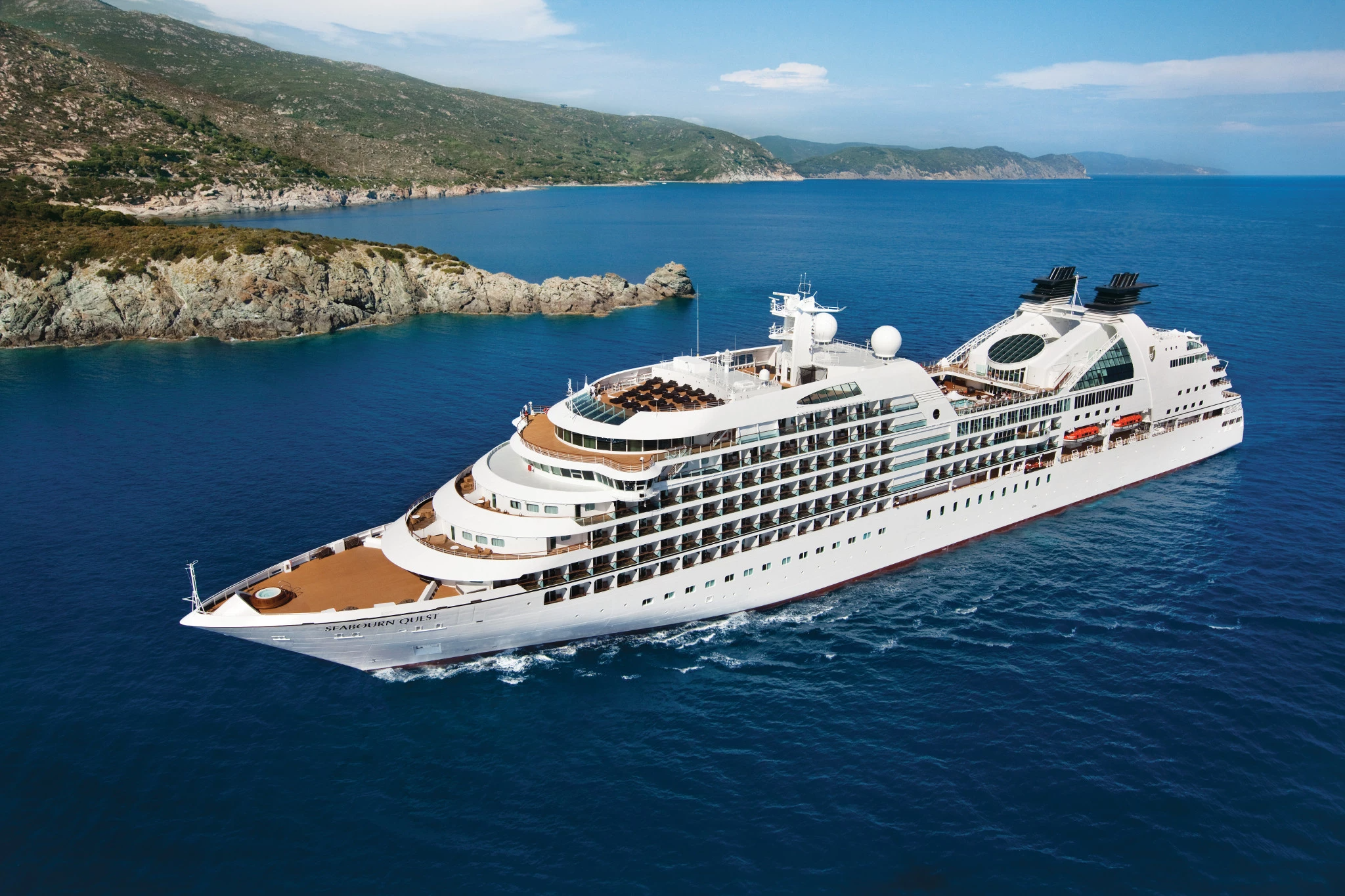
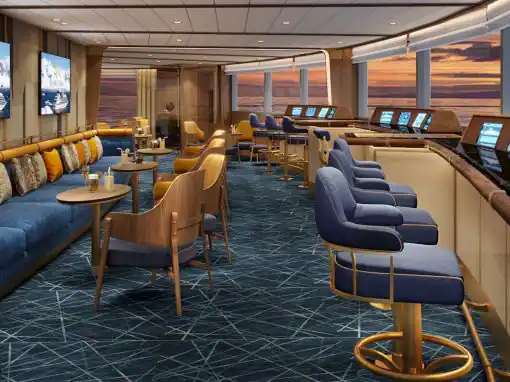
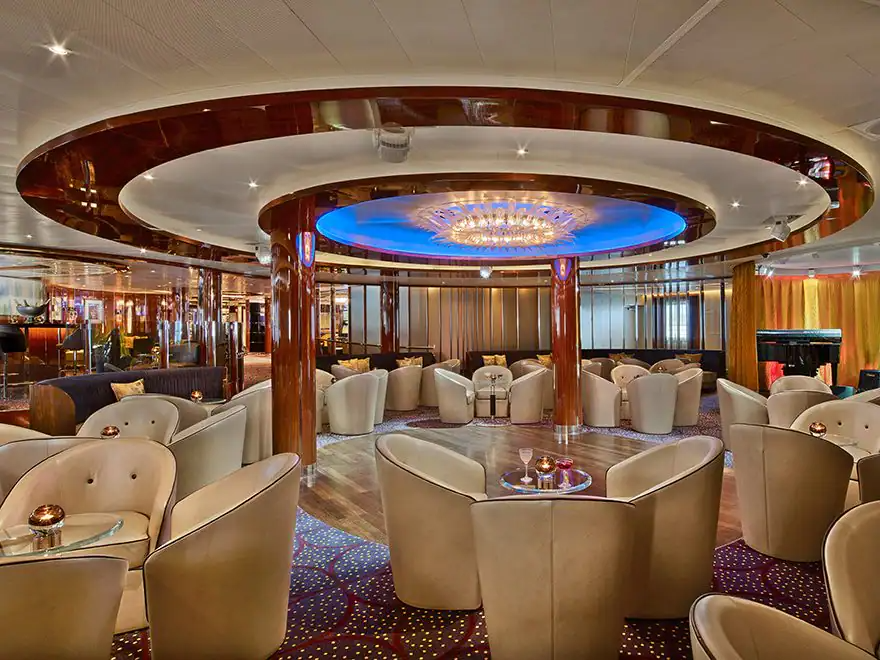
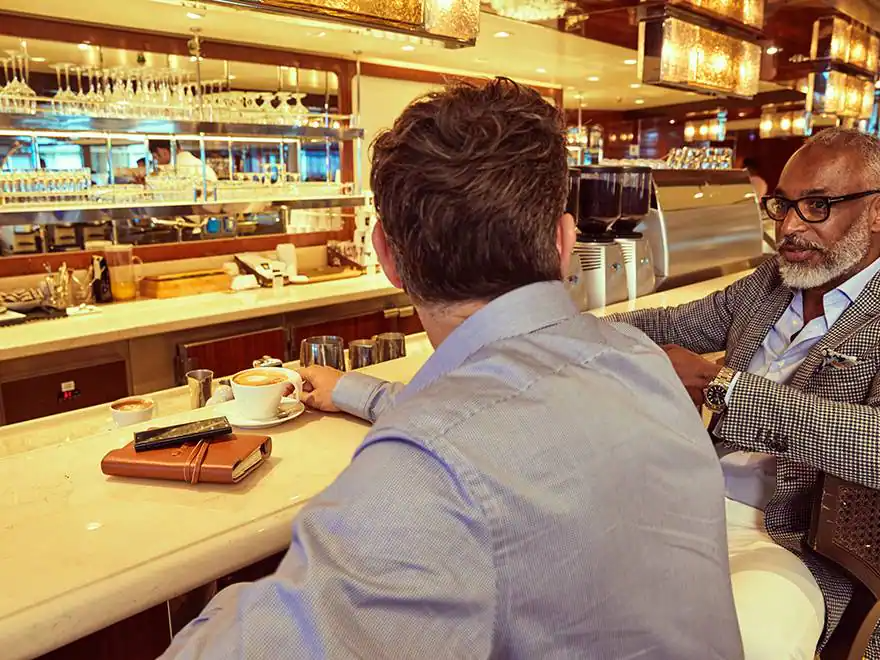
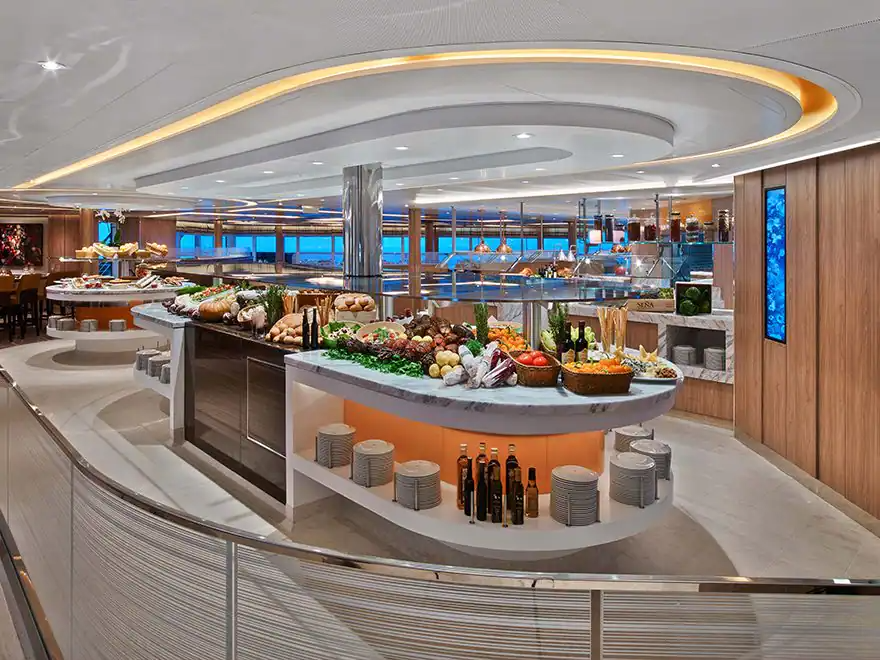
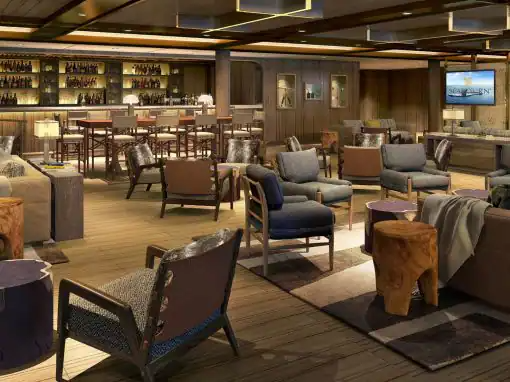

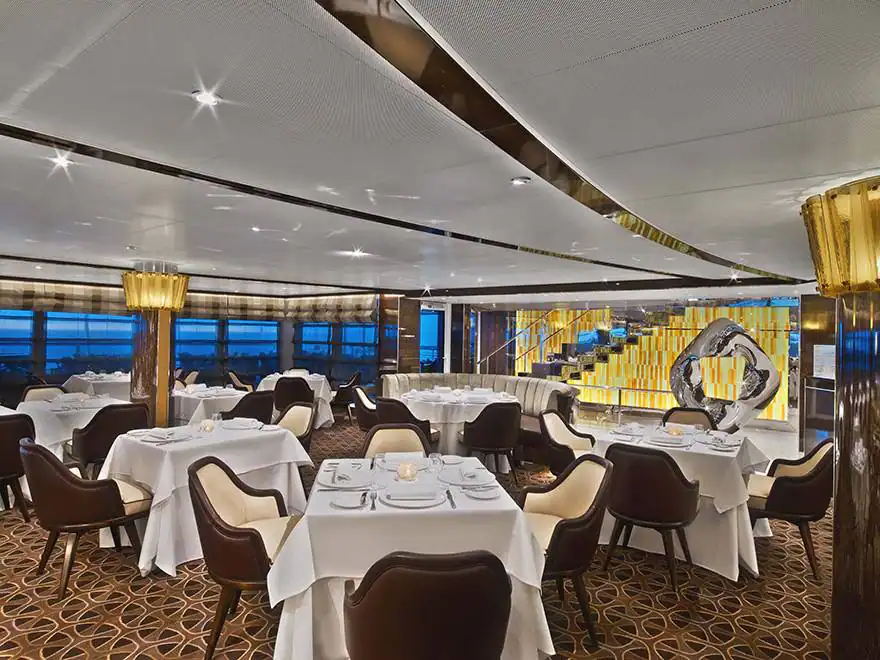

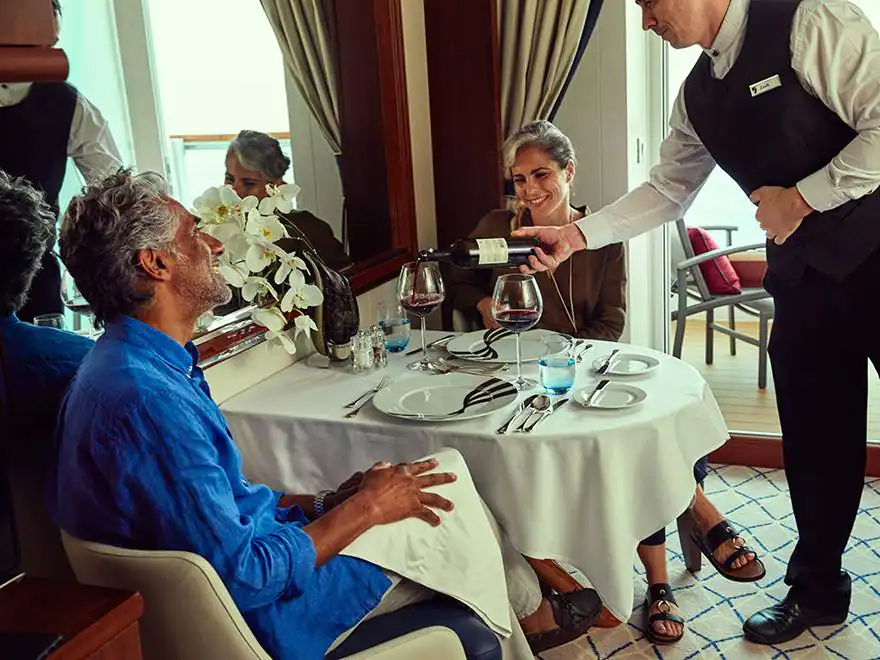
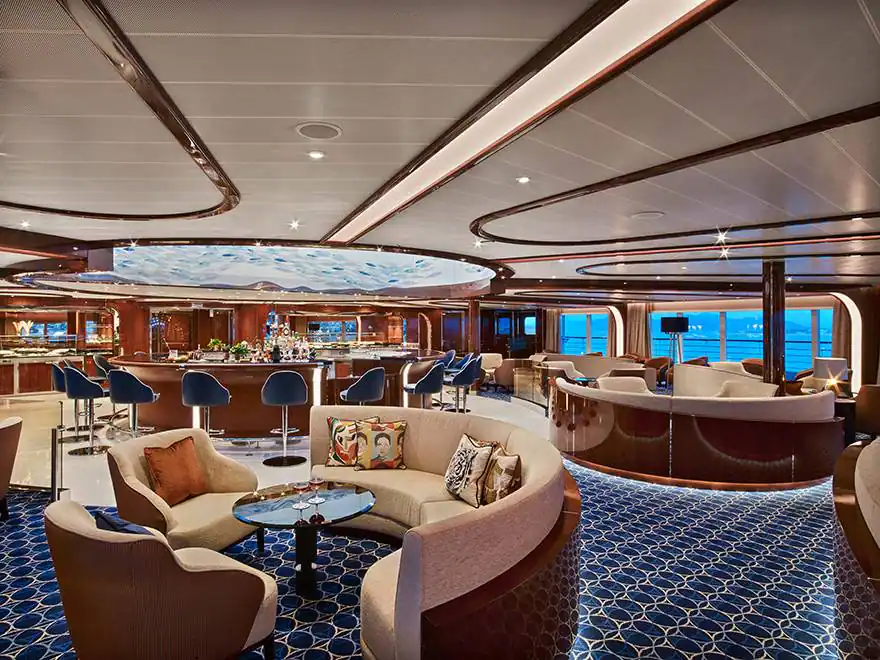
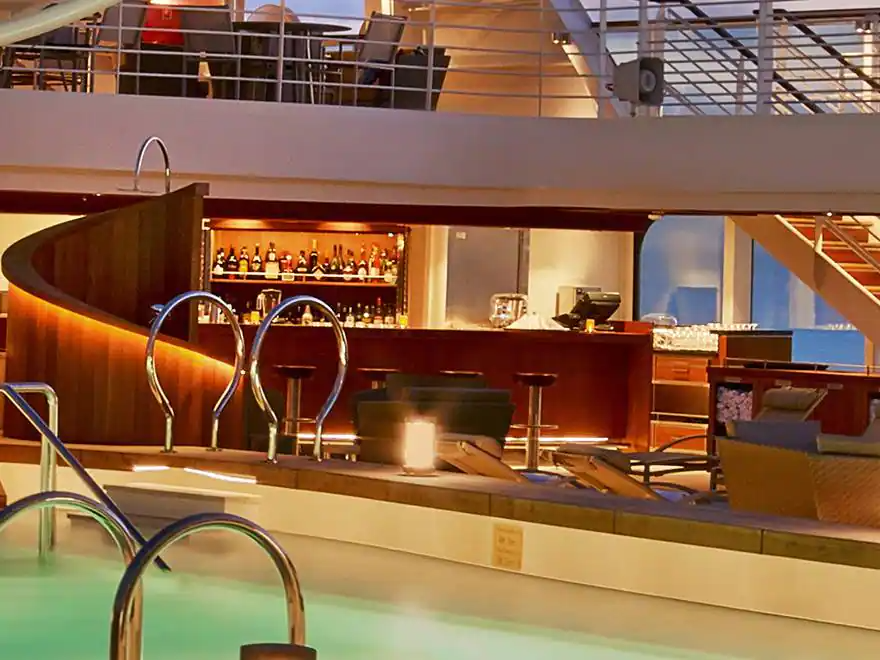
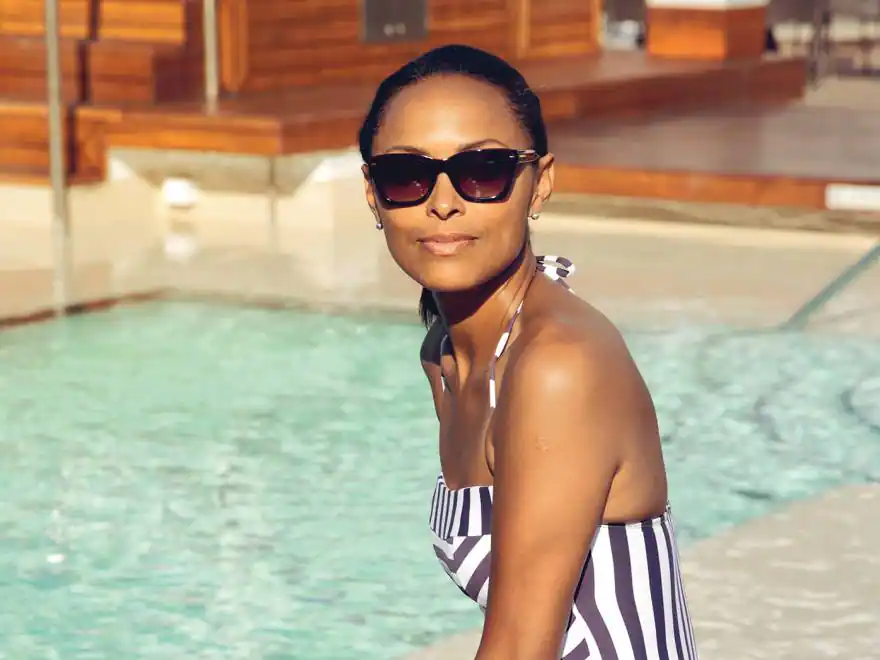
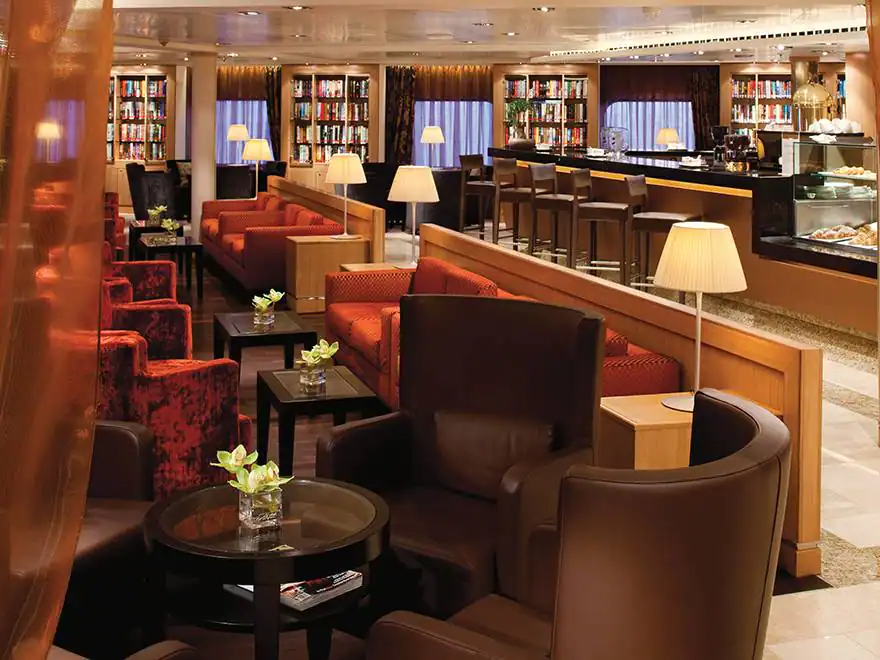
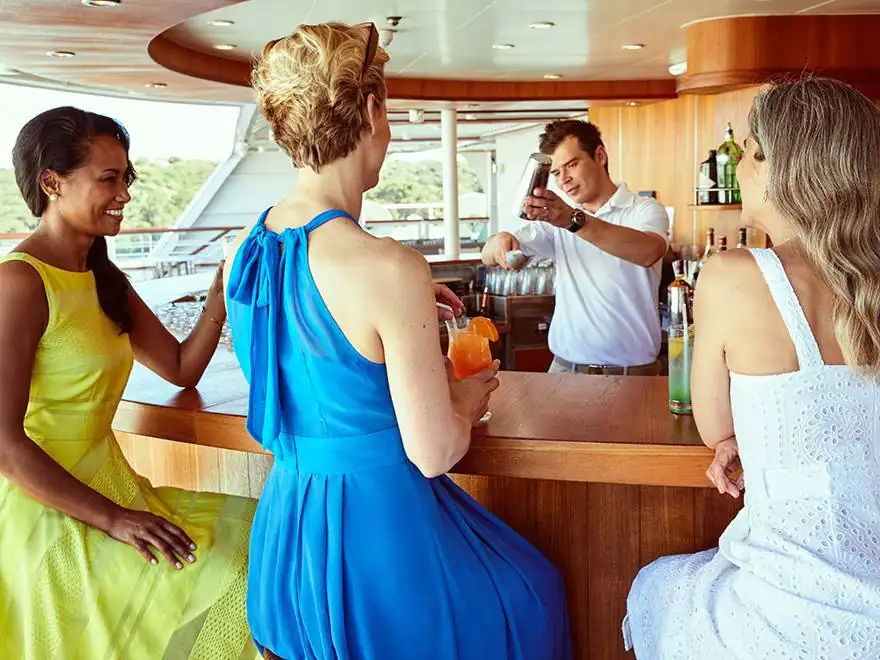
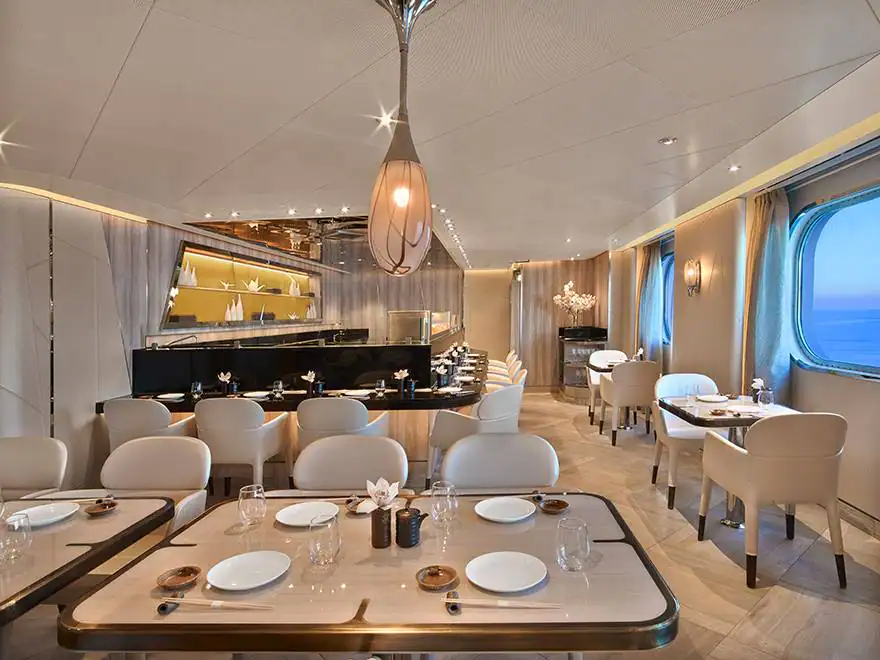
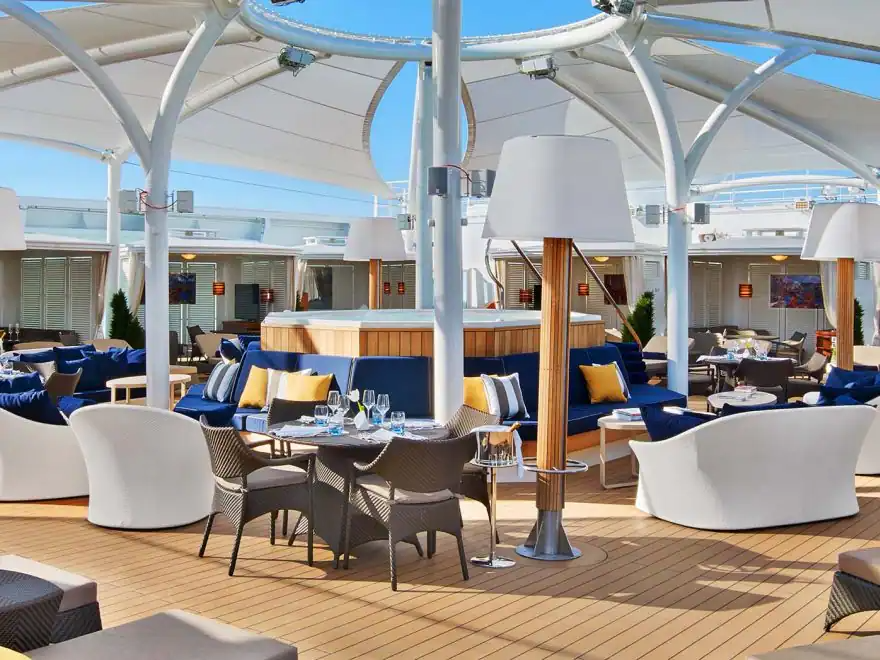



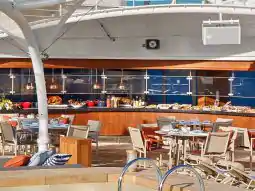
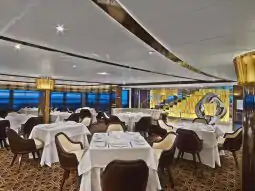
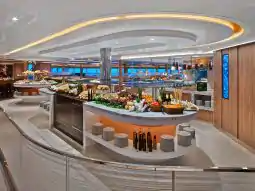
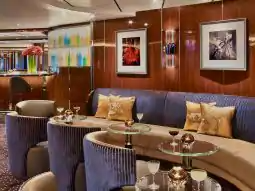
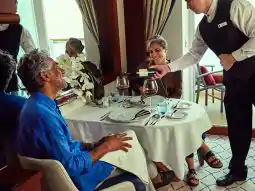

Seabourn Quest is the third iteration of the vessel design that has been called “a game-changer for the luxury segment.” True to her Seabourn bloodlines, wherever she sails around the world, Seabourn Quest carries with her a bevy of award-winning dining venues that are comparable to the finest restaurants to be found anywhere. Seabourn Quest offers a variety of dining options to suit every taste and every mood, with never an extra charge.
Fitness Center
Gym
Wellness Centre
Greenhouse Spa & Salon
Massage
Spa
Swimming Pool
Whirlpool
Bar
Mariners Patio Bar
Patio Grill
Patio Lounge
Sky Bar
The Colonnade
The Grill (burgers & hot dogs)
The Restaurant
The Restaurant 2
Internet Cafe
Casino
Entertainment Team
Gaming Club Casino
Theatre
9-hole Mini Golf
Card Room
Library
Water Sports Marina
Living Room
Shopping Gallery
Description
Seabourn Quest is the third iteration of the vessel design that has been called “a game-changer for the luxury segment.” True to her Seabourn bloodlines, wherever she sails around the world, Seabourn Quest carries with her a bevy of award-winning dining venues that are comparable to the finest restaurants to be found anywhere. Seabourn Quest offers a variety of dining options to suit every taste and every mood, with never an extra charge.
Fitness
Fitness Center
Gym
Wellness Centre
Relaxation
Greenhouse Spa & Salon
Massage
Spa
Swimming Pool
Whirlpool
Food and Drink
Bar
Mariners Patio Bar
Patio Grill
Patio Lounge
Sky Bar
The Colonnade
The Grill (burgers & hot dogs)
The Restaurant
The Restaurant 2
Technology
Internet Cafe
Entertainment
Casino
Entertainment Team
Gaming Club Casino
Theatre
Recreational
9-hole Mini Golf
Card Room
Library
Water Sports Marina
Other
Living Room
Shopping Gallery
STATEROOMS

suite

balcony
